
Some links in this article are affiliate links. As an Amazon Associate, rcplanediy.com earns from qualifying purchases at no extra cost to you.
⚡ Quick Picks at a Glance
- Best Foamboard on Amazon: Navy Penguin 20″×30″×3/16″ Foam Board 12-Pack
- Best Budget Foamboard Pack: UCreate 20″×30″ Foam Board, 10 Sheets
- Best XPS for Wing Cores: Multi Purpose XPS Foam Board 47″×23.5″×2″, 2-Pack
- Best Small XPS Sheets: Frienda Pink XPS Foam Sheets, 15″×7.5″×1/2″
- Best Spar for Depron & Foamboard: MECCANIXITY 1×3mm Carbon Fiber Strips
- Best EPP Covering: 3 Mil Thermal Laminating Film, 27″ × 250 ft
- Best Foam-Safe CA: Bob Smith Industries Super-Gold Odorless (BSI-139H)
- Best Glue for EPP: Beacon Foam-Tac
- Best Detail Foam Cutter: GOCHANGE 4-in-1 18W Hot Wire Foam Cutter
Foam changed everything for me when I got back into this hobby. I’d been a balsa guy for years — still love the stuff — but watching a mate build and fly a park flyer in a single weekend out of dollar store foam board was a revelation.
The catch is that there isn’t just one foam. Foamboard, Depron, EPP, insulation board and bead foam all behave differently on the bench, in the air and in a crash. I went back through RCGroups, Flite Test, BARCS and RCPowers threads and builders’ own measurements, and rebuilt this guide around what actually matters for an airplane — weight per square metre, stiffness, crash behaviour and real sheet sizes — then picked the products worth buying for each foam.
What Matters When Choosing RC Foam
- Weight per m², not just density — it decides wing loading. Heavy sheets need more power and land faster.
- Stiffness — doubling a sheet’s thickness makes it about eight times stiffer, which is why thin sheets need spars.
- Crash behaviour — polystyrene foams (foamboard, Depron, XPS, EPS) dent or snap; EPP bounces back.
- Glue and paint — normal CA and solvent spray paint melt polystyrene foams. See the glue guide.
- Sheet size — it limits your one-piece wing panel, so check it against your plan.
RC Foam Spec Cheat Sheet
Typical values from manufacturer data and builders’ measurements — weigh a sheet before trusting a plan’s all-up weight.
| Foam | Density | Thickness | Weight per m² | Sheet size | In a crash |
|---|---|---|---|---|---|
| Dollar Tree foamboard (Adams Readi-Board) | PS core + paper | 3/16″ (~5mm) | ~300 g/m² (~115 g/sheet) | 20″ × 30″ | Dents, easy repair |
| Art-store foamboard | Denser core + paper | 3/16″ (~5mm) | ~580–650 g/m² | 20″ × 30″ | Stronger, heavier |
| Depron (thin XPS) | ~30–50 kg/m³ | 3, 6, 9mm | 3mm ≈ 90–150; 6mm ≈ 230–250 g/m² | up to 31.5″ × 49.5″ | Cracks |
| EPP | 1.3 or 1.9 lb/ft³ (~20 / 30 g/L) | 5–10mm, blocks | 10mm ≈ 200–300 g/m² | ~1000 × 600mm | Bounces back |
| XPS insulation board | ~1.3–1.6 lb/ft³ | 1/4″ to 3″ | 1/2″ ≈ 300 g/m² | 4′ × 8′ | Snaps under big loads |
| EPS wing-core foam | ~1 lb/ft³ | Blocks | Core, then sheeted | To order | Brittle unless skinned |
Avoid for airframes: EVA craft foam (heavy, floppy), PVC foam board (far too heavy), polyurethane packing foam and loose-bead packaging EPS. EPO/Elapor, used in ready-to-fly planes, isn’t sold as sheet.
Which Foam for Which Build?
| Build type | Best foam | Why |
|---|---|---|
| First build / Flite Test plans | Foamboard | Cheap, forgiving, plans assume its weight |
| Combat, slope or FPV wing | EPP (or XPS core) | Survives mid-airs and hard landings |
| Indoor / F3P | 3mm Depron | Lightest rigid sheet |
| 3D profile / park aerobat | 6mm Depron or EPP | Stiff and light, or crash-proof |
| Hot-wire cut sport wing or glider | XPS or wing-core EPS | Cuts into a true airfoil |
Section 1 — Foamboard: The Fastest Way to Get Flying
Foamboard is the Flite Test material: hundreds of free plans, and you can go from idea to airborne in a day. Scoring the paper and folding makes hinges, curved leading edges and box sections — that’s where most of its stiffness comes from.
Brand matters. A 20″×30″ Dollar Tree (Adams) sheet weighs about 112–115 g; art-store boards like Elmer’s or Flipside weigh about twice that. In Vortex-RC’s bend test the heavy board held about three times the load — stronger, but it needs more power.
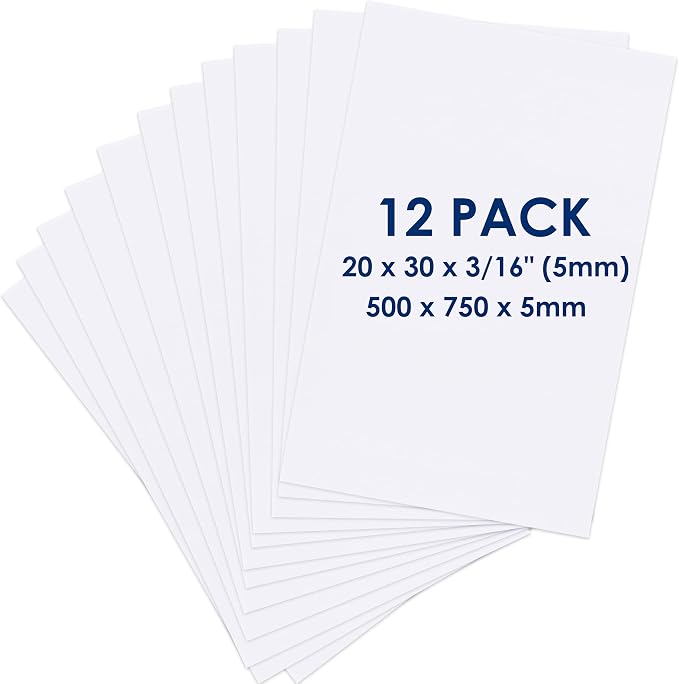
🥇 1. Navy Penguin 20″×30″×3/16″ Foam Board — 12-Pack
The most practical foamboard on Amazon in the classic 20″×30″×3/16″ format that Flite Test plans are drawn for. It’s an extruded polystyrene core laminated between two paper sheets, well reviewed, and ships in protective packaging so you don’t get crushed corners — which matters, because a dented sheet makes a wavy wing.
Be clear-eyed about what it is: an art and display board, not a dedicated aeromodelling board. Boards in this category are typically heavier and stiffer than Adams Readi-Board from Dollar Tree. That’s not a deal breaker — it makes excellent fuselages, tails and tougher trainers — but weigh a sheet before you build a light FT design from it, and plan on a slightly bigger motor and battery. Builders flying heavier board report it penetrates wind better and survives more knocks.
- Specs: 20″×30″×3/16″ (5mm) | 12 sheets | Paper-faced extruded polystyrene core | Acid free
- Best for: Flite Test-style builds when you can’t get Dollar Tree board, stronger trainers, fuselages and tail surfaces
- Builder feedback: 4.6★ from ~780 ratings; buyers praise flatness and packaging. Heavier than DTFB, so adjust power accordingly.
2. UCreate Foam Board, 20″×30″×3/16″ — 10 Sheets
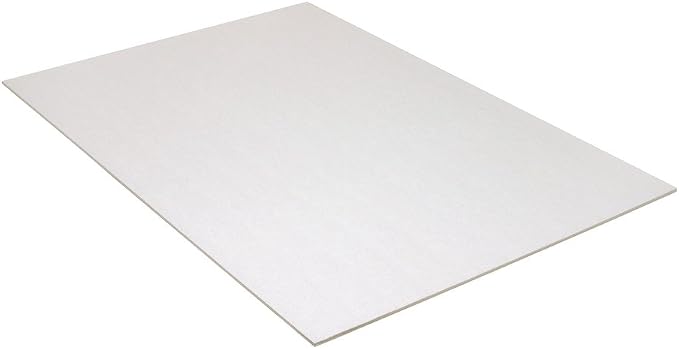
UCreate (part of the Dixon Ticonderoga family) makes a straightforward, US-made white foamboard in the same 20″×30″×3/16″ size. It’s the smaller, cheaper pack to try before committing to a dozen sheets, or to top up stock mid-build.
Like any art-store board, expect it to be heavier than Dollar Tree board, so it’s best used where a bit of extra strength is welcome: fuselage boxes, motor pods, tail booms and trainer wings. Score and fold it exactly as you would DTFB.
- Specs: 20″×30″×3/16″ | 10 sheets | Paper-faced extruded polystyrene | Matte white | Made in USA
- Best for: Trying foamboard building, fuselages and tails, topping up stock
- Builder feedback: 4.4★ from ~330 ratings; described as sturdy and easy to cut.
Also worth knowing — not sold on Amazon
Adams Readi-Board (Dollar Tree): still the lightest common US foamboard at roughly 112–115 g per 20″×30″ sheet (~300 g/m²), and the board most Flite Test plans assume. The Amazon listings for it are currently unavailable, so pick it up in store at Dollar Tree. Builders report a newer version is slightly heavier and more prone to warping in humidity, so store it flat and dry.
Flite Test Maker Foam Board by Adams v2: the same 20″×30″×3/16″ format with a coated, water-resistant, bright white paper facing that takes paint and stickers better. Around $70 per 20-pack at the time of writing from the Flite Test store.
Section 2 — EPP Foam: Build It Once, Crash It Many Times
EPP is the foam of combat wings, slope wings and bash-proof trainers — fuzzy-edged and floppy, but it bounces off trees. Two densities matter: 1.3 lb/ft³ (lighter, softer) and 1.9 lb/ft³ (stiffer, tougher; one popular 48″ wing weighs about 20 oz in 1.3 lb foam and 30–35 oz in 1.9 lb).
You can hot-wire cut EPP — just hotter and much slower than polystyrene. Stiffness comes from carbon spars plus 3–5 mil laminating film, and it’s glued with Foam-Tac, Foam-Cure, UHU Por or hot glue.
🥇 3. 3 Mil Thermal Laminating Film Roll — 27″ × 250 ft
This is the single most important thing you’ll buy for an EPP airplane after the foam itself. Bare EPP is floppy; ironed-on laminating film turns it into a crisp, stiff, wipe-clean flying surface and protects it from scuffs. It’s the same stuff sold by slope and combat-wing suppliers, just in a big 250 ft office roll that will cover dozens of wings.
The usual method: a light mist of spray adhesive (3M Super 77) on the foam, lay the film on, then seal it with a covering iron from the middle out towards the edges. 3 mil is the light, standard choice for small wings; heavier 5 mil film is used on big, abused combat and slope wings. It’s thermal film, so keep the iron temperature modest and test on scrap first — EPP softens if you overdo it.
- Specs: PET thermal laminating film | 3 mil | 27″ × 250 ft | 1″ core | Clear gloss
- Best for: Covering and stiffening EPP wings, protecting Depron and foamboard surfaces
- Builder feedback: 4.4★ from ~85 ratings; laminate film is standard practice on EPP wings in RC build threads.

4. GOCHANGE 4-in-1 Electric Foam Cutter Set — 18W (Detail Tool for Foam Builders)
Strictly speaking this is a tool, not a foam — but it comes up every time foam building is discussed, so it’s staying in here, with one important correction to how it’s often described. The GOCHANGE kit is a detail and shaping tool, not a wing-core cutter. It includes 7cm and 12cm straight hot-knife wands, a 5cm bent carving tip and a small 18cm bow, powered by an 18W supply.
That makes it excellent for cutting hinge lines, servo pockets, canopy openings, cowls and nose blocks from XPS, Depron and foamboard cores, and for tidying up hot-wire cut parts. What it can’t do is cut a full wing panel — for that you need a proper bow cutter with a long wire and adjustable heat, which I cover in the hot wire foam cutters guide. It will cut EPP too, slowly and at a low feed rate, but a sharp blade is usually cleaner on EPP sheet.
- Specs: 18W | 7cm & 12cm hot knives, 5cm bent tip, 18cm bow | On/off switch
- Best for: Servo pockets, hinge slots, cowls and nose blocks, carving XPS and Depron details
- Builder feedback: 4.4★ from 1,000+ ratings. Liked for heating up fast; the small bow limits it to small parts.

Where to buy EPP sheet — not sold on Amazon
Proper aeromodelling EPP isn’t really stocked on Amazon, and generic “EPP” craft listings often turn out to be EVA or EPE. One US source that states the density clearly is ReadyMadeRC’s STRIX flat EPP: 1.9 lb/ft³ (~30 g/L), 8mm or 10mm, 1.0m × 0.6m sheets in 10-packs (around $85–100 at the time of writing) — ideal for profile 3D planes, FPV and combat wings. For the lighter 1.3 lb grade, look to specialist slope and combat-wing suppliers and always check the density in the listing.
Section 3 — Depron: When You Want a Proper Model
Depron is a fine-cell XPS sheet that cuts crisp edges, sands beautifully and gives the smoothest finish of any sheet foam. It isn’t lighter than foamboard at 6mm (both around 230–300 g/m²); you pay for the surface, no paper to delaminate, and the 3mm option for indoor models.
Small wings can fly unsparred, but anything beyond park-flyer size needs a carbon spar, and Depron kinks rather than bending into tight curves — keep airfoils thin (under about 12% of chord).
🥇 5. MECCANIXITY Carbon Fiber Strips, 1×3mm × 400mm — 6 Pack (Depron & Foamboard Spars)
Depron isn’t sold on Amazon, but the thing every Depron wing needs is: a carbon spar. Pultruded flat strips like these are the standard spar for Depron and foamboard models — glued on edge (vertically) into a slot along the wing’s thickest point, a 1×3mm strip adds a remarkable amount of bending stiffness for a couple of grams. They’re also used along fuselage sides of 3D profile planes, as leading-edge stiffeners on 3mm indoor models, and as control-surface stiffeners.
At 400mm they suit wings up to roughly 800mm span with the strips butted or overlapped at the root; for bigger wings, overlap two strips or step up to a carbon tube. Glue them with foam-safe CA or epoxy, and scuff the carbon first.
- Specs: Pultruded carbon fiber | 1mm × 3mm × 400mm | 6 strips
- Best for: Depron and foamboard wing spars, 3D profile fuselage stiffeners, indoor model reinforcement
- Builder feedback: 4.6★ from 35 ratings; buyers use them for RC wings and kites and note they’re straight and consistent.

Where to buy Depron — not sold on Amazon
Depron 6mm: the one to start with — fuselage sides, park-flyer wings, tails and control surfaces, and thick enough to slot a carbon spar into. About 230–250 g/m², sheets up to 31.5″ × 49.5″. Cut with a fresh snap-off blade, glue with foam-safe CA, UHU Por or hot glue, and paint with water-based acrylics only.
Depron 3mm: the indoor and F3P material at roughly 90–150 g/m² — the lightest rigid sheet you can buy. A complete indoor model can come in well under 100g, but it needs thin carbon strips and calm air.
In the US, German-made Depron is imported by RcDepron.com in 3mm, 6mm and 9mm. If you can’t get Depron, the closest substitutes are 1/4″ fanfold XPS insulation (peel off the plastic film), thin XPS flooring underlayment from some DIY stores, and foamboard with the paper removed.
Section 4 — XPS & EPS Board Foam: Big Sheets, Low Price
Pink and grey insulation board is XPS — the same base material as Depron in thick boards. It hot-wires beautifully into wing cores, fuselages and cowls. FOAMULAR 150 is about 1.45–1.55 lb/ft³, and DuPont’s Styrofoam XPS is now light grey rather than blue. Sand or peel off the printed skin, and use foam-safe glue only.
Fine-bead white EPS (~1 lb/ft³) is still the classic core for balsa- or obechi-sheeted wings — just avoid crumbly packaging EPS.
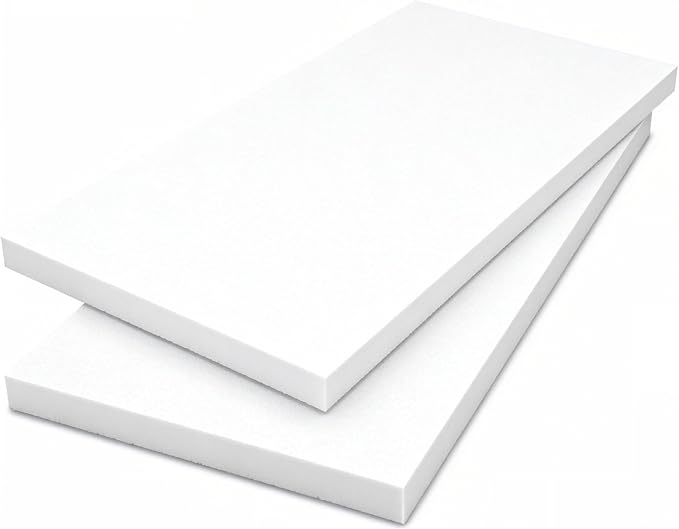
🥇 6. Multi Purpose XPS Foam Board, 47″×23.5″×2″ — 2-Pack
If you’d rather have XPS delivered than wrestle a 4’×8′ insulation board into the car, this is the most useful size on Amazon for model aircraft. At roughly 47″×23.5″ (about 1.2m × 0.6m) and 2″ thick, each board is big enough for full-length hot-wire cut wing panels on a park flyer or glider, and thick enough for most sport airfoils. It’s a clean white XPS with no printed skin to sand off, and the listing quotes a compressive strength of up to 300 kPa.
The catch is price: two boards cost several times what the same foam costs at a hardware store, so it makes most sense if you don’t have Home Depot or Lowe’s nearby or only need a couple of cores. Cut it with a proper bow and a slow, steady pull — see the hot wire foam cutters guide — and plan root and tip templates with the free RC Wing Designer.
- Specs: XPS | 47″ × 23.5″ × 2″ | 2 boards | White, closed cell | Up to 300 kPa compressive strength (per listing)
- Best for: Hot-wire cut wing cores, carved fuselages, flying wings, big cowls and nose blocks
- Builder feedback: 4.2★ from ~100 ratings; buyers note clean cutting and a smooth, paintable surface.
7. Frienda Pink XPS Foam Sheets — 12 Pieces, 15″×7.5″×1/2″
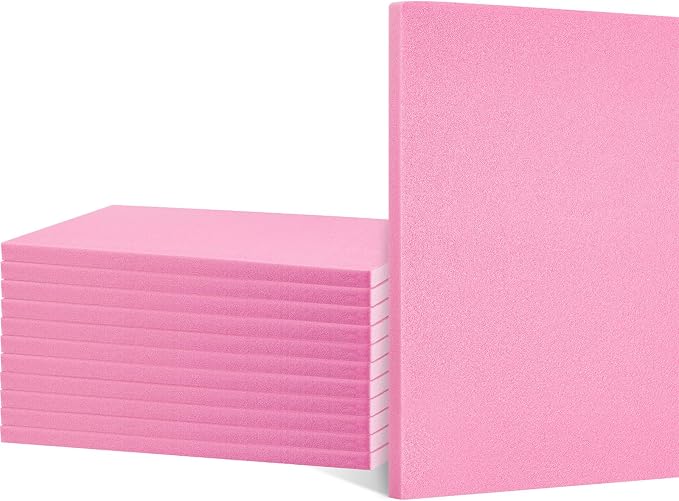
If you don’t want a whole board at all, small XPS sheets like these are a handy option. At 15″×7.5″×1/2″ they’re too small for a wing, but ideal for nose blocks, cowls, canopies, wing-tip blocks, fillets and practising hot-wire technique before you commit to a full core.
Treat them like any XPS: foam-safe glue only, water-based paint only.
- Specs: XPS | 12 pieces | 15″×7.5″×1/2″ (38×19×1.27cm) | Pink
- Best for: Nose blocks, cowls, canopies, fillets, small parts and hot-wire practice
- Builder feedback: 4.2★ from ~190 ratings; buyers note it cuts cleanly without crumbling.
Cheapest option — in store, not online
Owens Corning FOAMULAR (pink): the most widely used XPS board in US RC building. FOAMULAR 150 is rated at 15 psi and roughly 1.45–1.55 lb/ft³; standard boards are 4’×8′ in 1″–3″ thicknesses, with thinner 1/2″ sheathing also sold. 1″ and 2″ boards are the most useful for wing cores.
DuPont Styrofoam Brand XPS: performs the same for our purposes — now light grey rather than the old blue.
1/4″ fanfold XPS (e.g. FOAMULAR 1/4″ × 4′ × 50′, typically folding into 2′ × 4′ panels): the classic budget Depron substitute for profile planes. Peel the film off (or leave it on one side for stiffness) and keep parts away from the weak fold lines. All three are stocked at Home Depot, Lowe’s and Menards — in-store pickup is far cheaper than shipping big sheets.
Section 5 — Foam-Safe Adhesives: The Critical Supporting Cast
No foam article is complete without adhesives, because the wrong glue is the fastest way to destroy both your material and your afternoon. Standard CA (cyanoacrylate) attacks polystyrene — foamboard cores, Depron, XPS and EPS — on contact, and so do solvent-based spray paints. EPP (polypropylene) and EPO (a polystyrene–polyethylene blend used in ready-to-fly planes) aren’t dissolved by CA the way pure polystyrene is, but CA cures brittle and doesn’t grip EPP well. Here’s what actually works, and for which foam:
- Foamboard: low-temp hot glue (the Flite Test standard), foam-safe CA for small joints
- Depron / XPS: foam-safe CA, UHU Por, Foam-Tac, or epoxy for hard points
- EPP: Foam-Tac, Foam-Cure, UHU Por or hot glue — flexible glues that move with the foam
- EPO (repairs to RTF planes): regular or foam-safe CA with kicker, Foam-Tac
More detail and more options are in the Best Glue for RC Airplanes guide.
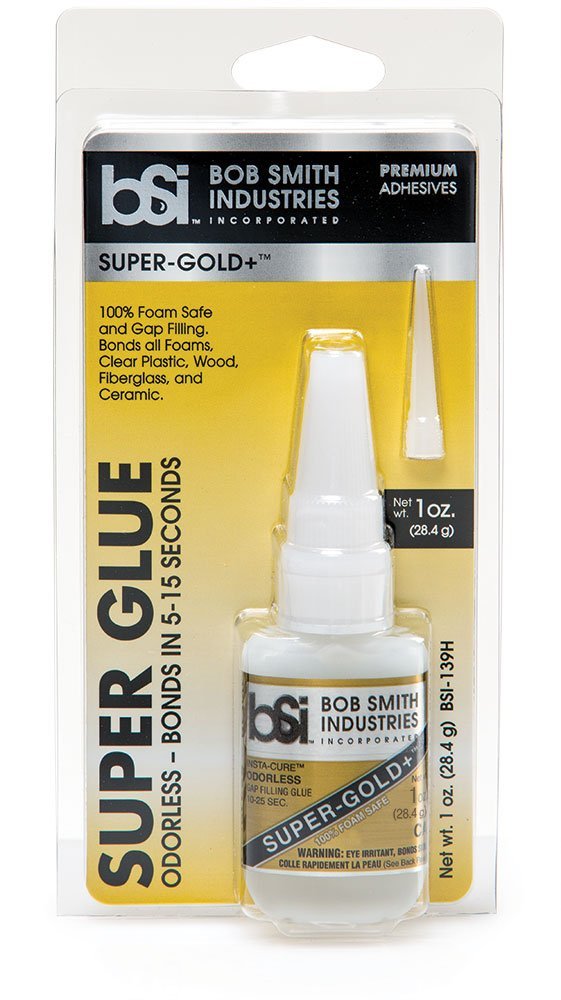
🥇 8. Bob Smith Industries Super-Gold Odorless Foam-Safe CA (BSI-139H)
If you want CA speed on polystyrene foams, this is the one to reach for. BSI’s Super-Gold is sold as 100% foam safe and odorless, and it’s a gap-filling (medium) viscosity that bonds in about 5–15 seconds. It won’t frost or eat Depron, XPS or foamboard cores the way normal CA does, and it bonds foam to wood, carbon and plastic too.
Use it for quick assembly joints, carbon spars into Depron slots, and hinges. For big flexible joints on EPP, use one of the contact-type glues below instead. A light mist of foam-safe kicker speeds it up if you need it.
- Specs: Foam-safe odorless CA | Gap-filling medium viscosity | 1 oz | Sets in 5–15 seconds
- Best for: Depron, XPS, foamboard, carbon spars in foam, quick structural joints
- Builder feedback: 4.7★ from 850+ ratings; the standard foam-safe CA recommendation in build threads.
9. Bob Smith Industries Foam-Cure (BSI-142) — Flexible Foam Glue
This one is often mis-described (including in an earlier version of this guide) as a foam-safe CA. It isn’t — Foam-Cure is a clear, flexible craft-style foam glue that’s compatible with all foams and takes overnight to reach full strength. That slow cure is the point: it gives you working time on long EPP joints and a bond that flexes with the foam instead of cracking.
Use it for laminating EPP layers, gluing EPP wing halves, attaching fuselage sides and other big-area joints where you can tape or pin the parts while it cures.
- Specs: Flexible foam adhesive | Dries clear | 4 oz | Overnight full cure
- Best for: EPP assembly, laminating foam layers, large flexible joints
- Builder feedback: 4.7★ from 700+ ratings; recommended by EPP builders as a strong, flexible glue.

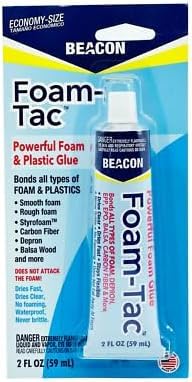
10. Beacon Foam-Tac — Flexible Foam Glue for EPP, EPO and Depron
Foam-Tac is the glue many EPP sheet sellers recommend with their foam, and it’s become a staple for foam builders generally. It bonds EPP, EPO, Depron, balsa, carbon fiber and 3D-printed parts, stays flexible, and the current formula adds UV blockers. It’s also the go-to for repairing ready-to-fly foam planes.
Like UHU Por, you can use it wet for a slow, strong bond or as a contact cement (coat both sides, let it tack, press together) for an instant grab.
- Specs: Flexible foam and plastic glue | 2 oz | Waterproof | UV blockers
- Best for: EPP builds, EPO repairs, motor mounts and hard points in foam, carbon-to-foam joints
- Builder feedback: 4.6★ from ~980 ratings; widely praised by RC builders for strong, flexible bonds.
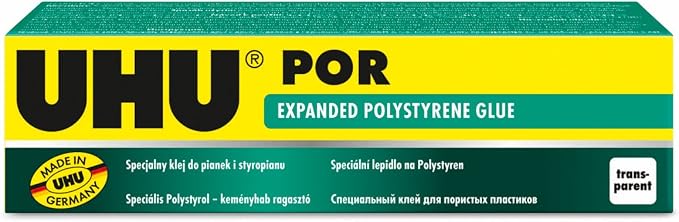
11. UHU Por — Foam-Safe Contact Adhesive
UHU Por is a classic European modeller’s glue made specifically for polystyrene foams, and it works on EPP too. Apply a thin coat to both surfaces, let it tack for a minute or so, then press together. The bond is strong, stays slightly elastic, is waterproof, and doesn’t attack foam.
It’s excellent for Depron and XPS joints where you want flexibility, for bonding foam to wood or plastic, and for paper-to-foam lamination. For hard points like firewalls and motor mounts, use epoxy or Foam-Tac instead.
- Specs: Contact adhesive for polystyrene foams | 50ml tube | Elastic, clear, waterproof | Made in Germany
- Best for: Depron, XPS and EPP assembly, flexible joints, foam-to-wood bonds
- Builder feedback: 4.6★ from ~820 ratings; the standard Depron glue in European build threads.
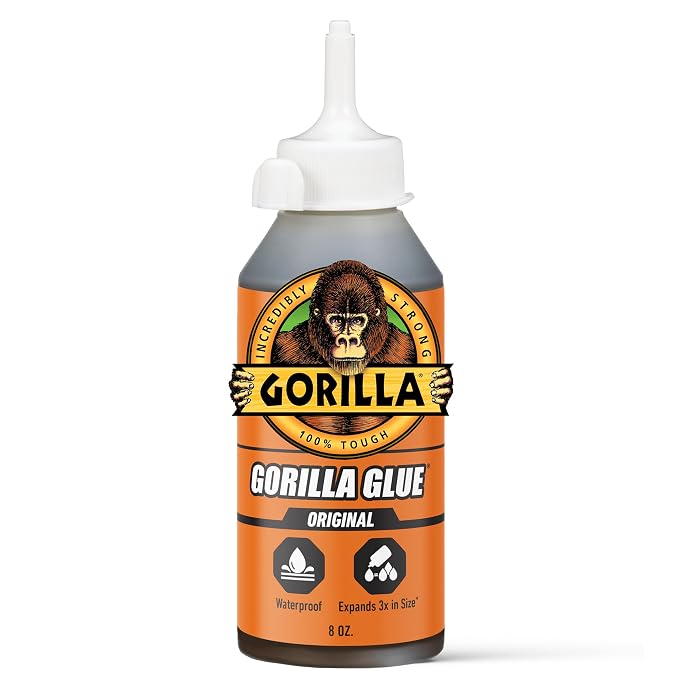
12. Gorilla Glue Original — Expanding Polyurethane (Hard Points Only)
Gorilla Glue expands as it cures, which is useful for filling gaps in foam joints where surfaces aren’t perfectly flat, and it bonds foam, wood and plywood strongly. It’s safe on polystyrene and good for hard points like firewall doublers, nose blocks and landing gear plates.
Two warnings from experience: it foams up and adds weight, so use a very thin film on one side only and slightly dampen the other; and clamp or tape the joint, because the expansion will push parts apart. It’s not a general-purpose foam glue — for everything else, the glues above are lighter and neater.
- Specs: Expanding polyurethane | Waterproof | 8 oz | Full cure in about 24 hours
- Best for: Structural hard points, gap-filling joints, firewall doublers, gear plates
- Builder feedback: 4.6★ from 19,000+ ratings; strong and waterproof, but messy and heavy if overused.
Section 6 — Making Foam Stiff Enough to Fly Well
Flutter, flexing wing tips and mushy ailerons are stiffness problems, not strength problems:
- Spars: a carbon strip set on edge, or a tube, along the wing’s thickest point is the best upgrade.
- Skins: packing tape, 3–5 mil laminating film, brown paper or light fiberglass stiffen any foam panel.
- Thickness: a box spar or doubled root section adds lots of stiffness for very little weight.
For finishing, stick to water-based products — see the paint & finishing guide and the covering film guide.
Quick Comparison Table
| Material | Best For | Weight | Crash Resistance | Surface Quality | Cost |
|---|---|---|---|---|---|
| Adams Readi-Board (DTFB) | FT plans, first builds, prototyping | ~300 g/m² | Moderate | Good (paper-faced) | $ (cheapest) |
| Art-store foamboard (e.g. Navy Penguin) | Stronger trainers, fuselages | ~2× DTFB | Good | Good (paper-faced) | $$ |
| EPP 1.3 / 1.9 lb/ft³ | Combat & slope wings, trainers, 3D profiles | ~200–300 g/m² at 10mm | Excellent | Rough (needs film/tape) | $$ |
| Depron 6mm | Aerobatics, scale, 3D profiles | ~230–250 g/m² | Low (cracks) | Excellent | $$$ |
| Depron 3mm | Indoor, micro models, F3P | ~90–150 g/m² | Very low | Excellent | $$$ |
| XPS board (FOAMULAR / Styrofoam in store, or on Amazon) | Hot-wire wing cores, carved parts, big builds | ~23–25 kg/m³ | Moderate | Good once skin is sanded | $ (hardware stores) |
| EPS wing-core foam | Sheeted wing cores | ~16 kg/m³ | Low unless skinned | Needs sheeting | $ |
Weights are typical values from manufacturer data and builders’ measurements; batches vary. Prices are approximate — click links for current pricing.
Frequently Asked Questions
Can I use regular CA glue on foam?
Not on polystyrene foams. Cyanoacrylate itself attacks polystyrene, so standard CA melts foamboard cores, Depron, XPS and EPS on contact. Use a foam-safe CA such as Bob Smith Industries Super-Gold Odorless, or hot glue, UHU Por, Foam-Tac or epoxy. EPP and EPO aren’t dissolved by standard CA, but on EPP the bond is brittle and weak — use Foam-Tac, Foam-Cure, UHU Por or hot glue instead. On EPO (most ready-to-fly foamies), regular CA with kicker is a common repair glue.
What’s the difference between EPS and XPS foam?
EPS (expanded polystyrene) is made of fused beads — the white foam in coolers and packaging. XPS (extruded polystyrene) is a continuous closed-cell foam — pink, grey or blue insulation board, and Depron. XPS is smoother, stiffer and more uniform. Cheap loose-bead packaging EPS is useless for airplanes, but fine-bead EPS at about 1 lb/ft³ is the traditional core for balsa- or obechi-sheeted wings, where the skin provides the strength.
Can I spray paint foam models?
Depends entirely on the paint. Most aerosol spray paints contain solvents that dissolve polystyrene foam (foamboard cores, XPS, Depron) very quickly. Water-based acrylic paints — applied by brush or airbrush — are safe on all foam types. Paper-covered foamboard tolerates a light mist better than bare foam, but always test on scrap first. The paint & finishing guide lists foam-safe primers and paints.
Which foam should I start with as a complete beginner?
Foamboard (Adams Readi-Board / Dollar Tree foam board) without a doubt. It’s cheap enough that mistakes don’t hurt, widely available, and the entire Flite Test library of plans is designed around its weight. Start with an FT Flyer or FT Old Fogey, follow the build video, and you’ll be flying within a day or two for well under $50 in materials. Once you’ve built a few and understand how foam models fly and fail, you’ll have a much better sense of whether EPP, Depron or XPS fits what you want to build next.
Is Depron worth the extra cost over foamboard?
For the right type of model, yes — but not because it’s lighter. 6mm Depron weighs about the same per square metre as Dollar Tree foamboard. You pay for the smooth, paper-free surface, crisp edges and no delamination, plus the 3mm option for indoor models. For precision aerobats, indoor flyers and scale models it produces a noticeably better result. For quick park flyers and trainers, foamboard is the smarter buy. Most active builders end up using both.
How much does a sheet of Dollar Tree foam board weigh?
Around 112–115 g for a 20″×30″×3/16″ Adams Readi-Board sheet — roughly 300 g/m². Ross board is about 134 g, and art-store boards such as Elmer’s or Flipside are around 225–250 g. If you build a Flite Test plan from heavier board, expect a heavier plane that needs more power.
What thickness of foam should I use for an RC plane wing?
It depends on the construction method. Foamboard wings use 3/16″ (5mm) board folded into an airfoil with a box spar. Flat or lightly curved Depron wings are usually 6mm with a carbon spar (3mm for indoor models). EPP profile and combat wings are commonly 8–10mm sheet or hot-wire cut from thicker blocks, with carbon spars and laminate. Hot-wire cut sport wings start from 1″–2″ XPS or EPS blocks sized to the airfoil’s maximum thickness.
Can you hot wire cut EPP foam?
Yes. It’s slower and fussier than polystyrene — the wire needs more heat and a very slow, steady feed or it drags and leaves a stringy surface — but hot-wire cut EPP wing cores are common. For flat sheets, a fresh blade, serrated knife or bandsaw is usually easier.
Is Depron still available in the US?
Yes. German-made Depron is imported into the US by RcDepron.com in 3mm, 6mm and 9mm thicknesses, with sheets up to 31.5″ × 49.5″. If you search Amazon for Depron, check carefully: most results are EVA craft foam or paper foamboard, which are different materials.
Final Thoughts
If I’m being completely straight with you — and I might as well be — most of what I’ve built in the last few years has been foamboard and EPP with the occasional Depron project when I want something that looks the part at the field. The cost argument for foamboard is pretty much unanswerable when you’re starting out, and EPP for trainers and wings just makes sense when you factor in the cost of rebuilding every time a beginner (or an over-confident intermediate) gets the approach wrong.
The bigger lesson from going back through the forums and the measurements: compare foams by weight per square metre and by how you’ll stiffen them, not by marketing claims. Dollar Tree board and 6mm Depron weigh about the same; heavy art-store board weighs double; EPP needs spars and film to fly crisply; XPS and EPS shine when you hot-wire cut thick, efficient wings.
The smart move is to stock a bit of each: a stack of Readi-Board for regular builds and prototyping, a few EPP sheets for the wings and trainers, some Depron for the model you actually want to be proud of, and a sheet of pink or grey XPS for cores, cowls and nose blocks.
Get the foam-safe glue sorted before you start — seriously, the number of builds I’ve seen ruined by the wrong adhesive is depressing. And for cutting XPS, EPS and Depron, a small hot knife for details plus a proper bow for wing cores covers everything.
Continue Reading — Related Guides
- 🔗 Best Glue for RC Airplanes: CA, Epoxy & Foam-Safe Adhesives — Full breakdown of which adhesive goes with which foam type
- 🔗 Best Hot Wire Foam Cutters & CNC Foam Cutting Kits for RC Airplanes — Bows, handheld cutters and nichrome wire for cutting XPS and EPS wing cores
- 🔗 Best RC Airplane Paint & Finishing Supplies — Foam-safe primers, paints and decals
- 🔗 Best Balsa Wood for RC Airplanes: Sheets, Strips & Blocks — Traditional materials guide, and sheeting for foam wing cores
- 🔗 How Do I Build an RC Airplane? — The whole build process, start to finish
- 🔗 RC Airplane Materials List — Full overview of everything you need to build from scratch
As an Amazon Associate, rcplanediy.com earns from qualifying purchases at no extra cost to you. Prices and availability are subject to change — always verify on Amazon or the retailer’s site before purchasing.
2 Comments
Best Hot Wire Foam Cutters & CNC Foam Cutting Kits for RC Airplanes - RC Plane DIY
[…] between EPP, EPS, XPS, or Depron for your build, I’ve already covered that in a separate foam materials guide. And if you’re building rigid balsa/plywood structures instead of foam-core wings, powered […]
Best RC Airplane Paint & Finishing Supplies: Paints, Primer & Decals - RC Plane DIY
[…] Best Foam for RC Airplane Building — know which foam you’re painting before you pick the paint […]