

Some links in this article are affiliate links. As an Amazon Associate, rcplanediy.com earns from qualifying purchases at no extra cost to you.
⚡ Quick Picks at a Glance
- Best Electric Prop (Small/Medium): APC 10×4.7 Slow Flyer – rock-solid choice for trainers and sport flyers
- Best Electric Prop (Sport): Master Airscrew GF Series 10×7 – strong thrust, well balanced
- Best for Gas/Glow: XOAR PJA Wood Propeller – CNC beechwood, beautiful to look at
- Best Warbird Scale Prop: XOAR PJWWII Black/Yellow Wood Prop – looks the part, flies the part
- Best Balancer: Du-Bro Tru-Spin Prop Balancer – the old reliable, every workshop needs one
Introduction: The Propeller is the Last Thing People Think About. It Shouldn’t Be.
Here’s a thing that happens a lot: you spend two weeks building a plane, three hours choosing the right motor and ESC combo, carefully select a battery with the right C rating — and then just grab whatever prop came in the bag and call it a day. I’ve done it. You’ve probably done it. And then you wonder why the thing doesn’t fly quite right, pulls left, or vibrates like it’s trying to shake itself apart by the third minute.
The propeller is where your entire power system actually meets the air. It converts motor RPM into thrust. Get the diameter or pitch wrong and you’re either bogging your motor down or spinning it so fast it glows. Get the material wrong and you get unnecessary vibration, noise, or you’re picking plastic shards out of the wing skin after a slightly firm landing.
This guide is meant to cut through the confusion. I’ve covered prop sizing, pitch, material, what each type is actually good for, and which specific products on Amazon are worth your money right now. Whether you’re running a brushless electric trainer, a nitro sport plane, or a scale warbird with a gas engine, there’s a right prop for it — and a lot of wrong ones.
The article is organized by use case: electric sport props, slow-flyer and trainer props, gas/glow props, wood props for scale models, and balancing tools. Should cover most of what you need.
Understanding Propeller Size and Pitch — The Basics You Actually Need
Every RC propeller spec is given as two numbers: diameter × pitch, both in inches. So a “10×4.7” prop is 10 inches in diameter with a 4.7-inch pitch.
Diameter determines how much air the prop can move per revolution. Larger diameter = more thrust at low RPM, but more rotational inertia and more load on the motor. Small planes and high-RPM motors need smaller diameters. Larger slow-flying trainers work well with bigger, slower-spinning props.
Pitch is the theoretical forward distance the prop would travel in one full revolution if it were a screw in solid material. Higher pitch = more speed per revolution, but more torque required. Low pitch = more thrust and efficiency at low speeds, better for hovering and slow scale flying. High pitch = aggressive pull, speed, but can overheat motors if not properly matched.
A rough rule: big diameter + low pitch for trainers, gliders, and slow flyers. Smaller diameter + higher pitch for sport and speed. And for glow/gas engines, wood or nylon props, not the thin carbon-reinforced electric designs.
Now — material. The three main ones you’ll encounter:
- Carbon-reinforced nylon (APC standard grey): Efficient, relatively stiff, good for electric sport flying. Will snap on a hard landing.
- Glass-fiber reinforced nylon (Master Airscrew, APC slow-fly black): More flexible, more durable, survives bad landings better. Slightly less efficient but the difference isn’t worth obsessing over for Sunday flying.
- Wood (XOAR beechwood): Most efficient and rigid, looks great on scale planes, preferred for gas/glow. No flex = better power transfer. Also no flex = shatters on contact with the ground. Always carry two or three spares.
Right, let’s get to the actual products.
Section 1 — Electric Slow-Flyer & Trainer Props
These are the props most builders will use most often. Designed for low-RPM electric motors (800Kv–1400Kv range), wide chord, light construction, high-thrust at lower speeds. Perfect for trainers, foamies, and anything you’re not trying to race.
🥇 1. APC 10×4.7 Slow Flyer Propeller (3-Pack)
If there’s a default prop for electric RC trainers, this is it. APC’s Slow Flyer series uses a wider, flatter blade profile compared to their standard electric props, which moves more air at lower RPM — exactly what you want on a trainer or foamie running a 1000–1300Kv motor on a 3S battery. The 10×4.7 specifically is called out constantly on RC forums as the go-to for 40–50 inch wingspan aircraft.
This listing is a 3-pack, which is handy because props are consumables. The fiberglass-reinforced nylon survives moderate nose-plants better than wood. Balance is good straight from the bag. Not exciting — just works, every time.
Specs: 10″ diameter | 4.7″ pitch | Slow-flyer electric series | USA-made | Pack of 3
Best for: Trainers, foamies, 40–50″ wingspan aircraft, 1000–1300Kv motors, 3S–4S LiPo
One drawback: It’s a tractor (pull) prop — you’ll need the SFP version if your plane has a pusher layout

2. APC 10×4.7 Slow Flyer Pusher Propeller (APC10047SFP)
Same prop as above, just reverse rotation for pusher configurations. If you’re building anything with a rear-mounted motor — flying wings, some gliders, the FPV crowd’s favourite “flying brick” designs — this is the one. APC makes both tractor and pusher versions across their entire range, which is genuinely useful.
Specs: 10″ diameter | 4.7″ pitch | Reverse rotation | Slow-flyer series | Bushing set included
Best for: Pusher aircraft layouts, flying wings, twin-boom pushers
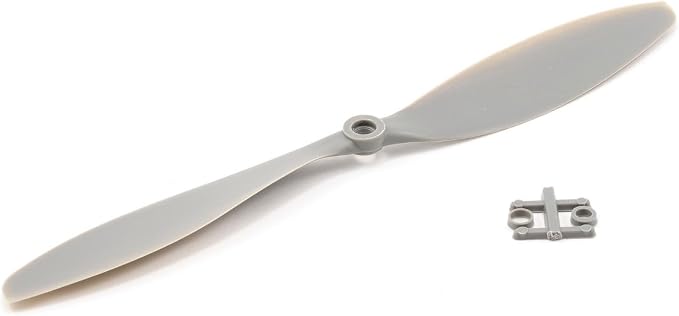
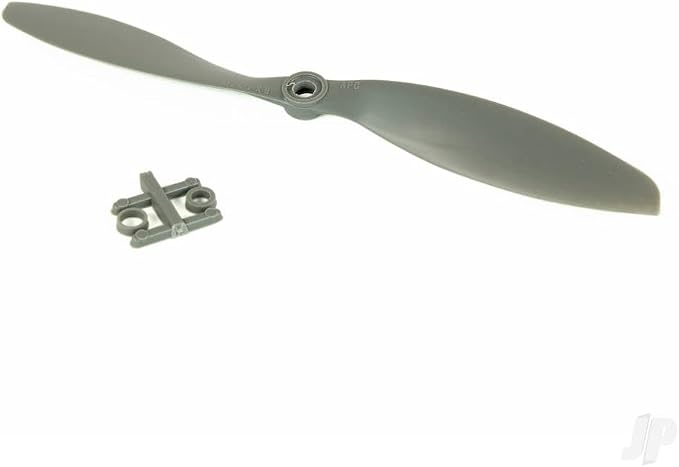
3. APC 8×4.7 Slow Flyer Electric Prop (APC08047SF)
Scale down for smaller planes — sub-40 inch wingspan park flyers, micro foamies, and anything running a smaller 2205–2212 style brushless motor. The 8×4.7 is probably the most-used prop on small foam trainers and beginner electrics. You get the same APC quality, just in a size that won’t clip the ground on a low-slung fuselage.
Specs: 8″ diameter | 4.7″ pitch | Slow-flyer electric series | Bushing set included
Best for: Small park flyers, 30–38″ wingspan foamies, micro RC trainers
Section 2 — Electric Sport & Performance Props
These are for faster aircraft and higher-Kv motors, aerobatic planes, and anyone who wants a bit more bite in their flying. Higher pitch, thinner blade profiles, designed to push speed rather than max out low-speed thrust.
🥇 4. Master Airscrew GF Series 10×7 Propeller
Master Airscrew has been making props in California since 1978, and their GF (glass-filled) series is a proven performance prop for when you’re flying anything above beginner pace. The 10×7 is the classic sport combo: enough diameter to produce serious thrust on a 1000–1200Kv motor, and the 7-inch pitch gives you good forward speed without being an absolute motor-destroyer at full throttle.
The glass-fiber reinforced nylon is flexible enough to survive the occasional unplanned ground contact better than carbon or thin electric styles. They arrive well balanced — not always the case with cheaper props. The one thing: at 21g the GF 10×7 is a touch heavier than APC thin-electrics, which matters if you’re obsessing over nose-heavy CG issues. For most of us, it’s not a problem.
Specs: 10″ diameter | 7″ pitch | GF series (glass-filled nylon) | 1/2″ hub, 1/4″ shaft | 21g | Tractor rotation
Best for: Sport electric planes, aerobatic trainers, faster builds, 900–1200Kv motors on 3S–4S
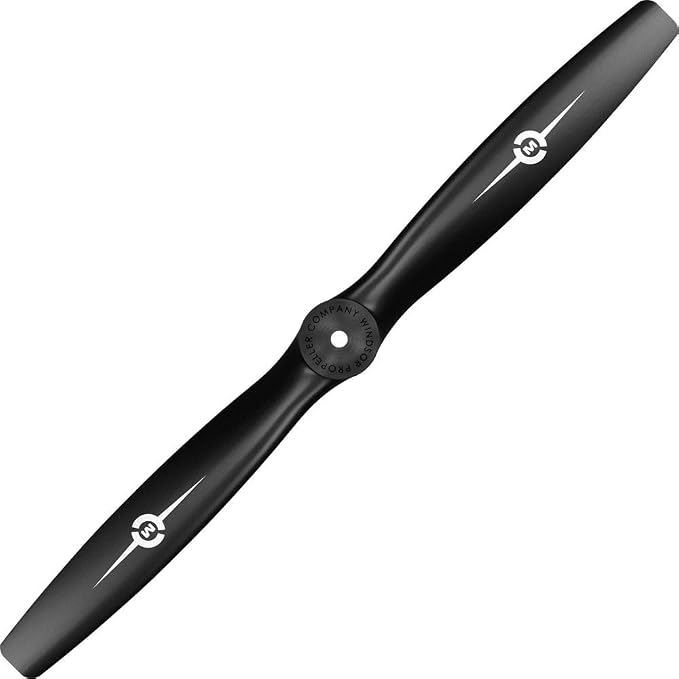
5. Master Airscrew Electric Only 8.5×6 Propeller
The 8.5×6 is a good fit for aerobatic foamies — your typical 3D park flyer or small aerobat running a 1300–1600Kv motor on 3S. The 6-inch pitch keeps torque manageable while the 8.5-inch diameter still gives decent low-speed authority for slow, controlled maneuvers. It’s also light at just 13.6g, and the bag includes adapter rings for 1/8″, 3/16″, 5/16″, 4mm, 5mm and 6mm shafts, so it fits most small motors without hunting for bushings.
Specs: 8.5″ diameter | 6″ pitch | Electric Only series | 7/16″ hub, 1/4″ shaft + adapter rings | 13.6g
Best for: 3D aerobatic foamies, slow-speed maneuvers, 1300–1600Kv motors
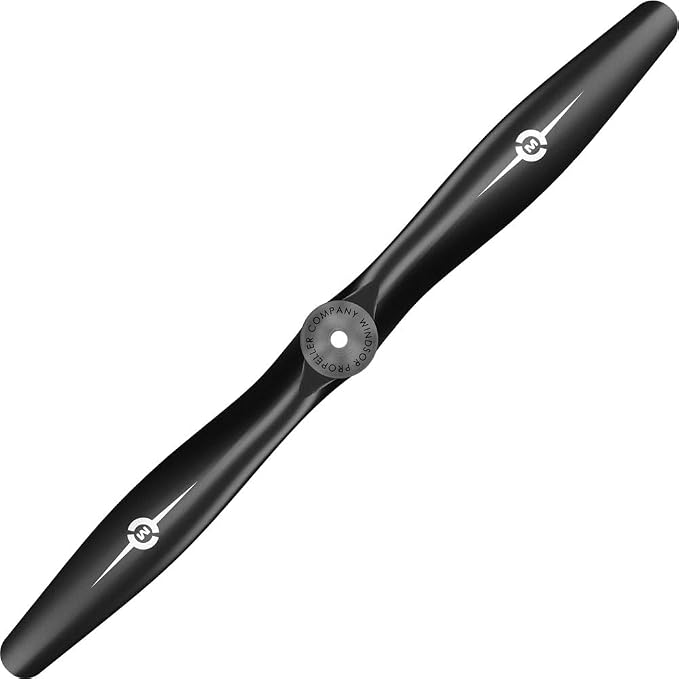
6. Master Airscrew GF Series 7×6 Performance Propeller
The GF (Glass Fiber) series from Master Airscrew is their general-purpose sport prop — works on both electric motors and glow engines, which is a nice flexibility. The 7×6 is sized for smaller sport aircraft: 30–36 inch wingspan electric sport planes, micro-size nitro trainers, and anything where you want a prop that’s genuinely balanced from the factory. Smaller props are harder to balance properly and cheaper brands often skip it. Master Airscrew doesn’t.
Specs: 7″ diameter | 6″ pitch | GF series | Glass-fiber composite | Electric and glow compatible
Best for: Small sport planes, micro nitro trainers, electric aircraft with smaller motors
Section 3 — Gas & Glow Propellers
Gas and glow engines are a different world from electric. They run at different RPM ranges (typically lower than brushless electric), produce vibration, and require props that can handle it. Thin electric carbon-fiber props are not designed for this — they can shatter at glow engine RPM. Use nylon, glass-filled nylon, or wood props designed for internal combustion engines.
🥇 7. XOAR PJA 15×10 Beechwood Propeller — Gas Engine
XOAR’s PJA series is probably the best wood prop you can buy on Amazon without going into custom territory. CNC-machined from premium beechwood, pre-balanced both horizontally and vertically — and it shows, they genuinely run smooth right out of the bag (which isn’t always guaranteed with wood, let me tell you). The 15×10 is a 41g tractor prop with an 8mm bore, sized for gas engines from around 15cc, so it covers the mid-range gas sport plane category well.
One thing I’ll flag: the center bore comes from the factory slightly undersized on some units. You might need to chase it with a drill bit to fit your prop adapter. It’s a minor annoyance but it comes up in reviews often enough to mention.
Specs: 15″ diameter | 10″ pitch | Premium beechwood | CNC machined | Pre-balanced | 41g, 8mm bore
Best for: Gas RC airplane engines from about 15cc, mid-size gas sport aircraft
One drawback: Bore can be slightly undersized — quick fix with the right drill bit
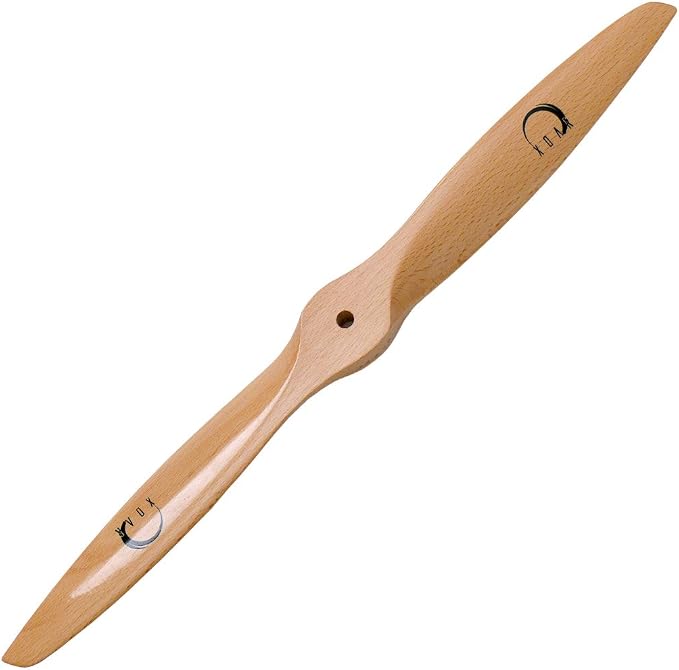
8. XOAR PJA 16×12 Beechwood Propeller — Gas Engine
Step up to the 16×12 and you’ve got XOAR’s recommendation for 15cc to 25cc gasoline engines when you want more speed — the higher 12-inch pitch trades some low-speed pull for a faster top end. Over 100 reviews on Amazon averaging close to 5 stars is hard to argue with. XOAR’s attention to finish and balance is genuinely evident at this size; a 16-inch wood prop that runs without vibration is worth paying the bit extra for. Always carry a spare — wood props are spectacular on the ground but they don’t argue with it.
Specs: 16″ diameter | 12″ pitch | Premium beechwood | CNC precision | Pre-balanced | 52g, 8mm bore
Best for: 15–25cc gas RC airplane engines, faster sport planes
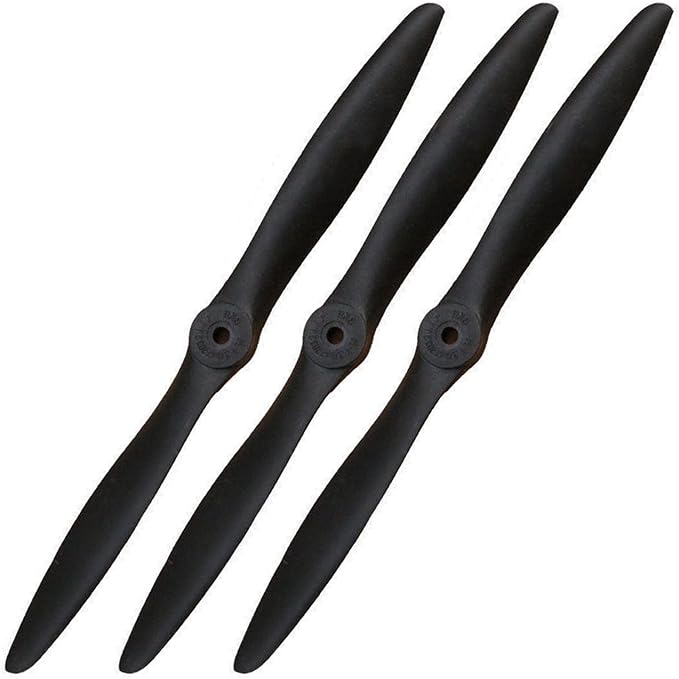
9. XOAR PJG 13×8 Nylon Propeller — Glow/Nitro Engines (3-Pack)
Glow/nitro engines need something more forgiving than wood — props take more abuse, and having to pull apart the whole nose to replace a shattered wood prop mid-field day gets old fast. The PJG series is XOAR’s glass-filled nylon line for nitro and glow engines, and the 13×8 is a good size for .46–.61 glow engines — the workhorse of the nitro trainer and sport plane world. Three-pack is sensible because they do snap. At the price, always buy in multiples.
Specs: 13″ diameter | 8″ pitch | Quality nylon fiber | Balance checked | 6mm bore | Pack of 3
Best for: .46–.61 glow engines, nitro sport planes and trainers
Section 4 — Scale & Warbird Props
If you’re flying a scale WWII warbird or a classic prop-driven scale model, the prop is part of the look. A grey plastic prop on a P-51 is technically fine but it looks wrong. Wood warbird props with authentic color schemes are widely available and they matter if scale appearance is part of the point for you.
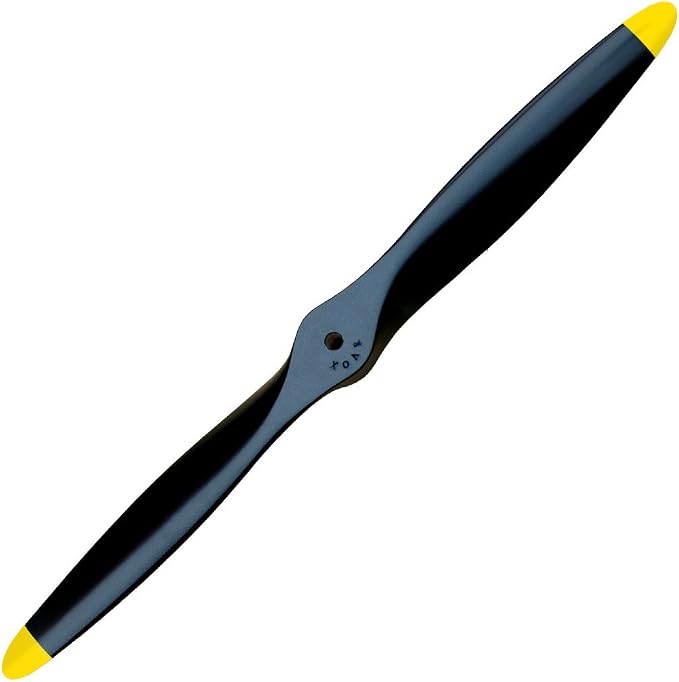
🥇 10. XOAR PJWWII 15×8 WWII Warbird Prop — Black with Yellow Tips
This is the prop that makes your warbird look like it actually belongs in the 1940s. XOAR’s PJWWII line is grade A beechwood, CNC-machined like the regular PJA, but finished in the classic black-with-yellow-tips colour scheme used on WWII combat aircraft. The 15×8 is sized for 20–30cc gas engines and fits most 1/5 to 1/6 scale warbirds in the 60–70 inch wingspan range.
Quality is excellent, balance is good out of the box. The only thing: these are gas-engine props. If you’re running an electric scale warbird, look at XOAR’s electric wood prop series (PJM-E) instead — using a gas prop on an electric motor setup isn’t advised due to RPM differences.
Specs: 15″ diameter | 8″ pitch | Grade A Beechwood | Black with yellow tips | Pre-balanced
Best for: Scale WWII warbirds, 20–30cc gas engines, 60–70″ wingspan scale models
11. XOAR PJG 14×6 Nylon Propeller — Glow/Nitro 3-Pack
When running a glow engine on a warbird and you don’t want wood (understandable if it’s a valuable build and field repairs are likely), the PJG 14×6 in a three-pack is the sensible choice. Same quality nylon as the 13×8 but sized up for .61–.90 four-stroke engines and bigger scale aircraft. The three-pack means you’re not grounded if you have a prop incident.
Specs: 14″ diameter | 6″ pitch | Nylon fiber | Pre-balanced | Pack of 3
Best for: .61–.90 four-stroke glow engines, larger scale warbirds and sport planes
Section 5 — Prop Balancers: Don’t Skip This
Right, this is the part where I tell you something you probably already know but might not be doing: balance your props. Even when the manufacturer says they’re pre-balanced. “Pre-balanced” means it was within spec at the factory. By the time it’s been shipped, stored on a shelf, and shipped again, things shift. A 10-inch prop running at 6,000 RPM with even minor imbalance introduces vibration that works through your airframe, loosens screws, and wears out motor bearings faster than necessary. A £15 balancer can save you a £40 motor. The math is pretty obvious.
🥇 12. Du-Bro Tru-Spin Prop Balancer (#499)
The Du-Bro 499 has been the standard in RC prop balancing since basically forever. If you look at what experienced builders have on their workbench, it’s usually this. The locking cone design centers the prop accurately on a hardened centerless-ground shaft, and the aluminum wheels turn with basically zero friction — meaning even tiny imbalances show up immediately. It handles everything from small electric props to large gas props, spinners, even car wheels.
Build quality is genuine — this thing lasts for years. The assembly instructions are decent. Some folks have had issues with thread tolerances on the mounting posts (it’s come up in reviews occasionally) but Du-Bro’s customer service is solid and they deal with it. For the price, there’s no better balancer on Amazon for RC airplane use.
Specs: Fully adjustable | Hardened steel shaft | Friction-free aluminum wheels | Handles all prop sizes | USA-made
Best for: All RC airplane props, gas, electric, glow — the only balancer you’ll ever need
One drawback: Minor assembly required; occasionally thread tolerance issues on the posts (rare, and Du-Bro will fix it)

Quick Comparison Table
| Propeller | Type | Size | Best For |
|---|---|---|---|
| APC 10×4.7 SF | Electric Slow Fly | 10×4.7″ | Trainers, foamies, 40–50″ wingspan |
| APC 10×4.7 SFP | Electric Slow Fly (Pusher) | 10×4.7″ | Pusher airframes, flying wings |
| APC 8×4.7 SF | Electric Slow Fly | 8×4.7″ | Small park flyers, micro aircraft |
| Master Airscrew GF 10×7 | Electric Sport | 10×7″ | Sport planes, aerobatic trainers |
| Master Airscrew EO 8.5×6 | Electric Sport/3D | 8.5×6″ | 3D aerobatic foamies, slow flying |
| Master Airscrew GF 7×6 | Electric/Glow | 7×6″ | Small sport planes, micro nitro |
| XOAR PJA 15×10 | Gas Wood | 15×10″ | Gas engines from ~15cc |
| XOAR PJA 16×12 | Gas Wood | 16×12″ | 15–25cc gas, faster sport |
| XOAR PJG 13×8 (3-Pack) | Glow/Nitro Nylon | 13×8″ | .46–.61 glow |
| XOAR PJWWII 15×8 | Gas Wood (Warbird) | 15×8″ | Scale WWII warbirds, 20–30cc gas |
| XOAR PJG 14×6 (3-Pack) | Glow/Nitro Nylon | 14×6″ | .61–.90 four-stroke glow |
| Du-Bro Tru-Spin #499 | Balancer (Tool) | All sizes | Balancing all props before every flight |
Propeller Sizing Quick Reference: Match Your Plane
Don’t want to dig through motor charts? Here’s a rough starting point by aircraft type:
- Micro park flyer / 30–36″ wingspan: 7×4 to 8×4.7 electric slow-fly
- Electric trainer / 40–50″ wingspan: 9×4.7 to 10×4.7 slow-fly, or 10×7 for faster flying
- Sport aerobatic electric / 40–48″: 9×6 to 10×6, glass-fiber nylon
- Electric glider / 60–80″ wingspan: 11×4.7 to 12×5 slow-fly, large diameter for climb efficiency
- .46–.61 glow four-stroke: 11×6 to 13×6 nylon or wood
- 15–25cc gas engine: 14×4 to 15×6 wood
- 25–35cc gas engine: 16×6 to 16×8 wood
These are starting points, not gospel. Your motor manufacturer’s recommended prop range is always the first thing to check.
Frequently Asked Questions
Can I use an electric prop on a glow/nitro engine?
No, and don’t try it. Electric props like APC thin-electric or Master Airscrew EO series are engineered for the lower torque and higher RPM of brushless motors. Glow and gas engines produce significantly more torque at different RPM ranges and an electric prop can flex, crack, or shatter. Always use nylon or wood props rated for IC engines.
Does propeller pitch really matter that much for casual flying?
Yeah, it does — probably more than most people expect. Wrong pitch is the most common reason a properly-matched motor/battery combo still underperforms. Too much pitch loads the motor, causes heat and current spikes. Too little pitch and the plane just won’t go anywhere no matter how much throttle you give it. Start within the motor manufacturer’s recommended prop range.
How often should I replace a prop?
After any significant ground strike, inspect carefully for cracks and stress marks. Even if it looks fine, a slightly damaged wood prop can let go at full throttle and that’s not a good situation. Nylon props are more forgiving but chips or nicks change the balance. If in doubt, replace it — they’re cheap enough that it’s not worth the risk.
Is prop balancing really necessary for every flight?
Not literally every flight, but you should balance every new prop before its first flight, and recheck after any crash or ground strike. Once properly balanced, a nylon prop will hold balance well. Wood props can shift with humidity, so check before long flying sessions. The Du-Bro 499 takes about two minutes once you know how to use it.
What does “SF” and “SFP” mean on APC props?
SF = Slow Flyer (standard tractor rotation). SFP = Slow Flyer Pusher (reverse rotation). If your motor turns clockwise when viewed from the front, you need a standard prop. If it turns counter-clockwise (pusher configuration), you need the P version. Getting this wrong means your prop is spinning the wrong way and you’re going absolutely nowhere fast.
Final Thoughts
Honestly, propeller choice isn’t that complicated once you understand the basic rules: match diameter and pitch to your motor’s recommended range, match material to your engine type, and always — always — balance before you fly. For most electric flyers, an APC slow-flyer or Master Airscrew electric prop is all you’ll ever need. Gas and glow flyers should seriously consider XOAR’s wood lineup; the quality is there and they look great on anything scale or semi-scale.
And buy a Du-Bro balancer. Just do it. It’s one of those tools you use for fifteen years and forget you even bought.
Continue Reading — Related Guides
- 🔗 Best Brushless Motors for RC Airplanes — Motor KV, size, and which props to pair them with
- 🔗 Best ESCs for RC Airplanes — Match your ESC amp rating to the prop and motor combo
- 🔗 Best LiPo Batteries for RC Airplanes — Cell count and C-rating affect what your prop can actually do
- 🔗 Best RC Transmitters for Airplane Flying — Radio systems from budget to pro
- 🔗 RC Airplane Materials List — Full overview of what goes into an RC airplane build
As an Amazon Associate, rcplanediy.com earns from qualifying purchases at no extra cost to you. Prices and availability are subject to change — always verify on Amazon before purchasing.