
Best FPV Cameras & Goggles for RC Airplanes: Getting Started Guide (2025)
So you’ve been flying your RC plane line-of-sight for a while, watching it disappear into a tiny dot in the sky, squinting, hoping it’ll come back in one piece. And then you see some guy at the field with a pair of goggles strapped to his face, grinning like an idiot while his plane does loops you can barely track from the ground. That’s FPV — first-person view — and once you try it on a fixed-wing plane, there’s really no going back.
The good news: getting into FPV for RC airplanes doesn’t have to cost a fortune. The not-so-good news: there are about a million products out there, half of which seem designed specifically to confuse beginners. I’ve spent more time than I care to admit sorting through the options, and in this guide I’m going to break it all down for you — cameras, video transmitters (VTX), goggles, and a couple of complete starter bundles. Fixed-wing FPV is its own animal compared to FPV drones, and I’ll point out where those differences actually matter for your buying decisions.
Whether you’re strapping a camera to a foam trainer or building a long-range cruiser from scratch, there’s a setup here that’ll work for you. Let’s get into it.
Quick note on legality: In the US, you need at least a Technician-class ham radio license to transmit FPV video legally in most cases. Check your local regulations before you fly.
Quick Picks — Best FPV Gear for RC Airplanes
| Category | Pick | Why |
|---|---|---|
| Best Budget Camera | RunCam Phoenix 2 Joshua Edition | 1000TVL, super WDR, great low light, 4:3/16:9 switchable |
| Best Budget Goggles | EV800D (SpeedyBee) | 5″ screen, DVR, detachable monitor, easy to use |
| Best Starter AIO | AKK KC02 Camera + VTX Bundle | Everything in one box, beginner-friendly |
| Best Camera for Low Light | Caddx Ratel 2 | Starlight sensor, incredible night performance |
| Best Mid-Range VTX | AKK X2-Ultimate 1000mW | Switchable power, smart audio, proven range |
What to Look For: FPV System Basics for RC Airplanes
Before you spend any money, it helps to understand what an FPV system actually is. You need three basic components: a camera on the plane, a video transmitter (VTX) that sends the signal wirelessly, and a display — either goggles or a monitor — on the ground to receive and show the video feed.
For fixed-wing RC planes specifically, there are a few things that matter more than they would for a drone racer:
- Weight — Every gram counts on a plane. A heavy camera or VTX can throw off the balance, especially on smaller models. Aim for the lightest gear you can get away with.
- VTX power output — Planes fly farther than drones. A 25mW transmitter that’s fine for backyard drone flying will be completely inadequate when your plane is 500 meters away. For RC airplanes, 200mW minimum, 600mW or 1000mW for longer range flying.
- Wide dynamic range (WDR) — Flying outdoors means constant changes between bright sky and darker ground. A camera with WDR handles this much better than one without. Don’t skip this.
- Analog vs Digital — Digital systems (DJI, Walksnail) give you stunning HD video but cost significantly more and add weight. Analog is cheaper, lighter, and still very flyable. For a beginner setup, start with analog.
- Goggles vs Monitor — Goggles are more immersive. A monitor (handheld screen) is cheaper and easier to share with others at the field. Some goggles like the EV800D are actually detachable — you get both.
Now let’s get into the products.
Section 1: FPV Cameras for RC Airplanes
The camera is what your eyes will be, so don’t cheap out here. That said, you don’t need to spend a ton. A good analog FPV camera in the $20–$40 range does the job extremely well for fixed-wing flying.
1. RunCam Phoenix 2 Joshua Edition — The Reliable Workhorse
The RunCam Phoenix 2 Joshua Edition is one of the best bang-for-buck analog cameras you can put on an RC airplane right now. It uses an upgraded 1/2″ super global WDR image sensor, which handles the bright-sky-versus-dark-ground contrast you get on every plane flight much better than older budget cams, and RunCam rates its low-light performance above their own Eagle. Resolution is 1000TVL through a 2.1mm lens with a 155° field of view, and the 6-layer glass lens (f/2.0) keeps red lens flare and purple fringing down when you fly toward the sun. You can switch between 4:3 and 16:9 to match your goggles or monitor, and latency is low. This Joshua Edition is the UART-control version, so camera settings can be changed from your flight controller. On the downside, it’s a micro-size camera built for freestyle quads, so you may need an adapter bracket to mount it in a bigger plane’s nose. Still a solid, proven choice though.

2. Caddx Ratel 2 — Best Low-Light Performance
If you fly early mornings, late evenings, or just somewhere that’s not bathed in perfect noon sunshine, the Caddx Ratel 2 is a genuinely impressive camera. It uses a 1/1.8″ starlight sensor that performs in conditions where most FPV cameras give up and show you a grainy mess. The 1200TVL resolution is a clear step up from older 600TVL cameras, and the super WDR handles the sky-vs-ground brightness issue really well. For planes that cruise around doing scenic flying or aerial surveys, this is excellent. The micro size (19x19mm) also means it fits in tight fuselages without drama. One thing to be aware of: some users on Amazon have mentioned quality control isn’t perfect — occasionally you get a dud. Buy from a reputable seller and you’ll mostly be fine. The Ratel 2 V2 with the metal housing is more crash-resistant if durability is a concern.

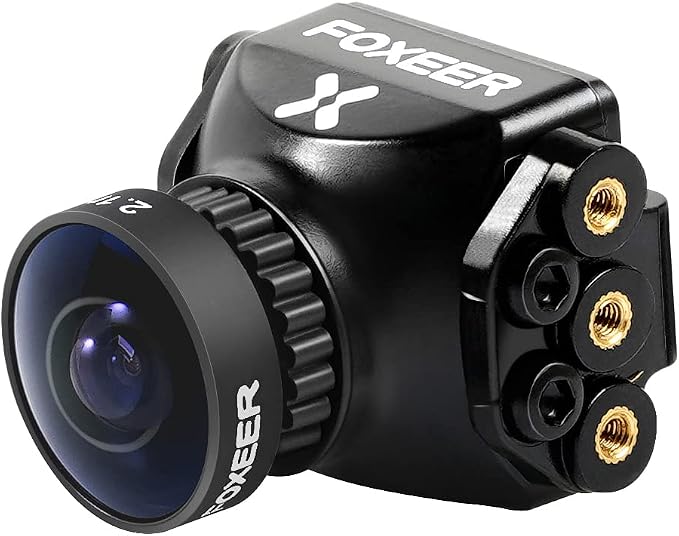
3. Foxeer Razer Mini — Budget Friendly with Decent WDR
The Foxeer Razer Mini is a CMOS 1200TVL camera that punches above its weight class for the price. The WDR isn’t quite as impressive as the Caddx Ratel in extreme conditions, but for normal daylight flying it’s more than adequate. It’s tiny, light, and switchable between NTSC/PAL and 4:3/16:9 aspect ratios — handy if you’re not sure what your goggles support. The OSD board is included in the package. Some pilots prefer CMOS cameras for their more saturated, punchy colors compared to CCD. It’s a bit subjective. For a first FPV plane build on a tighter budget, this is worth a look. Not the most thrilling camera ever built, but it works and it’s reliable.
Section 2: FPV Video Transmitters (VTX) for RC Airplanes
The VTX is what gets your video signal from the plane to your goggles. For RC airplanes — where you’re potentially flying hundreds of meters away rather than doing proximity drone maneuvers — VTX power output really matters. Don’t buy a 25mW VTX thinking it’ll be enough. It won’t. Aim for 200mW at a minimum; 600mW or 1000mW is better for anything beyond your immediate backyard.
4. AKK X2-Ultimate 5.8GHz Switchable VTX (up to 1000mW)
This is probably the most popular mid-range VTX for RC airplane builders and it’s easy to see why. The switchable power output (0.01mW / 25mW / 200mW / 600mW / 1000mW) means you can run in pit mode on the bench, low power for close-in flying, or crank it up to 1000mW for long-range cruising. Smart audio support lets you change channels via your radio transmitter. One user on Amazon actually flew it on a fixed-wing plane and noted his receiver signal gave out before his video signal at 600mW — which is exactly what you want. It does run a bit hot, which is typical for high-power VTXs. Add a small heatsink if you’re running it at 600mW+ regularly. Has a display screen for easy channel/power selection, which is nice when you’re fiddling with it at the field.

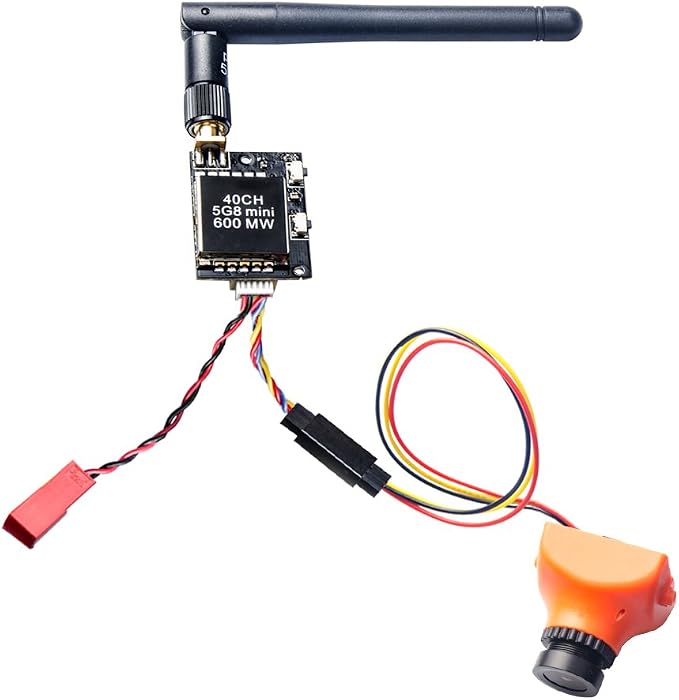
5. AKK KC02 Camera + VTX Bundle — Best Starter Package
If you just want to grab one thing and get flying without sorting out compatibility between a separate camera and VTX, the AKK KC02 bundle is a solid option. You get a 600TVL Sony CCD camera and a 600mW 5.8GHz VTX in one package with a matching wiring harness. It’s been around for years and has hundreds of reviews. The camera image quality is good, the range at 600mW is decent for RC airplane flying. Fair warning: some users have reported wiring harness issues and the occasional unit arriving with swapped positive/negative leads — yes, really, double-check with a multimeter before connecting anything important. AKK customer service seems to be decent about replacements when things go wrong. For a first-time FPV setup, the convenience of a matched bundle outweighs these annoyances.
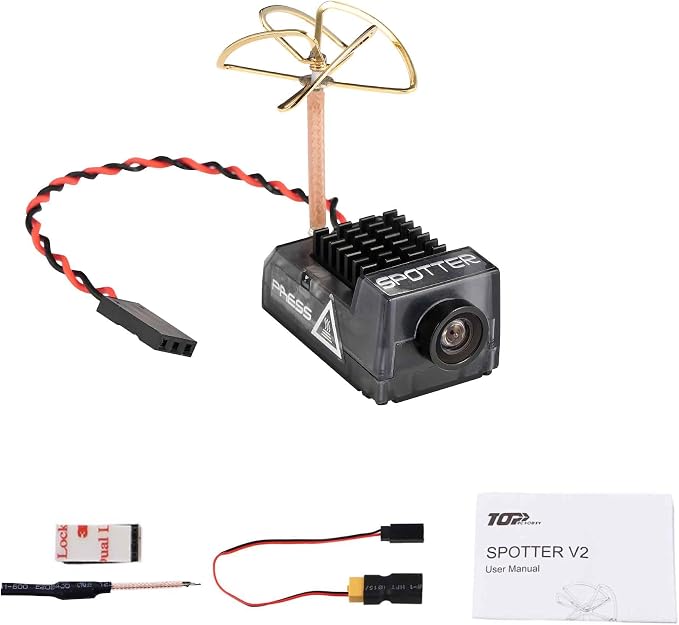
6. RunCam Spotter V2 AIO — Tiny All-in-One for Micro Planes
For smaller RC airplanes and micro builds where weight is critical, the RunCam Spotter V2 is an all-in-one camera and transmitter unit that weighs almost nothing. The 700TVL FOV170 camera is integrated with a 5.8GHz 40CH transmitter with adjustable power from 20mW to 200mW. It also has OSD and an integrated microphone — hearing your motor through the goggles is actually useful for monitoring throttle and motor health. The 200mW max power is the main limitation — you won’t want to fly this far from you. For small park flyers, trainers, and anything under maybe 60cm wingspan, it’s a great fit. Not ideal for long-range fixed-wing cruising.
Section 3: FPV Goggles for RC Airplanes
Your goggles are the interface between you and the plane. Get a bad pair and FPV becomes uncomfortable and frustrating. Get a decent pair and suddenly you’re flying with a huge grin on your face. Here’s what I’d recommend at different budget points.
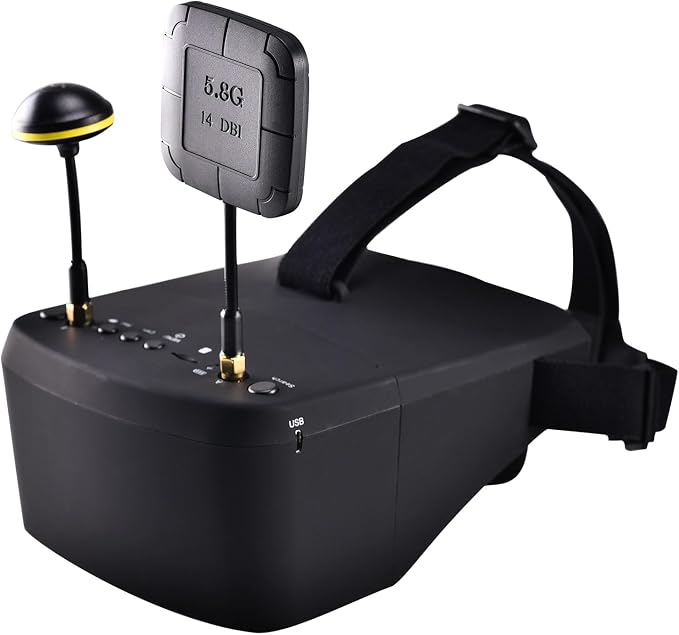
7. EV800D FPV Goggles (SpeedyBee) — Best Beginner Goggles
The EV800D is the classic entry-level recommendation for FPV goggles, and it’s held that position for years for a reason. The 5-inch 800×480 LCD screen is large enough to give you a decent field of view, the built-in 2000mAh battery gets you about 2 hours of flying, and the 5.8GHz 40CH receiver with dual diversity antennas handles signal reception well. What really sets it apart at this price is the detachable screen — you can pop the monitor off and use it as a handheld display, which is great for showing spectators your video feed or working on your plane while watching the camera output. The DVR function lets you record flights to a microSD card, which is a nice bonus. Build quality is plasticky and feels cheap, honestly. If you wear glasses, fitting them inside can be awkward. And the image quality is 800×480 — it works but don’t expect crisp HD visuals. For a first pair of FPV goggles for RC airplanes, this is still the smart starting point before committing to a more expensive system.
Section 4: FPV Monitors — For Those Who Prefer Not Wearing Goggles
Some pilots prefer an FPV monitor over goggles — especially if they want to comply strictly with line-of-sight rules, or want others at the field to see what they’re seeing. A monitor also means you keep your face exposed and can occasionally glance up at the actual plane, which some pilots prefer for safety. Here are a couple of solid options.
8. SoloGood 4.3″ FPV Monitor with DVR
A compact 4.3-inch IPS display with 5.8GHz 40CH reception, DVR recording, and 800×480 resolution. The IPS panel looks noticeably better than TN screens found on cheaper monitors — colors are more accurate and the viewing angle is better, so people standing next to you can actually see the screen. It runs off a built-in battery, so no worrying about a power connection at the field. At 4.3 inches the screen isn’t huge, and flying FPV with a monitor is a different experience than goggles. But for RC airplane flying where you’re mainly watching a stabilized forward view rather than twitchy drone footage, it works pretty well. Also a decent option as a secondary display — mount it on your transmitter so a friend can watch while you fly.

9. Flysight Black Pearl RC801 7″ FPV Monitor with Sun Hood
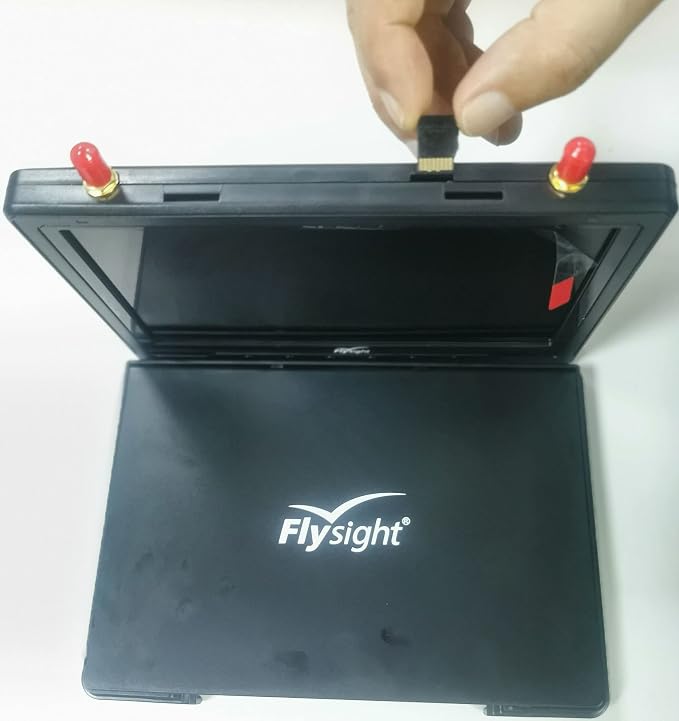
If you’re serious about using a monitor rather than goggles — particularly for longer, more relaxed cruising flights — a 7-inch display is considerably easier to see, especially in bright sunlight. The Black Pearl RC801 has a fold-able rigid sun hood that shields the screen from glare, and its 1024×600 matte LCD is a real upgrade over 4.3-inch monitors. The built-in 5.8GHz 40CH diversity receiver takes two antennas and doesn’t blue-screen when the signal gets weak, there’s an integrated DVR for recording flights, and a removable 11.1V 1000mAh LiPo powers it without extra cables. It’s physically bigger to carry, but for a permanent field setup where you’ve got a table or tray, the larger screen makes a real difference for comfortable flying. Works with any standard 5.8GHz FPV camera and VTX setup.
Section 5: FPV Antennas — The Cheap Upgrade That Actually Matters
Here’s something most beginner FPV guides gloss over: the stock antennas that come with budget goggles and VTXs are often terrible. Swapping them out for quality circular polarized antennas can dramatically improve your range and reduce video breakup. It’s one of the cheapest and most impactful upgrades you can make to any FPV system.
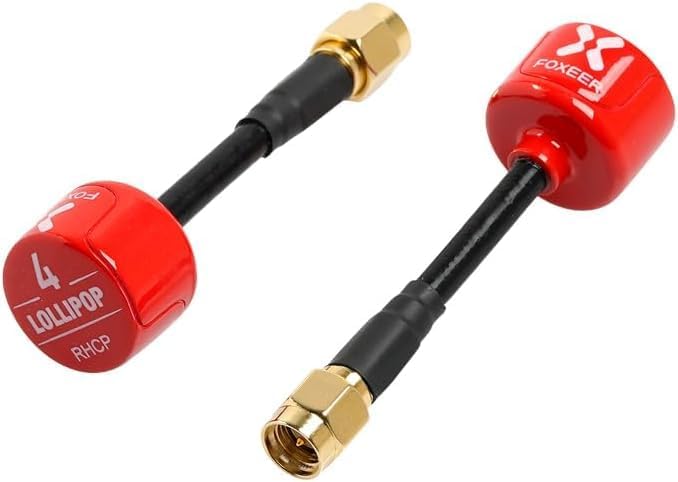
10. Foxeer Lollipop 4 Circular Polarized Antennas
The Foxeer Lollipop series has been a favorite in the FPV community for years. Circular polarized antennas are significantly better for FPV flying than the basic dipole antennas that come stock with most budget gear. They handle multi-path reflections better, which means less video interference and cleaner signal at range. The Lollipop 4 is relatively compact and works well on both VTXs on the plane and on diversity-receiver goggles. Important: make sure your camera and goggles have matching polarization (both RHCP or both LHCP). Check your connector type before ordering — SMA and RP-SMA are different things, and many beginners mix them up. Don’t be that guy.
11. AKK FPV Cloverleaf Antenna Pair — Budget Antenna Upgrade
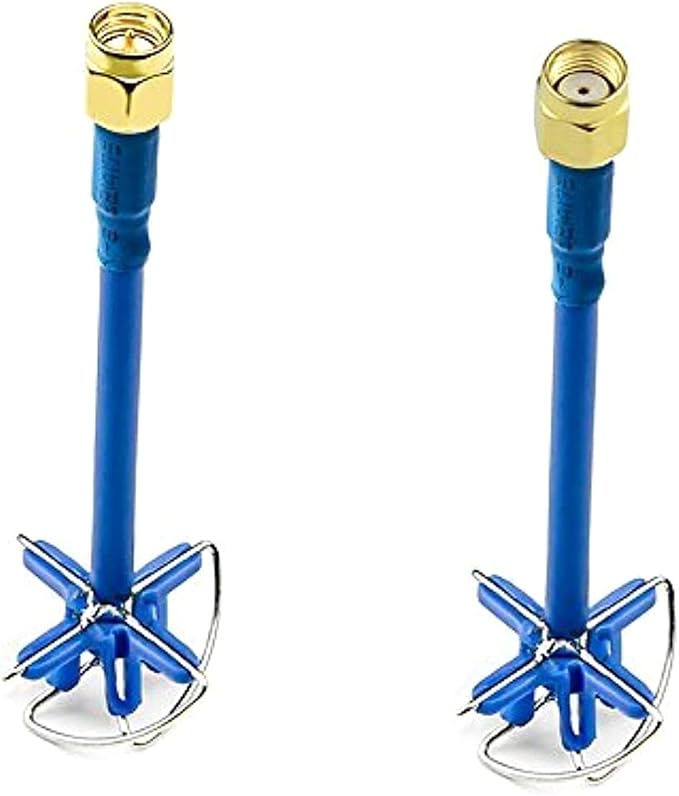
If you want a simpler budget antenna upgrade before committing to Foxeer or TBS, AKK makes a basic cloverleaf (circular polarized) antenna that’s a solid step up from the flat dipole sticks. Sold in pairs so you can do both your VTX and your goggle receiver at once. These aren’t as refined as the Foxeer Lollipops but they’re considerably better than stock, and at this price it’s hard to argue. Connector check still applies — know whether you need SMA or RP-SMA before hitting Buy.
Comparison Table: FPV Systems for RC Airplanes
| Product | Type | Best For | Key Spec |
|---|---|---|---|
| RunCam Phoenix 2 Joshua | Camera | Most RC airplane builds | 1000TVL, 1/2″ WDR sensor, 155° FOV |
| Caddx Ratel 2 | Camera | Low light / scenic flying | 1200TVL Starlight, super WDR |
| Foxeer Razer Mini | Camera | Budget builds | 1200TVL CMOS, 90dB WDR |
| AKK X2-Ultimate | VTX | Long-range plane flying | 25mW-1000mW switchable |
| AKK KC02 Bundle | Camera + VTX | First-time FPV setup | 600TVL + 600mW, matched wiring |
| RunCam Spotter V2 | AIO Camera+VTX | Micro / lightweight planes | 700TVL, 20-200mW, 5.2g |
| EV800D Goggles | Goggles | Best beginner goggles | 5″ 800×480, DVR, detachable |
| SoloGood 4.3″ Monitor | Monitor | No-goggles flying | 4.3″ IPS, DVR, 5.8GHz |
| Foxeer Lollipop 4 | Antenna | Range upgrade | RHCP circular polarized |
How to Set Up Your First FPV System for an RC Airplane
Getting this stuff working is actually not that complicated once you understand the signal flow: Camera > VTX (on the plane) > Radio waves through the air > Goggles or receiver (on the ground). Here’s the basic install process:
1. Mount the camera in the nose or fuselage of your plane, angled slightly downward (around 10-15 degrees) so you can see the horizon comfortably while flying at normal cruise speed. Too flat and you’ll only see sky. Too far down and landing approach becomes hard to judge.
2. Connect the camera to the VTX using the supplied video cable. Most FPV cameras use a standard CVBS analog video signal. The VTX also needs power — wire it to your battery through a BEC or voltage regulator if needed. Check the VTX input voltage range first.
3. Mount the VTX somewhere with airflow — these things get warm, especially at higher power levels. Make sure the antenna is secure and positioned to radiate the signal effectively (generally pointing down or sideways when the plane is level, not forward into the fuselage).
4. Power on the system on the ground first and confirm your goggles are picking up the video before you fly. Channel-match the VTX and goggles, and test the whole chain works.
5. Use pit mode (0mW transmit) on your VTX when the plane is powered up on the bench to avoid interfering with other pilots at the field.
For a deeper dive into the electronics side of building your plane, check out our guide on Best ESCs for RC Airplanes and our LiPo Battery Guide — those two components are closely related to how you’ll power your FPV gear.
FAQ: FPV Cameras and Goggles for RC Airplanes
Can I use FPV on any RC airplane?
Mostly yes, as long as the plane is big enough to carry the weight of the camera and VTX without affecting flight performance significantly. A typical analog FPV setup (camera plus small VTX) weighs around 40-60 grams. Smaller micro planes might struggle with that, but anything with a 90cm+ wingspan handles it without issues. If you’re flying a small foam trainer, look at the AIO options like the RunCam Spotter V2 which are as light as possible.
Analog vs Digital FPV — which should I buy for an RC airplane?
For a first setup, analog. It’s cheaper, lighter, has less latency (important for flying), and there are far more product options at accessible price points. Digital systems like DJI O3 give you stunning HD video but cost several times more and add meaningful weight. Once you’re sure FPV flying is for you and you want to upgrade, digital is worth considering. But start analog.
What range should I expect from a 5.8GHz FPV system?
With a 200mW VTX and standard antennas, realistically expect solid video out to 300-500 meters in open areas. At 600mW with decent circular polarized antennas, you can push to 1km or beyond. Video will start getting static before cutting out completely — you’ll have some warning before total signal loss. Always set up a failsafe on your RC system so the plane returns to level flight if it loses signal.
Do I need a ham radio license for FPV?
In the US, the FCC requires a ham radio license (Technician class minimum) to legally operate FPV video transmitters. This applies to most 5.8GHz video transmitters above 25mW. The Technician license exam is not difficult — there are free study resources online and most people pass with a few hours of prep. It’s worth doing properly rather than flying without it.
Can I use FPV goggles designed for drone racing on my RC airplane?
Yes, completely. FPV goggles don’t care whether the camera is on a drone, airplane, boat, or car — they just receive whatever 5.8GHz video signal is being transmitted. The EV800D and similar goggles work just as well for fixed-wing flying as they do for drone racing. In fact, the calmer, more horizon-stable footage from a fixed-wing plane is actually a bit easier to fly with than the aggressive angles you see in drone racing footage.
Final Thoughts
FPV on RC airplanes is genuinely one of the best things you can do in this hobby. There’s something about cruising at altitude, looking out over a landscape from what feels like inside the cockpit, that never really gets old. The setup cost has come down a lot over the years — a complete beginner analog system (camera plus VTX plus goggles) can be had for under $100 if you’re careful about what you buy.
Start simple: a RunCam Phoenix 2 or the AKK KC02 bundle for the plane, an EV800D for your face, and a decent set of circular polarized antennas for both. That combination has gotten thousands of RC airplane pilots into FPV without breaking the bank. Once you’re hooked — and you will be — there’s always the upgrade path to digital systems, better goggles, long-range setups and beyond.
For more on building and equipping your plane, check out our guides on Best Brushless Motors for RC Airplanes, Best RC Transmitters for Airplane Flying, and if you’re still at the kit-selection stage, our Best RC Airplanes for Beginners guide is a good place to start.
Good luck out there — and watch out for trees.