
So you’ve got your airplane sorted. Maybe a balsa build you spent three weekends on, or a foam RTF you ripped out of the box last Saturday. Either way — the plane’s not everything. The stuff around it? That’s where things get interesting, and honestly, where things can go wrong if you’re not a bit prepared.
I’ve been flying long enough to know that showing up to the field without a prop balancer or a decent field bag is the kind of thing that turns a good day into a wasted trip. Ask me how I know. Actually, don’t. It involves a cracked prop, no spares, and a 45-minute drive home in silence.
This list covers the RC airplane accessories I think every pilot actually needs — not the fancy stuff you buy once and leave in a drawer. We’re talking practical gear: field organisation, safety, electronics maintenance, and a few things you didn’t know you were missing until you were missing them.
Whether you’re electric-only or still messing around with nitro (respect, by the way), there’s something here for you. All products are available on Amazon, from decent brands, and well-reviewed. Let’s get into it.
Quick Picks
| Category | Our Pick |
|---|---|
| 🏆 Best Overall Field Bag | Hangar 9 Flight Pack Field Box |
| 💰 Budget Must-Have | Du-Bro Tru-Spin Prop Balancer |
| 🔋 Battery Safety | Zeee Fireproof LiPo Storage Bag |
| 🔧 Electronics Check | RC Servo Tester / Battery Checker Combo |
| ⛽ Fuel Pilots | Hangar 9 Ultra Fuel Pump |
What to Look For in RC Airplane Accessories
The short answer: stuff that actually saves your bacon at the field. Here’s what I consider before buying anything in this category:
Build quality vs. price. Most RC accessories don’t need to be expensive to be good. A prop balancer is a prop balancer. A fuel pump is a fuel pump. What you want is something that doesn’t break on the third use or corrode after a season outdoors. Brands like Du-Bro and Hangar 9 have been around long enough to know what they’re doing.
Does it travel well? Everything you use regularly needs to survive being chucked in a bag, driven over gravel, and unpacked with cold hands. I’ve broken two “precision” instruments that way. Think about it before you buy.
Electric vs. nitro/gas needs. Electric flyers have it simpler in terms of field kit, honestly. But if you’re running glow or gas engines, you need more gear — igniters, fuel pumps, starters. Budget and plan accordingly.
LiPo safety. This one isn’t optional. If you’re flying electrics and not using a fireproof bag for your batteries, you’re gambling. Cheap insurance compared to a house fire.
1. Field Organisation & Storage
You’d be amazed how much time you waste at the field looking for stuff. A decent field box or bag is the closest thing to a flying day cure-all I’ve found. Everything has a place, you know where it is, and you can actually enjoy flying instead of digging around in a carrier bag like a maniac.
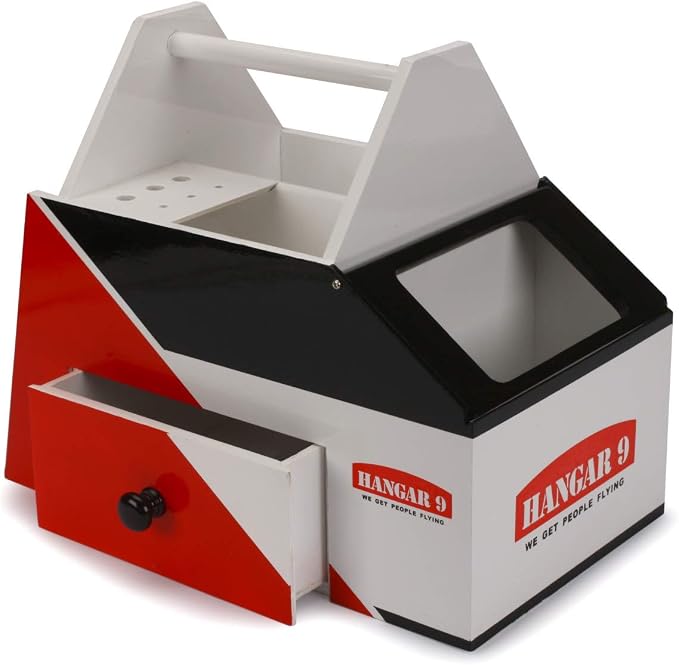
Hangar 9 Flight Pack Field Box
This is a proper field box and it’s been around for years, which tells you something. It’s a bare wood kit you assemble yourself (yes, some building required — appropriate for this hobby), and it ends up solid, roomy, and well thought out. There are compartments for tools, prop holders on the outside, and it’ll fit a 12V battery inside if you’re running glow gear. The only mild annoyance is that it ships unassembled and needs painting — but honestly for nitro guys this is probably fine because you’ve already spent time building a plane, this is nothing.
Good choice for: nitro and gas flyers, anyone who wants a traditional tote setup that’s actually tough.
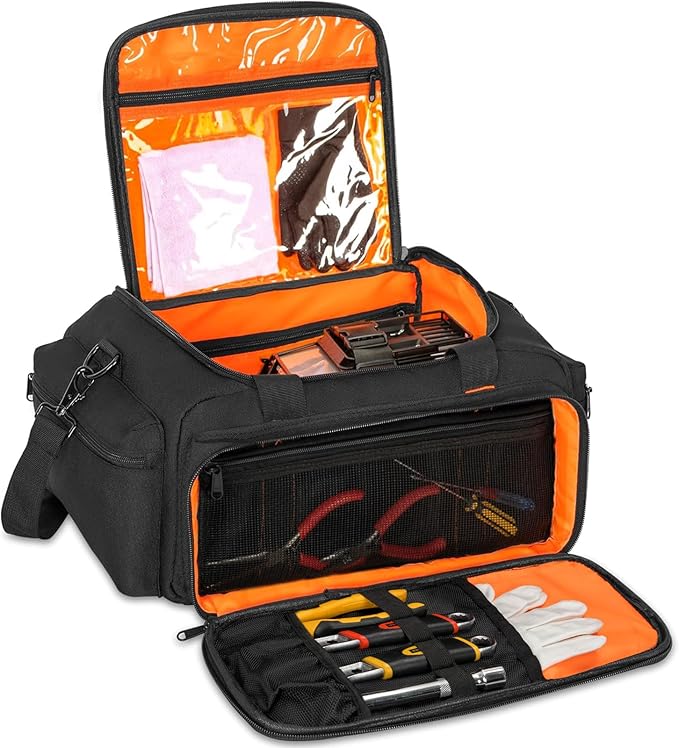
Portable RC Repair Tool Bag / Field Bag
Not everyone needs a full field box, and if you’re running electric gear mostly, a decent tool bag is all you need. There are several solid options on Amazon — look for something with multiple zippered compartments, a carrying handle, and enough depth to hold a few LiPo packs alongside your tools. These smaller bags are great for travelling light, and they don’t draw weird looks in a public park the way a giant wooden crate does. The downside versus a proper field box is no prop rack and usually no 12V power setup, but for electric flyers that’s not really a problem.
Good choice for: electric pilots, park flyers, casual outings where you don’t want to haul a lot of gear.
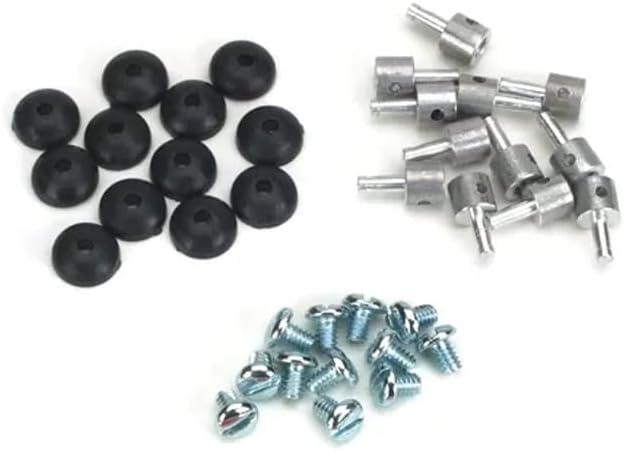
Du-Bro E/Z Connector Set
These little connectors are something every builder should have a pack of. They make pushrod-to-servo horn connections dead easy — you can disconnect and reconnect control surfaces in seconds. Sounds minor but on build day or at a repair session, they save a ton of frustration. Been making these for decades, quality is fine, works as advertised.
2. Propeller Balancing
I’d guess maybe half the vibration issues people complain about in their planes come down to an out-of-balance prop. It transmits right through the airframe, beats up your servo gear, rattles your electronics loose over time, and generally makes everything feel wrong. Balancing your props is a five-minute job once you have the right tool. There’s really no excuse not to.
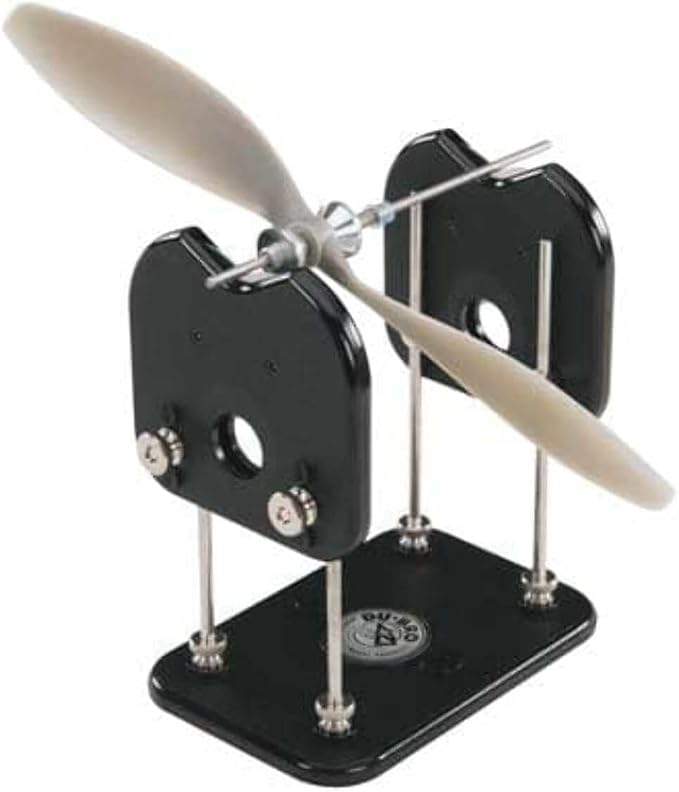
Du-Bro Tru-Spin Prop Balancer
This is the gold standard for prop balancing in the RC world — hardened steel balancing shaft, friction-free aluminium wheels, locking cones that actually center your prop properly. Works for props of basically any size, boat props, spinners, rotor heads — whatever you need balanced. It’s not cheap for what it is visually (it’s a shaft on a stand, let’s be honest), but the precision is real and it lasts forever. I’ve had mine for years without any complaints. If you’re serious about your builds and your flying, this is the one to get.
3. LiPo Battery Safety Gear
Alright, look — LiPo batteries are a fantastic power source for RC planes. Light, powerful, high discharge. They’re also genuinely capable of catching fire if they’re damaged, charged wrong, or stored improperly. I’m not trying to scare anyone off the hobby, I fly electrics almost exclusively at this point. But you do need to take battery safety seriously. It’s not complicated, it just requires the right gear and a bit of habit-building.
Zeee Fireproof LiPo Battery Storage Bag
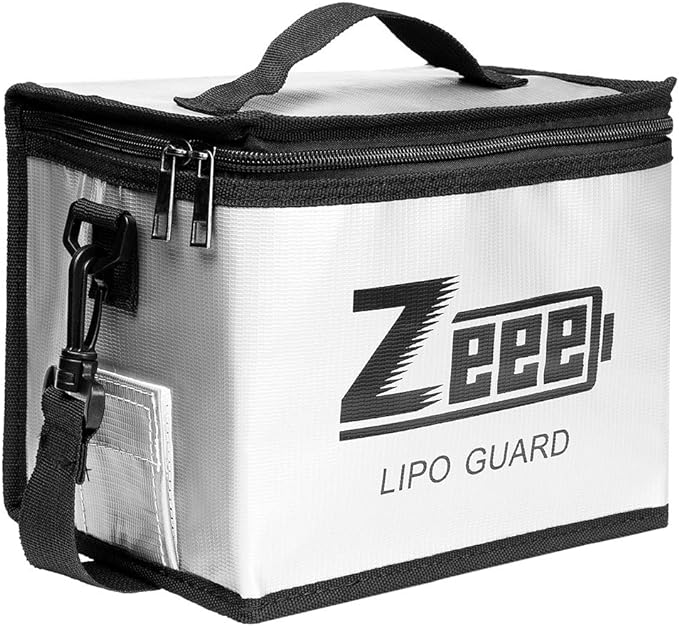
Zeee makes solid LiPo products and their fireproof storage bag is one of the most popular on Amazon for good reason. It’s got a multilayer construction — inner fireproof fabric, flame-retardant interlayer, PVC outer layer — and it’s roomy enough to hold a decent stack of packs. Not 100% fireproof in a serious fire situation (nothing cheap is), but it provides genuine containment and reduces the risk significantly during charging or storage. It’s also just a convenient way to keep all your packs in one place. Fair warning from the reviews: don’t expect miracle fire protection, but do expect it to do a solid job reducing risk. Most people use these exactly as intended without incident.
LiPo Battery Voltage Checker / Cell Balancer
Before every flight you should check your battery voltage. It takes about ten seconds and it can save you from flying a half-dead pack, which causes brownouts, motor stutters, and potentially a crash. A standalone voltage checker plugs into your balance lead and reads out each cell. Incredibly simple, cheap, and honestly essential if you’re using any battery that doesn’t have a built-in readout. Look for one that displays individual cell voltages, not just the pack total. The Tenergy 5-in-1 meter linked below covers 2S–7S LiPo, LiFePO4 and Li-ion packs, reads each cell, shows internal resistance and can balance or storage-discharge a pack — plenty for any RC airplane battery.

DEVMO On/Off Switch with LED & Charge Port (2 Pack)
This is one of those small things that’s just genuinely useful. Heavy-duty switch with a bright LED status light and a built-in charge port so you can top up your receiver battery without pulling the whole thing out of the fuselage. Works with most RC setups, rated to 4.6A which handles just about any plane electronics load. These are sold in pairs so you can kit out more than one plane. The LED light alone is worth it — you can tell at a glance whether your plane is on or off, which sounds obvious until you’ve packed up a plane that’s been sitting on for two hours and wonders why the battery is dead.

4. Electronics Testing & Maintenance Tools
These are the tools you use before you fly, not during — and they save you from finding out something was wrong at 50 feet up. A servo tester, a battery checker, a multimeter if you do any wiring work. Not glamorous, but genuinely valuable kit for any builder or regular pilot.
RC Servo Tester / ESC Consistency Tester
A servo tester is something every builder should have, full stop. You plug your servos into it (up to three at once on most models), power it from a small LiPo or battery pack, and you can run them through their range, test neutral position, and check for jitter or inconsistency — all before they’re installed in the plane. Saves you finding out a servo is cooked after you’ve already glued the servo mount in. Also useful at the field if something is behaving oddly and you want to isolate whether it’s the servo or the signal chain. There are loads of these on Amazon, most under $15, and they all do basically the same job well. The HJ digital tester linked below is a popular, well-reviewed example.

OGRC RC Digital Servo Tester / Centering Tool
A bit more streamlined than multi-function testers — this one is specifically built for centering and testing servos with solid accuracy. It’s small enough to bring to the field in a pocket, which is actually its main appeal. Reviewers consistently say it works reliably and feels like a genuinely useful tool rather than a cheap widget. Runs on a 1S LiPo or the balance lead of a larger pack. If all you want is to center your servos cleanly and test before flight, this does it without fuss.

Digital Multimeter (Klein Tools or Similar)
If you do any wiring at all — soldering connectors, building power harnesses, diagnosing why something isn’t working — you need a multimeter. Not an RC-specific one, just a decent digital multimeter. Klein Tools, Fluke, AstroAI — any of the well-reviewed brands on Amazon will do the job. Look for one with continuity test (the beep function) and DC voltage measurement at minimum. AC measurement and resistance are handy too. Don’t buy a $4 no-name unit, they tend to be unreliable and occasionally dangerous. Spend a little more and get something that’ll last.

5. Fuel System Accessories (Nitro & Gas Flyers)
If you’re running glow or gas engines, your accessory list is a bit longer than the electric crowd. You need a way to get fuel in and out of tanks, glow plug management, and ideally a way to keep everything organised without smelling like methanol all day. Here’s the core stuff worth getting from Amazon.
Hangar 9 Ultra Fuel Pump — Manual Gas & Glow (HAN155)
Solid, straightforward manual fuel pump that handles both gas and glow fuel. Rated well — over 200 reviews on Amazon, averaging 4.4 stars — and it works consistently without requiring batteries or power. That’s the appeal of a manual pump over electric: nothing to charge, nothing to fail, and it still gets fuel where it needs to go. The Hangar 9 version is a step up in build quality from the generic options, and for something you’re going to use every single flying session, it’s worth having something that doesn’t feel like it’s going to fall apart. The hose connections are decent and it doesn’t drip everywhere like some cheaper alternatives I’ve tried.

Du-Bro Tygon Fuel Tubing (5/32″ ID)
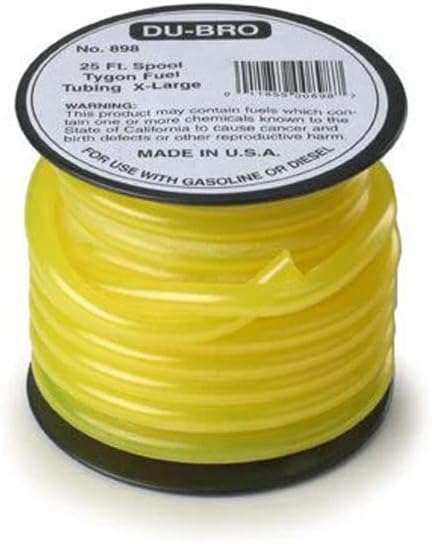
Good fuel tubing is one of those things you don’t think about until the cheap stuff you bought cracks or goes hard and starts leaking fuel everywhere. Du-Bro’s Tygon tubing is resistant to both glow and gasoline fuel, stays flexible, and doesn’t degrade quickly in the sun or from repeated handling. It comes in a 25-foot spool which is more than enough for multiple planes and field spares. Rated 4.7 stars with over 200 reviews — boring product, but a reliable one. Your engine will thank you. Or at least it won’t punish you.
Du-Bro In-Line Fuel Filter
Debris in your fuel line is a major cause of glow and gas engine issues — rough running, inconsistent idle, the whole thing. An in-line fuel filter is a very cheap fix that a surprising number of people skip. The Du-Bro version is small, rated for both glow and gas, fits standard fuel tubing, and includes a plug for when you’re not using it. It’s one of those accessories that costs almost nothing, takes two minutes to install, and could save you hours of head-scratching at the field. Sold and shipped by Amazon directly, in stock.

Quick Comparison: Essential RC Accessories at a Glance
| Accessory | Best For | Electric / Nitro / Both | Priority Level |
|---|---|---|---|
| Hangar 9 Flight Pack Field Box | Organised field kit | Both | ⭐⭐⭐⭐ |
| Du-Bro Tru-Spin Prop Balancer | Vibration reduction | Both | ⭐⭐⭐⭐⭐ |
| Zeee LiPo Fireproof Bag | Battery safety & storage | Electric | ⭐⭐⭐⭐⭐ |
| LiPo Voltage Checker | Pre-flight pack check | Electric | ⭐⭐⭐⭐⭐ |
| Servo Tester | Build & field diagnostics | Both | ⭐⭐⭐⭐ |
| Hangar 9 Ultra Fuel Pump | Field fuelling | Nitro / Gas | ⭐⭐⭐⭐⭐ (nitro) |
| Du-Bro Tygon Fuel Tubing | Reliable fuel lines | Nitro / Gas | ⭐⭐⭐⭐ |
| Du-Bro In-Line Fuel Filter | Engine protection | Nitro / Gas | ⭐⭐⭐⭐ |
| DEVMO On/Off Switch w/ LED | Power management | Both | ⭐⭐⭐ |
| Digital Multimeter | Wiring & diagnostics | Both | ⭐⭐⭐⭐ |
More RC Airplane Resources
Looking for more ways to level up your RC game? These articles cover related gear in more detail:
- 🔋 Best LiPo Batteries for RC Airplanes — capacity, C-rating and which brands to trust
- ⚡ Best LiPo Chargers for RC Airplanes — balanced charging and field charging options
- 🛠️ Best Glue for RC Airplanes — CA, epoxy and foam-safe adhesives for repairs
- 🌱 Best RC Airplanes for Beginners — if you’re still shopping for the plane itself
Frequently Asked Questions
What accessories do I absolutely need for RC airplane flying?
The non-negotiables for most pilots: a prop balancer, a LiPo bag (if you fly electric), a basic voltage checker, and some kind of field bag or box to organise your gear. Everything else is useful but optional depending on your setup. Nitro flyers also need a fuel pump and glow plug igniter as day-one essentials.
Do I really need to balance my propellers?
Yes. An unbalanced prop causes vibration that travels through your whole airframe. Over time it loosens connectors, beats up your servo gears, and creates an annoying buzz that makes your plane feel rough. Balancing props with a decent tool takes maybe five minutes and makes a noticeable difference in how smooth your plane feels in the air.
Are LiPo fireproof bags actually fireproof?
Not completely, no — and reputable brands are upfront about this. They’re fire-resistant and containment-rated, meaning they significantly slow a LiPo fire and prevent it from spreading to your house or car. Most are rated to around 1000°F internal temperature. That’s enough to make a real difference in a LiPo incident. Just don’t assume “fireproof bag” means you can leave charging batteries unattended forever — that’s still not a great idea.
What’s the difference between a servo tester and a battery checker?
Different tools for different jobs, though some products combine both. A servo tester sends a PWM signal to your servo so you can test its movement and centering without a transmitter. A battery checker reads the voltage of each cell in your LiPo or NiMH pack to confirm it’s charged and healthy. Both are cheap, both are worth having, and they each catch different problems before your plane goes airborne.
Do electric pilots need any fuel-related accessories?
Nope. That whole section of the list doesn’t apply to you. Electric pilots essentially skip the fuel pump, tubing, in-line filter, glow plug gear, and field 12V battery that nitro pilots have to deal with. It’s one of the genuine advantages of going electric — less field equipment, less mess, fewer things to forget at home.
Final Thoughts
Look, nobody gets excited about buying a prop balancer or a fuel filter. It’s not the glamorous side of the hobby. But having the right accessories is the difference between a flying session that’s actually fun and one where you’re standing at the field wishing you’d remembered something basic.
Start with the essentials: a prop balancer (Du-Bro Tru-Spin is hard to beat), a LiPo bag if you fly electrics, a servo tester for build days, and some kind of organised field bag. From there, layer in the nitro stuff if you need it, and pick up small extras as you figure out what your flying days actually require.
The gear listed here is all from reputable brands, readily available on Amazon, and well reviewed by people who actually use it. Nothing on this list is going to break the bank, and all of it will genuinely improve your experience at the field. Which, at the end of the day, is the whole point.
Now go fly something.
One Comment
RC Airplane Fuel Guide: Best Nitro Fuel Blends, Glow Plugs & Starters - RC Plane DIY
[…] Best RC Airplane Accessories — Everything else you need at the […]