
Rc airplane materials list
Discover light yet strong materials to take to the skies
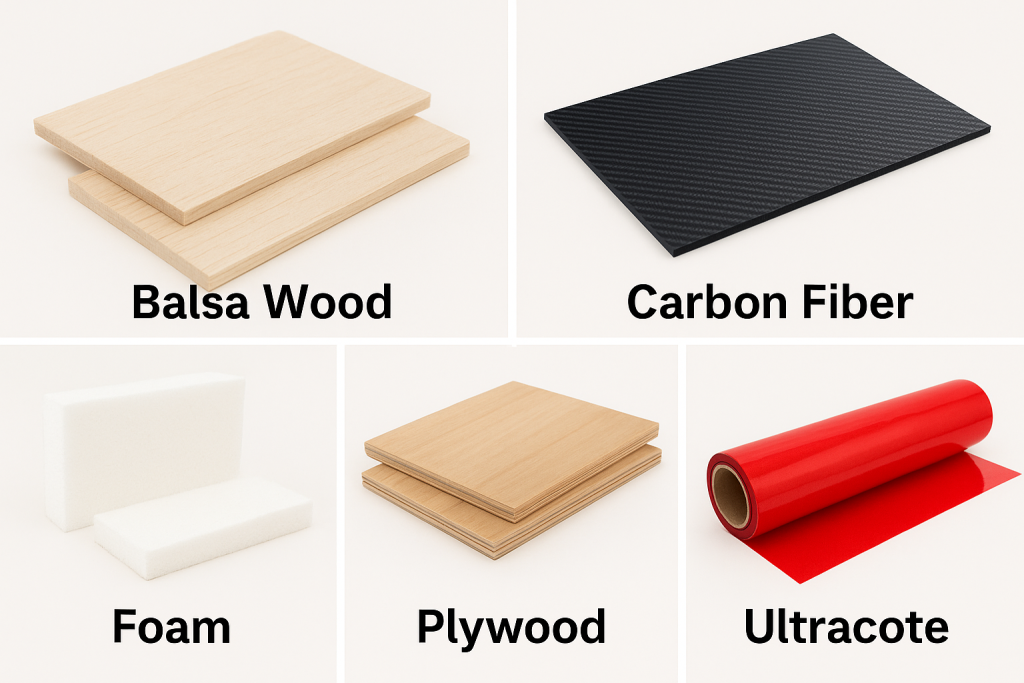
Rc airplane materials list
Building a DIY is an exciting hobby, and having the right airplane materials is essential to ensure your model flies perfectly. Whether you are a beginner or an experienced hobbyist, knowing which materials to use—from balsa wood and carbon fiber to foam and adhesives—will help you create a durable and high-performing RC airplane.
Some of the links on this page are affiliate links. This means that if you click through and make a purchase, I may earn a small commission at no extra cost to you. As an Amazon Associate, I earn from qualifying purchases. Thank you for supporting the site!
Looking for essential tools in airplane model building. Find here an essentials list of model building tools.
1. Balsa Wood
- is the cornerstone material for building RC airplanes, known for its lightweight and easy-to-work-with properties.
- Balsa is widely favored because of its high strength-to-weight ratio, making it ideal for constructing the framework, wings, and fuselage of the airplane.
- is typically available in sheets, sticks, and blocks, making it versatile for different parts of the airplane.
Why Balsa?
The unique characteristics of balsa wood make it the go-to material for most RC airplane builders. It is extremely light, which helps keep the airplane’s weight down, allowing for better lift and maneuverability. The wood is soft enough to be easily cut, sanded, and shaped, but still strong enough to provide the necessary rigidity for structural components. Balsa wood is typically available in sheets, sticks, and blocks, making it versatile for different parts of the airplane. For example, thin sheets of balsa are often used for wing skins, while thicker blocks might be used for crafting the nose or fuselage.
Basswood Balsa Sticks (4x6in, 5mm)
High-quality basswood sticks are a popular alternative to pure balsa, offering a good balance of strength and lightness for wing ribs, spars, and control surfaces. They’re straight-grained and easy to cut, making them ideal for structural framing in park flyers.
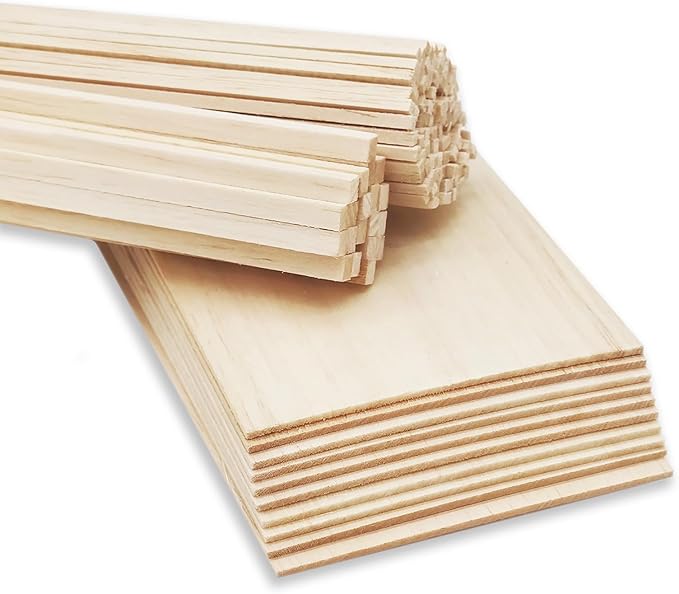
Balsa Wood Sheet (8”x12”x1/16”)
Standard balsa sheets provide a lightweight surface for wing coverings, fuselage sheeting, and formers. Known for its softness and easy sanding, this sheet is a go-to for creating smooth aerodynamic surfaces on small to medium-sized RC planes.
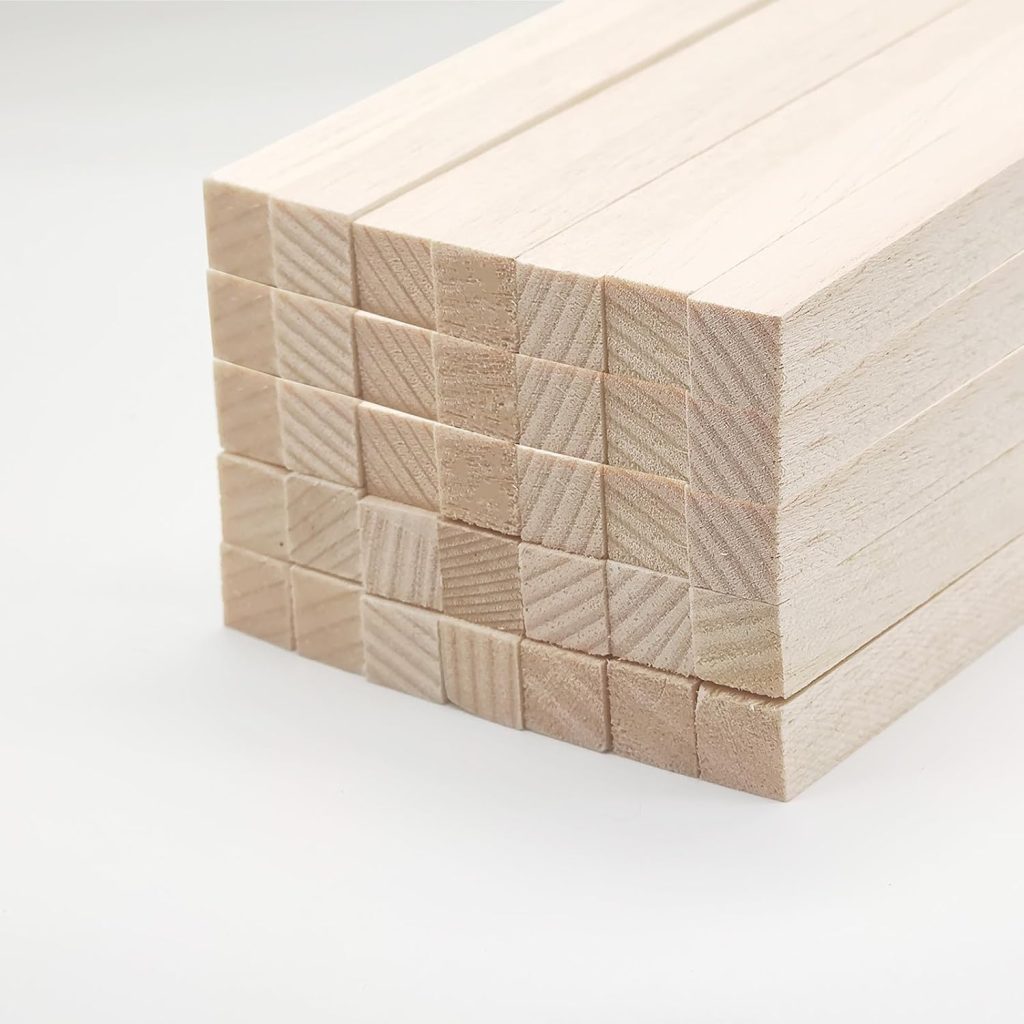
Balsa Wood Block (12′ X 1/2′ X 1/2′)
Balsa blocks are perfect for carving custom nose cones, fairings, or small structural parts. They are easy to shape with hand tools and sand down to smooth contours, offering versatility in detailed RC plane modeling.
2. Foam (Depron – EPP)
Foam materials such as Depron and Expanded Polypropylene have become increasingly popular in the RC airplane community, especially for electric-powered models and park flyers. Their combination of low weight, durability, and affordability makes them an attractive choice for both beginners and experienced builders. Because these materials are so easy to cut, sand, and shape, they allow hobbyists to create entire airframes with precision or add reinforcements to specific components without significantly increasing the aircraft’s overall mass.
Beyond their practicality, these foams also offer an excellent strength-to-weight ratio, which is crucial for maintaining efficient flight performance. Builders appreciate how well they absorb minor impacts and vibrations, contributing to smoother flights and longer airframe life. Whether used for prototyping, scratch-building, or fine-tuning existing designs, Depron and EPP provide a flexible and reliable foundation for a wide variety of RC aircraft projects.
Depron vs. EPP
Depron foam is a rigid, lightweight material that is excellent for constructing flat wings and fuselage components. It has a smooth surface, which makes it easy to paint and finish. On the other hand, EPP foam is more flexible and durable, which makes it ideal for planes that might take a lot of impacts, such as those flown in tight spaces or by beginners.
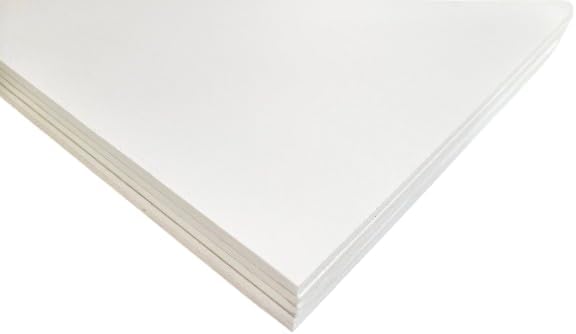
Union Strong Foam Board 3/16″
Depron 3/16″ is great for lightweight wing sheeting or control surfaces, while 6mm provides strength for fuselage sides, wing cores, and structural parts. You can cut this by hand using the PDF export function to print ribs on paper.
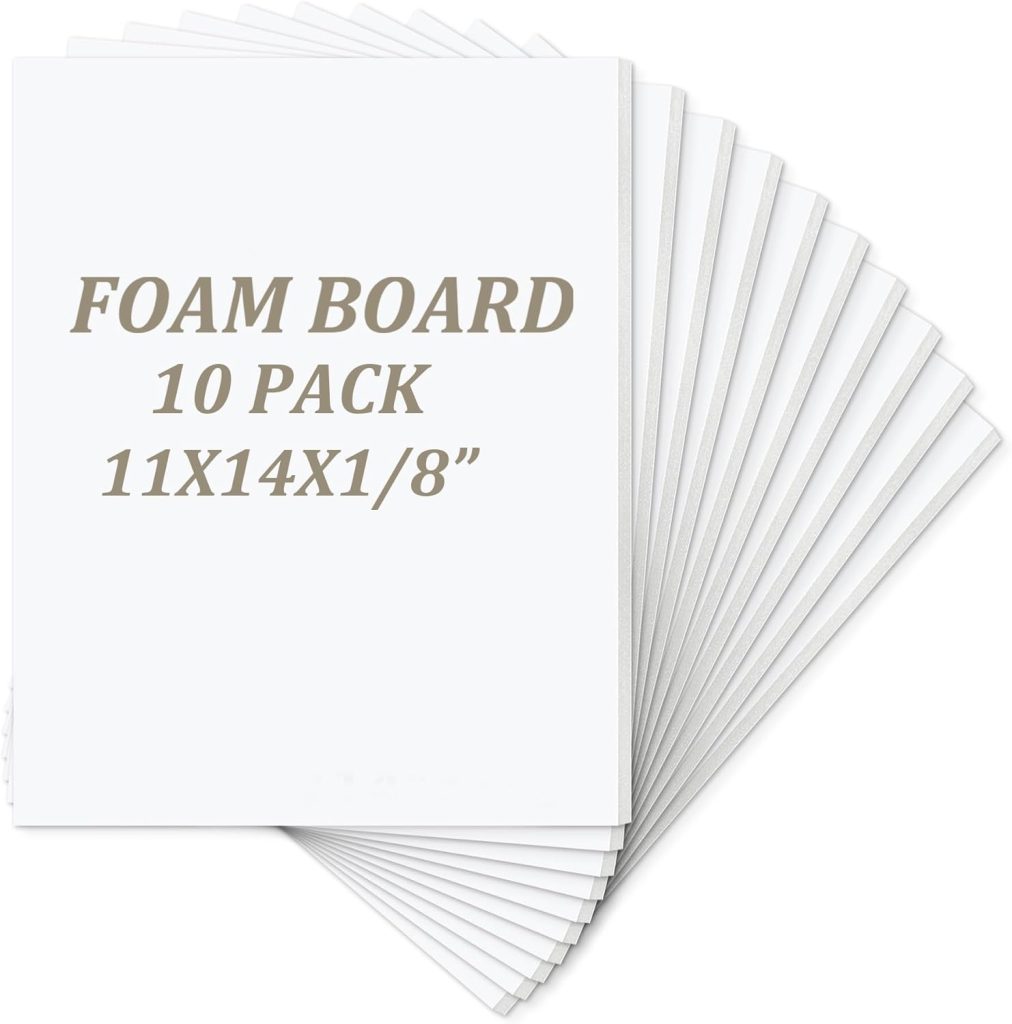
11×14 inch White Foam Boards, 1/8″
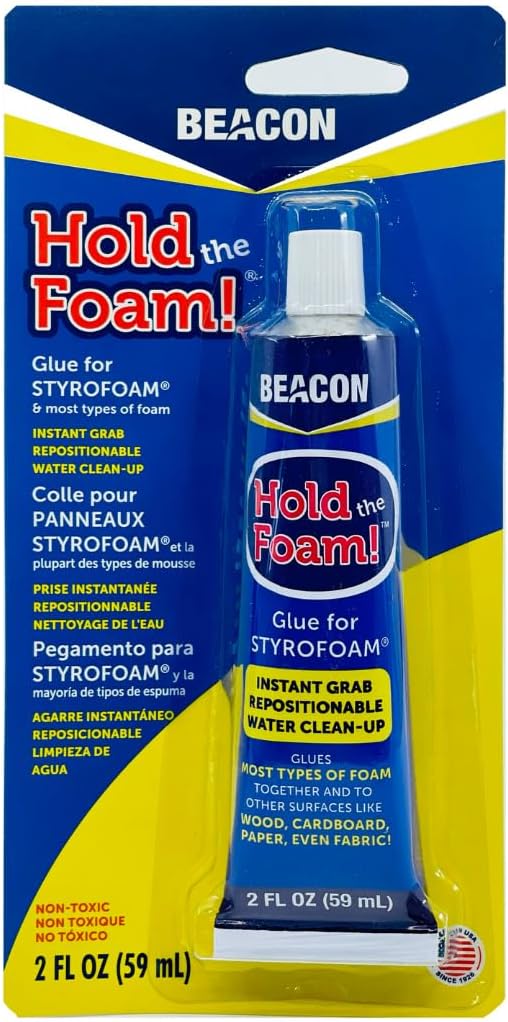
Beacon Hold The Foam Glue 2oz
Beacon Hold The Foam Glue is one the most reliable glue for Depron foam because it is specifically designed for foam materials and does not contain solvents that melt or weaken the foam. It creates a strong yet flexible bond, which is ideal for lightweight model aircraft where vibration and minor impacts are common. When applied as a contact adhesive (thin layer on both surfaces, allowed to tack, then pressed together), it provides excellent adhesion without adding unnecessary weight or causing deformation.
3. Plywood
Plywood is another crucial material in RC airplane construction, particularly for reinforcing balsa structures and creating motor mounts. It offers more strength and durability than balsa, making it ideal for parts of the airplane that need to withstand higher stresses.
Application in RC Airplanes
Plywood is often used in the firewall (the section of the fuselage where the engine or motor is mounted), landing gear mounts, and wing joiners. The extra strength provided by plywood helps distribute the forces from the motor, landing gear, and wing loads across a broader area, preventing damage to the more delicate balsa structures.
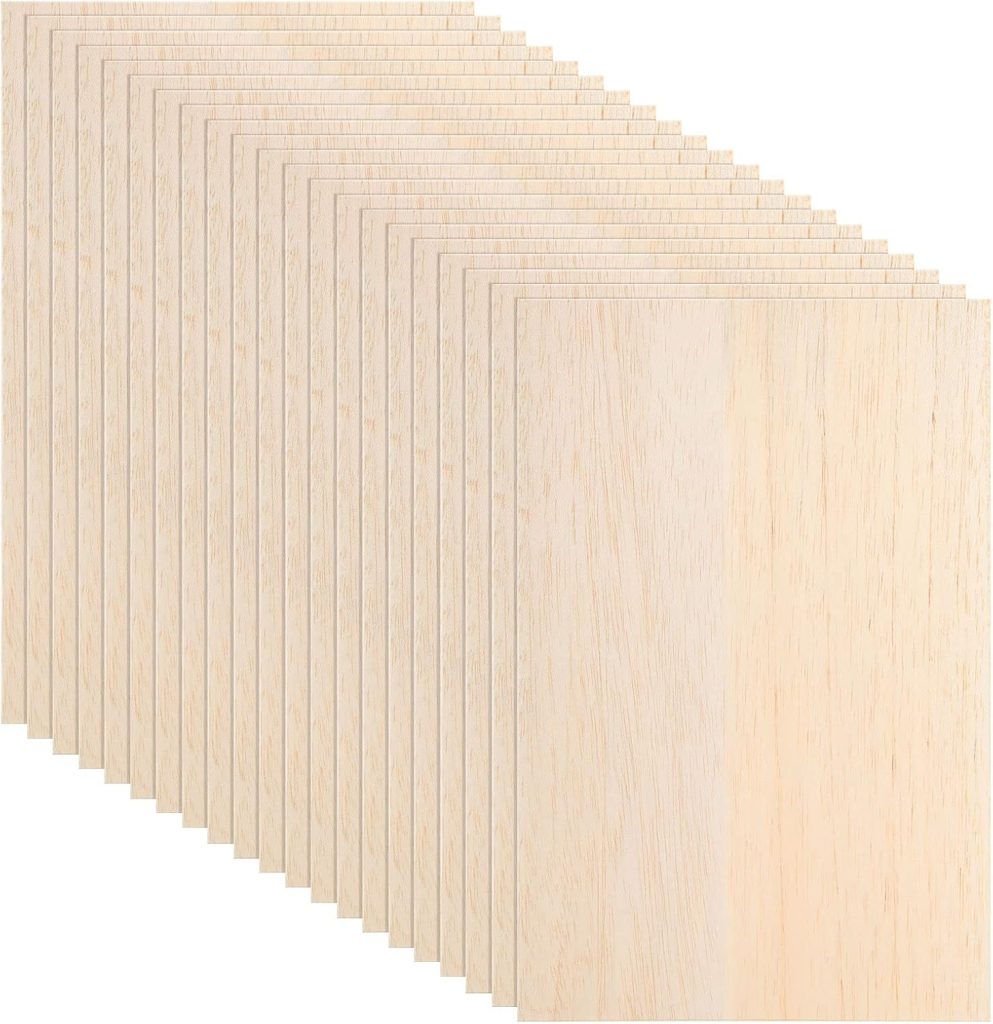
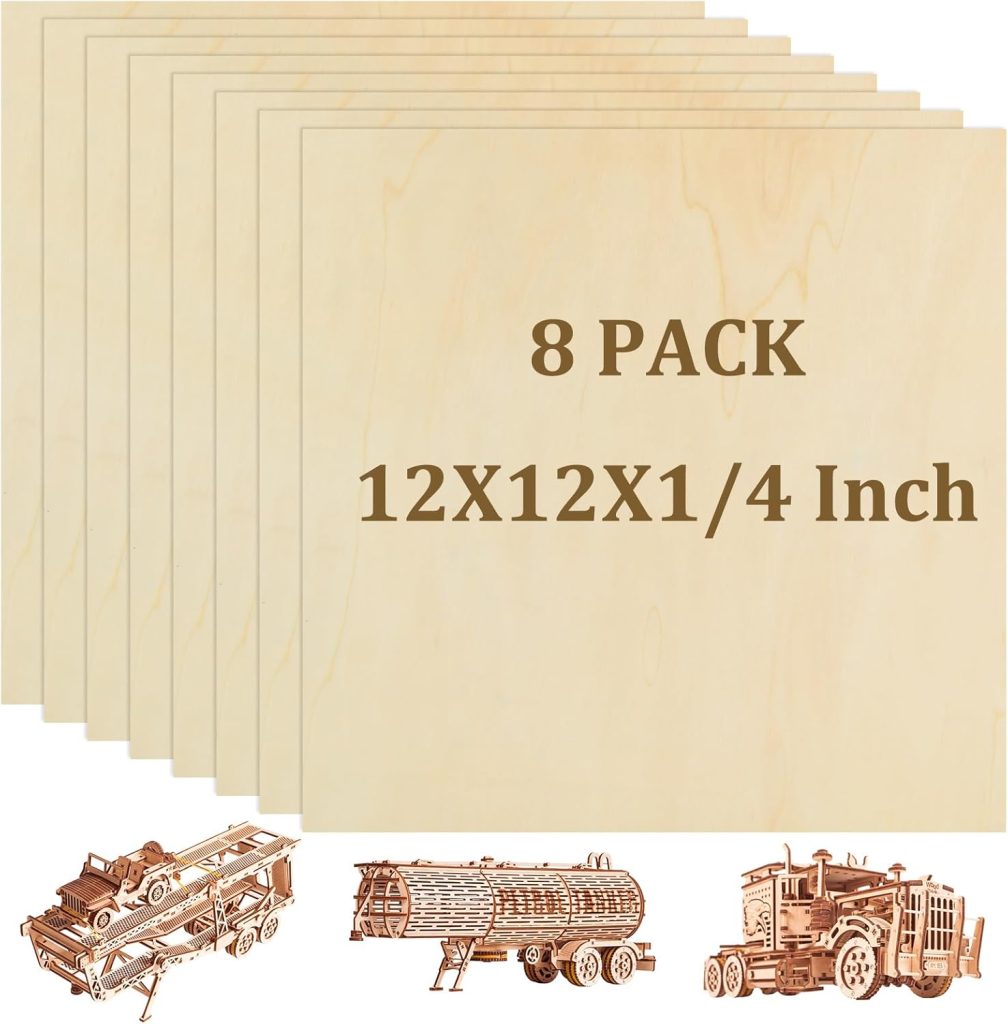
Basswood Sheets, 1/16
These thin, lightweight basswood sheets are ideal for sheeting wings, building fuselage sides, or crafting control surfaces. They’re easy to cut and sand, yet stiffer than balsa—great for areas that need a bit more strength without much added weight.
25 Pack 8 x 12 Inch Basswood Sheets, 1/16 Thin Craft Plywood Sheets
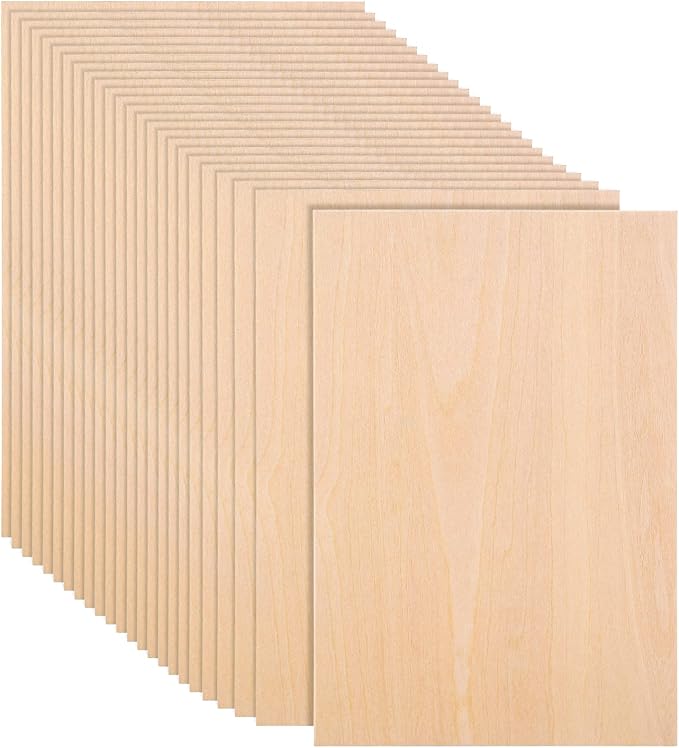
Baltic Birch Plywood Sheets
Known for its excellent strength and durability, this 1/8” Baltic birch plywood is perfect for firewalls, motor mounts, and landing gear plates. Its consistent grain and void-free core make it reliable for precision cuts and load-bearing components.
Midwest Balsa Wood Sheet 1/16” x 4” x 36” (5 Pack)
A staple material for RC builders, this 1/16” sheet is perfect for wing skins, fuselage sheeting, and control surfaces. It’s lightweight, easy to cut and sand, and ideal for park flyers where minimal weight is crucial.
4. Ultrakote
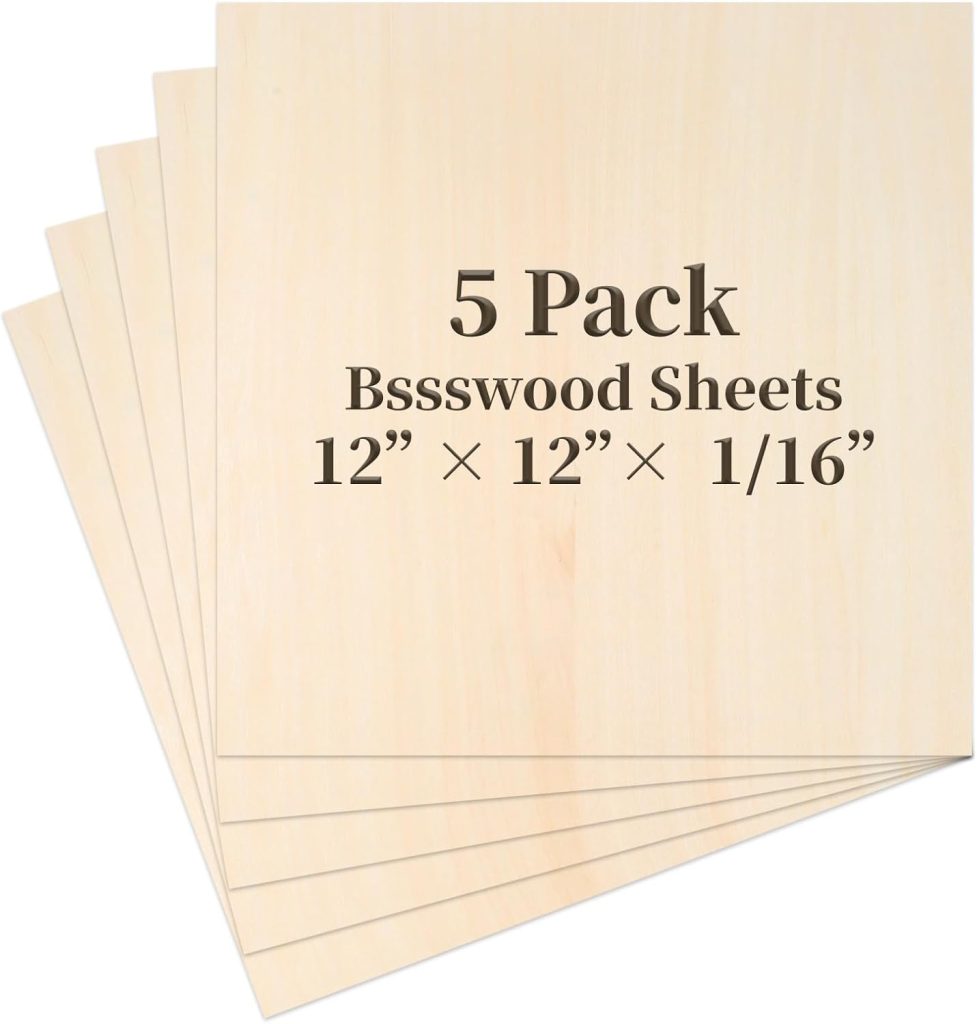
Ultrakote is a popular covering material used in RC airplane construction to finish and protect the airframe. It is a type of heat-shrinkable plastic film that adheres to the surface when heated, providing a durable, lightweight finish.
Appearance and Durability
Monokote comes in a wide range of colors and finishes, allowing builders to create custom designs and color schemes for their airplanes. It adds very little weight to the model and provides a smooth, glossy finish that reduces drag. Additionally, Monokote protects the underlying balsa wood from moisture and fuel residue, which can extend the life of the airplane.
Hangar 9 is the most well-known brand for Ultrakote, offering a variety of colors and patterns. The film is available in rolls, which can be cut to the size of the airplane parts being covered.
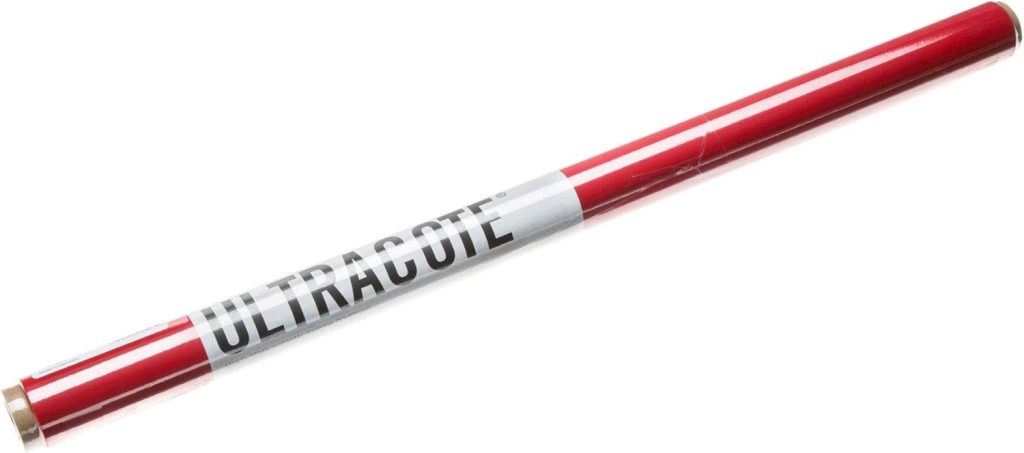
Hangar 9 UltraCote Transparent (HANU887) Airplane Covering
This high-tech polyester covering from Hangar 9 features a patented, multi-temperature adhesive and shrinkage system—allowing you to stretch or reposition it before final heat-shrink. Weighing just ~0.18 oz per sq ft, it’s fuel- and water-proof, ideal for transparent finishes over wings, fuselages, or decorative panels, and shrinks smoothly around tight curves without color-layer separation .
- White: Check product on Amazon
- Red: Check product on Amazon
- Blue: Check product on Amazon
Application Process – RC Airplane Materials List: Essential Materials
To apply it, you’ll need a heat gun or a covering iron. Start by cutting the film slightly larger than the part to be covered. Lay the film over the surface and tack down the edges with the iron. Then, use the heat gun to shrink the film, pulling it taut over the surface. The heat causes the adhesive on the back of the film to bond to the wood, creating a smooth, wrinkle-free finish.
For more complex shapes, such as curved wingtips, it may be necessary to use small relief cuts in the Monokote to allow it to conform to the shape. After the film is fully applied, trim any excess with a sharp hobby knife.
5. Cyanoacrylate (CA) Glue
CA glue, often referred to as “super glue,” is one of the most essential adhesives in RC airplane building. It’s prized for its quick bonding time and strong hold, making it perfect for assembling balsa wood structures quickly.
Speed and Strength
CA glue comes in different viscosities—thin, medium, and thick—each suited for different applications. Thin CA is ideal for quickly bonding small parts, as it can seep into tight joints and set almost instantly. Medium and thick CA are better for larger joints and for filling gaps between parts. Brands like Bob Smith Industries and Zap are popular choices among modelers for their consistent quality.
Because CA glue bonds almost instantly, it’s important to ensure that parts are properly aligned before applying the glue. This is particularly useful when assembling the framework of the airplane, such as joining the ribs to the spars or attaching the fuselage sides.
Tips for Using CA Glue – RC Airplane Materials List: Essential Materials
When using CA glue, keep in mind that it can be brittle once cured, so it may not be suitable for high-stress joints unless reinforced. In some cases, a small amount of baking soda can be used as an accelerator, causing the glue to set almost instantly and filling any gaps.
Additionally, always work in a well-ventilated area when using CA glue, as the fumes can be irritating. For those who are sensitive to CA fumes, odorless formulas are available, which reduce the harshness of the fumes.
6. Epoxy Resin
Epoxy resin is another indispensable adhesive for RC airplane construction, especially when working with materials like fiberglass, carbon fiber, or plywood. Unlike CA glue, epoxy offers a much stronger bond and is more flexible, making it ideal for high-stress joints.
Strength and Flexibility
Epoxy resin is particularly useful for bonding dissimilar materials, such as attaching a plywood motor mount to a balsa fuselage. It’s also the adhesive of choice for applying fiberglass cloth to airframes, creating a strong, durable surface. West System and Z-Poxy are well-regarded brands in the hobby, offering various formulations tailored to different applications. RC Airplane Materials List: Essential Materials
Epoxy comes in two parts—a resin and a hardener—that must be mixed before use. The working time (or pot life) of epoxy varies depending on the formulation, ranging from a few minutes to several hours. This allows for more time to align parts correctly before the adhesive sets.
Application Techniques
When using epoxy, it’s important to mix the resin and hardener thoroughly to ensure proper curing. Epoxy can be applied with a brush or spread with a small spatula, depending on the area being covered. For large areas, such as when applying fiberglass cloth, use a roller to spread the epoxy evenly and remove any air bubbles.
Epoxy can also be thickened with fillers like microballoons or silica powder to create a paste for filling gaps or creating fillets. Once cured, epoxy is very strong but can be sanded smooth for a clean finish.
RC Airplane Materials List: Essential Materials
7. Carbon Fiber
- is known for its exceptional strength and stiffness while being significantly lighter than metals like aluminum.
- is commonly used in areas where strength and rigidity are critical without adding weight, such as in spars, wing reinforcements, and control rods.
- ensures that your airplane remains stable at high speeds and under stress, which is especially important for aerobatic or racing models.
Where Carbon Fiber Shines
Carbon fiber is commonly used in areas where strength and rigidity are critical without adding weight, such as in spars, wing reinforcements, and control rods. Because it doesn’t warp or bend easily, carbon fiber ensures that your airplane remains stable at high speeds and under stress, which is especially important for aerobatic or racing models. Brands like DragonPlate offer carbon fiber sheets, rods, and tubes that are specifically designed for RC applications.
While balsa is the primary material for many RC airplanes, carbon fiber is increasingly popular, especially in high-performance models. Carbon fiber is known for its exceptional strength and stiffness while being significantly lighter than metals like aluminum. RC Airplane Materials List: Essential Materials
8. Treela Carbon Fiber Cloth Roll
These flat carbon fiber strips are perfect for reinforcing wing leading edges, elevons, or control surface hinges. Easy to glue and ultra-strong along their length, they provide a clean, durable solution to strengthen load paths without thickening the structure.
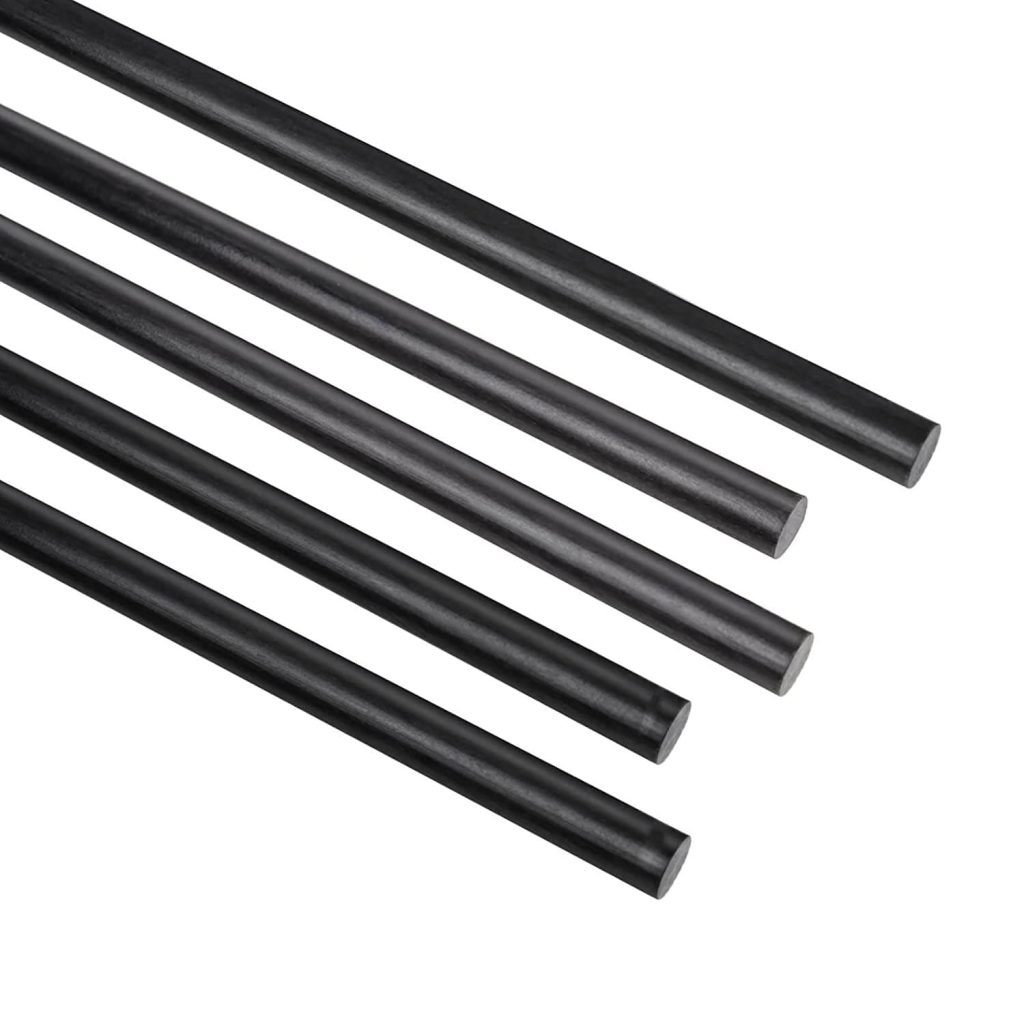
Carbon Fiber Rods (1mm – 10mm)
Designed for high-stress applications, these solid carbon rods provide outstanding durability and stiffness. Suitable for larger park flyers or gliders where structural strength is crucial without adding significant weight.