
Some links in this article are affiliate links. As an Amazon Associate, rcplanediy.com/ earns from qualifying purchases at no extra cost to you.
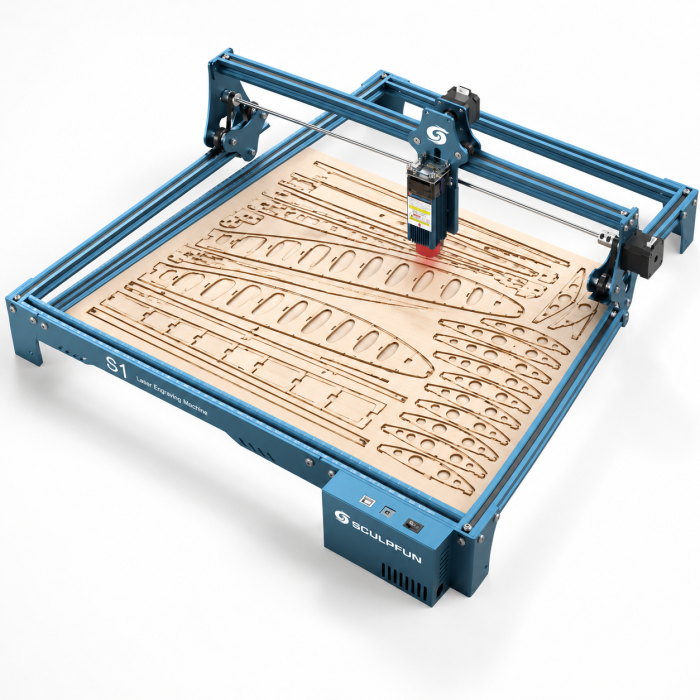
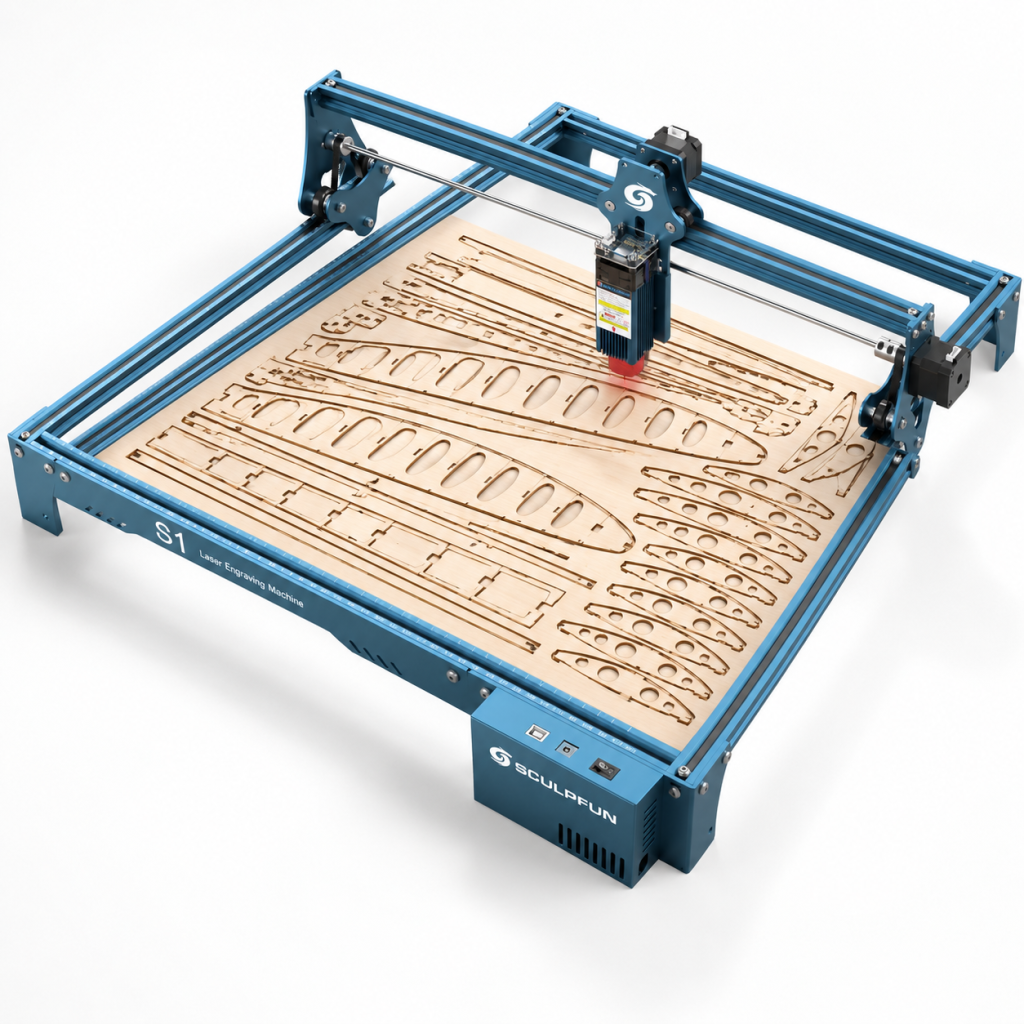
I’ll be upfront about something: a CNC router was not my first machine purchase, and if you’re brand new to powered cutting tools, it probably shouldn’t be yours either. I bought a laser cutter first, ran it for a few months, and then hit the wall every laser eventually hits — thick plywood that just wants to char instead of cut, and a carved cowl shape that a flat beam simply cannot produce no matter how many passes you throw at it. That’s the point where a CNC router earns its spot on the bench.
A CNC router spins a physical cutting bit instead of burning material with a beam. That means it handles thicker plywood, basswood, and even soft aluminum brackets that a diode laser would just scorch and give up on. It’s also the only real option for anything with a 3D profile — carved leading edges, cowls, wing tips — since a laser only ever cuts flat, full stop. The tradeoff is speed and mess: CNC cutting is slower and throws actual dust everywhere, versus a laser’s comparatively tidy (if smoky) char line.
Fair warning, same as always on this site: this stuff isn’t cheap, it’s got a real learning curve around feeds, speeds, and G-code, and a poorly clamped workpiece will absolutely get yanked around by a spinning bit if you’re not paying attention. I’ll flag the drawbacks honestly, not just sell you the highlight reel — and if you haven’t already, take a look at my rant about how expensive this hobby already is before you add a CNC router to the pile.
If what you actually need is something for flat balsa sheet, thin plywood, or engraving rib templates, a CNC router is honestly overkill — a diode laser cutter does that job faster and cleaner. I’ve got a full separate writeup on the best laser cutters for RC airplane building if that’s closer to what you’re after.
Quick Picks
| Pick | Machine | Why |
|---|---|---|
| Best for Beginners | SainSmart Genmitsu 3018-PROVer V2 | Cheapest legitimate entry point, small precision parts |
| Best Overall | Genmitsu 3020-PRO MAX V2 | Bigger bed than the 3018, offline controller, still desktop-sized |
| Best for Structural Cutting | Genmitsu PROVerXL 4030 V2 | Closed-loop steppers, real spindle power for thicker sheet |
What to Actually Look For in a Desktop CNC Router
Work area is the single biggest thing people get wrong. A compact 300 x 180mm bed is genuinely tiny — fine for ribs, formers, servo mounts, and small bulkheads, but don’t expect to cut a full wing panel in one shot. If you build anything bigger than a park flyer, step up to a 300 x 200mm or 400 x 300mm bed, or accept that you’ll be cutting panels in sections and joining them.
Open-loop vs. closed-loop steppers matters more than the spec sheets make it sound. Open-loop steppers (the standard on budget machines) can silently skip steps mid-cut if the bit hits resistance — and you won’t know until you’re gluing in a part that’s subtly the wrong shape. Closed-loop steppers report their actual position back to the controller and correct for it, which means fewer silently-ruined parts. It costs more, but on anything you’re cutting from an actual sheet of good plywood, it’s worth it.
Spindle power determines what materials you can realistically cut and how fast. A basic 775-class motor handles balsa, thin ply, and acrylic fine. A 400W+ spindle gets through thicker plywood and soft aluminum brackets without bogging down or burning the bit.
Workholding is the thing nobody budgets for and everyone needs. Thin sheet stock will lift, chatter, or get yanked completely loose mid-cut if it’s not clamped down properly — and there’s nothing quite like watching a nearly-finished wing panel get shredded because you trusted double-sided tape to hold it. Budget for hold-down clamps and a proper spoilboard from day one, not after your first ruined part.
Dust and noise are real, ongoing considerations that laser cutting mostly avoids. CNC routing throws fine wood and composite dust everywhere, and a spinning bit at speed is genuinely loud. A dust shoe with vacuum extraction handles most of it; without one, plan on cleanup after every session.
If you’re designing your own ribs and wing panels first, our free RC Wing Designer tool exports profiles you can nest and cut directly — design digitally, then let the machine do the physical work instead of hand-tracing a printed template.
Best Desktop CNC Routers for RC Airplane Parts
🥇 SainSmart Genmitsu 3018-PROVer V2 CNC Router
This is the entry point almost everyone in the maker world starts with, and for RC parts specifically it’s a solid one — ribs, formers, servo mounts, and small bulkheads for park-flyer to .40-size builds all fit fine. GRBL control, a Z-probe, limit switches, and an E-stop are all included, which is more than you’d expect at this size.
I’ll be blunt about the one real limitation: the work area is genuinely small. Don’t buy this expecting to cut a full wing panel in one shot — it’s a parts machine, not a sheet-cutting machine, and it’s happiest treated that way.
Specs: 3-axis GRBL control, ~300 x 180 x 45mm work area, Z-probe, limit switches, emergency stop, compact spindle motor
Best for: Small precision parts — ribs, formers, servo and motor mounts, bulkheads — rather than full sheet cutting
Builder feedback: Frequently the first CNC machine mentioned in maker forums for exactly this reason — cheap enough to justify as a “let’s see if I even use this” purchase.
🥈 Genmitsu 3020-PRO MAX V2 CNC Router
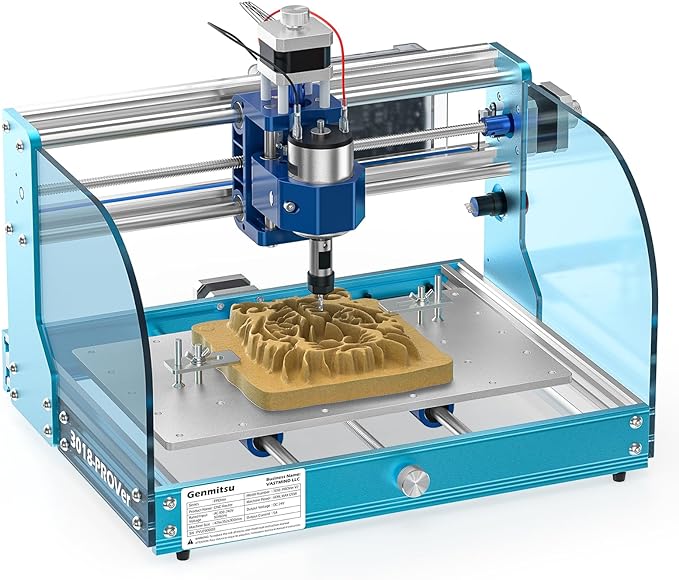
My actual pick for Best Overall, and the machine I’d tell most people to just buy instead of agonizing over the 3018 vs. 4030 decision. The bed is meaningfully bigger than the 3018 — enough to cut full rib sets and mid-size formers without sectioning — while staying at a price and footprint that doesn’t demand a dedicated corner of the garage. The offline controller and limit switches are a nice touch you don’t always get at this tier.
It’s still an open-loop machine, so the same caution applies as with the 3018 — don’t force cuts, and check your work on anything critical.
Specs: 3-axis engraver, ~300 x 200 x 60mm work area, offline controller, 6 limit switches, upgraded structure over the base 3020
Best for: Builders who’ve outgrown a 3018’s work area but don’t need the 4030’s structural cutting power
Builder feedback: Commonly recommended as the “just buy this one” middle ground once people realize the 3018 is too small for their actual projects.

🥉 Genmitsu PROVerXL 4030 V2 CNC Router
The step up, and my pick for Best Structural Cutting. A 400 x 300 x 110mm work area handles full plywood formers and larger wing panel sections, and the closed-loop NEMA 23 steppers actually matter here — they won’t silently skip steps mid-cut and ruin a part you won’t notice is wrong until you’re gluing it in. The 400W spindle gets through wood, acrylic, and light aluminum brackets without complaint.
It’s bigger, obviously, and that means it eats real workbench real estate. The closed-loop steppers also add cost over the base 3018/3020-class machines, so this one’s for builders who’ve decided they’re actually going to use a CNC regularly, not just try it out.
Specs: 400 x 300 x 110mm work area, closed-loop NEMA 23 steppers, 400W spindle, GRBL-based control
Best for: Larger scratch-built wing panels, fuselage formers cut from full sheets, and builders running actual G-code from CAD/nesting software instead of hand-jogging everything
Builder feedback: The closed-loop motors come up a lot as the reason people don’t go back to a standard 3018/3020 once they’ve tried this — fewer silently-ruined parts.

CNC Router Bits & Collets Worth Stocking
Budget extra for consumables here, genuinely — small bits snap more often than you’d think, especially while you’re still dialing in feed rates and depth of cut.
HQMaster CNC Router Bits — 10-Piece Upcut End Mill Set
A set of 1/8″ shank, 2-flute upcut spiral bits sized for wood, MDF, plywood, and acrylic. This is your everyday cutting bit for flat parts — ribs, formers, doublers.
Specs: 1/8″ shank, 2-flute upcut spiral geometry, tungsten carbide with wear-resistant coating, sized for wood/MDF/plywood/acrylic
Best for: Keeping spares on hand for 3018/3020/4030-class machines cutting balsa, light ply, and acrylic
Builder feedback: Fine for the materials this hobby actually uses — nobody’s expecting these to shrug off aluminum all day at this price, and they don’t need to.
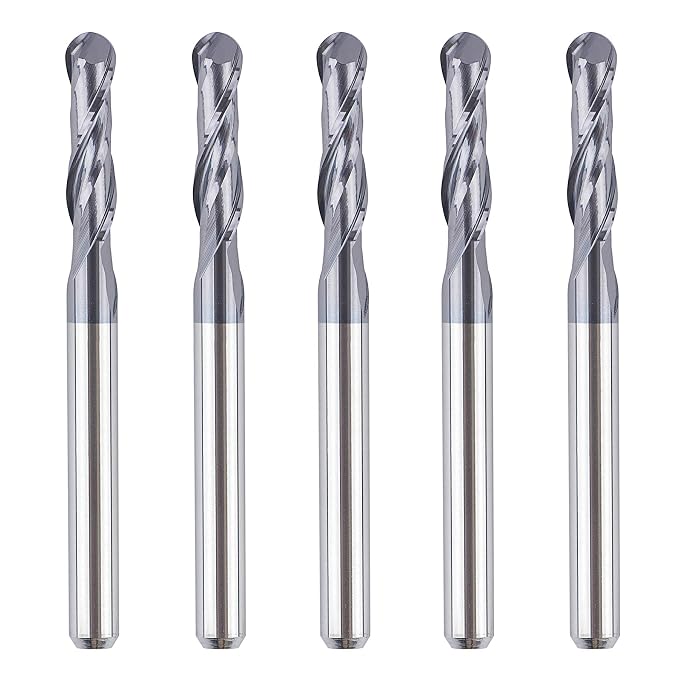
SpeTool Ball Nose End Mill Set — 5-Piece
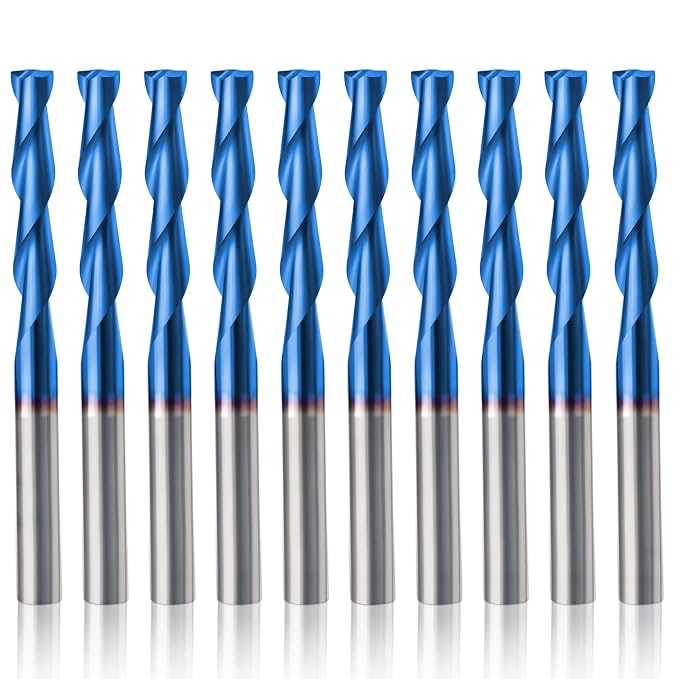
This is the bit that unlocks the actual reason to own a CNC over a laser: 3D contour work. Ball nose bits let you carve rounded profiles — leading edges, cowl shapes, wing tip curves — instead of just cutting flat outlines. If you only ever plan to cut flat ribs and formers you can skip this, but the moment you want a carved cowl, this is the tool that does it.
Specs: 5-piece set, 1/8″ shank, 1/8″ cutting diameter, 1/2″ cutting length, 1-1/2″ overall length, 2-flute ball nose, TiAlN-coated tungsten carbide
Best for: Carved leading edges, cowl shaping, wing tip curves, and any part with a rounded 3D profile
Builder feedback: The bit most people don’t know they need until they try to carve a cowl with a flat-bottom bit and get a stepped, terraced mess instead. Five identical bits also means a snapped one doesn’t end your weekend.
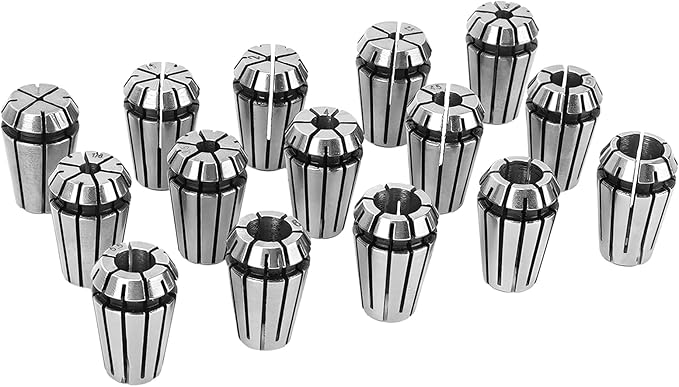
SILIVN ER11 Spring Collet Set (15-Piece)
Not glamorous, but genuinely useful — this set runs from 1mm to 7mm in half-millimeter steps plus dedicated 1/8″ (3.175mm, the standard bit shank size) and 1/4″ collets, so you’re not stuck buying a new collet every time you want to run a slightly different bit diameter. If you’ve only got the one collet your machine shipped with, this is a cheap way to stop that from limiting which bits you can actually use.
Specs: 15-piece set: 1mm–7mm in 0.5mm steps plus 1/8″ and 1/4″, spring steel, individually labeled, standard ER11 taper for common desktop CNC spindles
Best for: Running different bit shank sizes without buying single collets one at a time
Builder feedback: The kind of inexpensive part that saves you an afternoon of frustration the first time you need a bit size you don’t have a collet for.
Workholding, Setup & Precision Accessories
Genmitsu T-Track Mini Hold-Down Clamp Kit (4-Piece)
Thin balsa and light ply love to lift and chatter mid-cut if they’re not clamped down properly, and there’s nothing quite like watching a nearly-finished wing panel get yanked loose and shredded by a spinning bit. This kit solves that for Genmitsu’s T-track spoilboards specifically.
Specs: 4-piece aluminum hold-down clamps, sized for Genmitsu T-track spoilboards
Best for: Keeping thin sheet stock from lifting or vibrating loose mid-cut
Builder feedback: Only fits the T-track spacing on Genmitsu-style beds — it won’t just bolt onto any random CNC, so check compatibility before ordering.

Genmitsu CNC MDF Spoilboard for 3018-Class Routers
A sacrificial MDF spread board that sits under your workpiece so you’re not cutting into your machine’s actual bed when a bit goes slightly too deep — which happens to everyone eventually. Pre-drilled M6 holes line up with hold-down clamps, so it works directly with the clamp kit above.
Specs: 30 x 18 x 1.2cm MDF board, pre-drilled M6 mounting holes, screws and nuts included, sized for 3018-class machines
Best for: Protecting your machine bed and giving hold-down clamps somewhere proper to grip
Builder feedback: Cheap enough that there’s no good reason to run a 3018-class machine without one long-term.

FoxAlien 69mm CNC Dust Shoe with Double-Layer Brush
Fits 52mm, 65mm and 69mm diameter spindles and trim routers — which covers the 400W spindle on the 4030 and most common spindle upgrades — and connects to a shop vac via a 38mm (1.5″) hose port, so the dust actually gets collected instead of coating your entire workbench and every surface in a three-foot radius. The double-layer brush keeps most of it contained even on deeper cuts, and the magnetic split design pops apart for cleaning.
Specs: Fits 52mm / 65mm / 69mm spindles and routers, transparent ABS body, double-layer brush, magnetic split design, 38mm (1.5″) hose port
Best for: Keeping wood and composite dust contained instead of spread across your whole shop
Builder feedback: Genuinely changes how much cleanup a CNC session requires — worth doing before your garage floor looks like a sawmill. Measure your spindle diameter before ordering; the stock motor on the smallest 3018-class machines is narrower than 52mm.

NEIKO Digital Caliper (6-Inch)
Not a CNC accessory exactly, but you’ll reach for it constantly once you’re cutting your own parts — checking plywood thickness before you set cut depth, verifying a rib matches spec, confirming a bit diameter before you chuck it up. A basic digital caliper pays for itself the first time it saves you from a part that doesn’t fit because you eyeballed a measurement.
Specs: 0-6″ / 0-150mm range, large LCD display, inch/millimeter conversion, stainless steel construction
Best for: Verifying material thickness, bit diameters, and part dimensions before and after cutting
Builder feedback: One of those tools people wish they’d bought on day one instead of a year into the hobby.

Comparison Table
| Machine | Steppers | Work Area | Best For |
|---|---|---|---|
| SainSmart Genmitsu 3018-PROVer V2 | Open-loop | 300 x 180 x 45mm | Small precision parts, ribs, mounts |
| Genmitsu 3020-PRO MAX V2 | Open-loop | ~300 x 200 x 60mm | Full rib sets, mid-size formers |
| Genmitsu PROVerXL 4030 V2 | Closed-loop NEMA 23 | 400 x 300 x 110mm | Thicker sheet, structural parts, tougher materials |
Frequently Asked Questions
Do I need a CNC router if I already have a laser cutter?
Not necessarily, but they solve different problems rather than competing for the same job. A laser is faster and cleaner for flat sheet parts and template engraving. A CNC router handles thicker material and anything with a 3D profile, like a carved leading edge or cowl. Plenty of builders start with just a laser (see our laser cutter guide) and add a CNC later once they hit its limits.
What size work area do I actually need for RC airplane parts?
It depends entirely on what you build. Small park flyers and individual parts are fine on a compact 300 x 180mm bed. Anything with wing panels longer than about 16 inches gets a lot more practical with a 300 x 200mm bed or larger — otherwise you’re cutting parts in sections and rejoining them.
Can these machines cut carbon fiber or fiberglass?
Yes, with the right bit — but it throws fine, sharp, electrically conductive dust everywhere, so proper dust extraction (see the dust shoe above) and a mask are non-negotiable, not optional extras. Diode lasers can’t cut composites cleanly at all, so this is one job that’s CNC-only.
Is a closed-loop stepper really worth the extra cost?
If you’re cutting anything you actually care about — a real wing panel from good plywood, not a test scrap — yes. Open-loop steppers can silently skip steps under load, and you won’t discover it until the part doesn’t fit. Closed-loop steppers self-correct. It’s the difference between finding out about a mistake immediately versus finding out during final assembly.
How much dust and noise should I actually expect?
More than you’d guess from watching online demo videos. A spinning bit at cutting speed is genuinely loud, and wood/composite dust gets everywhere without a dust shoe and vacuum hooked up. Budget for both hearing protection and dust collection, not just the machine itself.
Final Thoughts
If you’re brand new to powered cutting tools and mostly build in balsa and thin ply, start with a laser cutter instead — it’s the more forgiving entry point. Come to a CNC router once you’ve hit a laser’s actual limits: thicker plywood, structural parts, or anything with a real 3D profile. When you do, the 3020-PRO MAX V2 is my honest recommendation for most builders — enough bed size to be genuinely useful without the cost and footprint of the 4030-class machines.
Budget for workholding and dust collection at the same time as the machine, not after your first ruined part or your first genuinely bad cleanup session. Both are cheap compared to the plywood sheet you’ll waste without them.
Related Guides
- Best Laser Cutters for RC Airplane Building — the companion guide for flat sheet cutting and template engraving
- Best Balsa Wood for RC Airplanes — the material you’ll actually be feeding into most of these machines
- Essential Tools for Balsa Model Building — the hand-tool basics that still matter even once you own a CNC
- Best 3D Printers for Printing RC Airplanes — the additive counterpart to everything on this page
- RC Wing Designer — Complete User Guide — design your rib profiles here first, then cut them with the gear above