
Some links in this article are affiliate links. As an Amazon Associate, rcplanediy.com earns from qualifying purchases at no extra cost to you.
There’s a moment in every build where the airframe is finished, sanded, looking lovely in bare balsa, and then you have to cover it. And that’s the point where a lot of people’s patience goes out the window. I’ve been there. My first covering job was done with my wife’s clothes iron, a roll of film I didn’t understand, and a lot of words I won’t repeat here. The iron lived, the marriage lived, the wing… well, it flew. Ugly, though.
A proper covering iron changes that. Not because it’s magic, but because it gives you a temperature you can actually control and a shoe shape that fits where you need it. This guide is just about irons — the full-size sealing irons, the small detail irons, and the socks and bits that go with them. If you want the wider picture with heat guns as well, that’s in my covering irons & heat guns guide.
A note about what’s on Amazon in 2026: most of the classic RC-branded irons are gone or out of stock. The Hangar 9 digital iron is still around, and then there’s a crop of “edge banding” irons made for woodworkers. They’re the same idea and some of them now list RC covering right in the description. I’ve tried to pick the ones that make sense for us and point out the catches.
Quick Picks
| Pick | Product | Why |
|---|---|---|
| Best Overall | Hangar 9 Digital Sealing Iron | Made for covering film, accurate digital control, stand and sock included |
| Best Budget | O’SKOOL Digital Edge Banding Iron VL01 | Digital display, pointed PTFE shoe, mentions RC covering in its own specs |
| Best Detail Iron | Clover MCI-900 Mini Iron | Tiny head for fillets, hatches and trim |
| Must-Have Extra | Hangar 9 Sealing Iron Sock | Protects the film, keeps the shoe clean |
How to Choose a Covering Iron
Know your film’s temperatures. Every film has a sealing temperature (where the adhesive grabs) and a higher shrinking temperature. Hangar 9 gives UltraCote as about 200–220°F to stick to wood, around 300°F to start shrinking and about 350°F for max shrink. Oracover’s heat-activated adhesive works at roughly 100–120°C (212–248°F) and shrinks hotter. So your iron should comfortably cover something like 200°F to 350°F, and ideally a bit more.
Digital beats a dial. Old analog irons have a dial with no numbers, or numbers that mean nothing. A digital readout isn’t perfectly accurate either, but it’s repeatable — once you know 230 on the screen gives you good sealing, it’ll give you good sealing next weekend too.
Shoe size and shape. A standard sealing iron shoe is roughly palm sized, which is right for sheeted surfaces, leading edges and the main wing panels. A pointed tip helps around the wing root and tail joint. For really tight stuff — inside fillets, around cowls, little trim stripes — you want a mini iron with a small head on a long neck.
Stand, cord, shutoff. A decent metal stand is a safety thing, not a luxury. A long cord saves you dragging the plane around the bench. Auto shutoff is nice for those of us who wander off to make coffee mid-session.
Plan on a sock. A cotton sock over the shoe prevents scratching on glossy film and stops adhesive gunk building up. It does insulate a bit, so you’ll set the iron a touch hotter with it on.
And a small tip: if you’re building from your own plans, design the wing first with our free RC Airplane Wing Designer. A wing with sensible rib spacing is a lot easier to cover without sagging bays.
Full-Size Sealing Irons
These do the bulk of the job: tacking the film down, sealing edges and overlaps, and shrinking over sheeted areas.
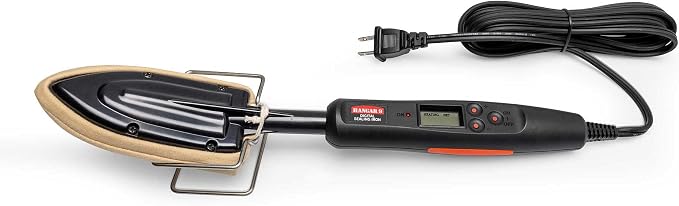
🥇 1. Hangar 9 Digital Sealing Iron (HAN1017)
If there’s a “proper” RC covering iron left on Amazon, it’s this one. Hangar 9 makes UltraCote, so it’s no surprise the iron is built around film work: digital temperature control with a small LCD, a Teflon-coated shoe with an updated shape that’s better in corners, an ergonomic handle and a three-hour auto shutoff. A metal stand and a sock are in the box.
What I like most is that it holds temperature well. You don’t get that thing where the shoe cools as you drag it along a long leading edge and the film stops sticking halfway. What I don’t love is the price, which is well above the woodworking irons, and the handle gets warm after an hour or so. If you only cover one plane every couple of years, the budget picks below make more sense.
Specs: Digital temperature control, LCD power indicator, °F/°C units, Teflon-coated shoe, metal stand and sock included, 3-hour shutoff
Best for: Regular builders, UltraCote users, anyone covering bigger or nicer models
Builder feedback: Reviewers mostly mention the stable temperature and the improved shoe compared to the older Hangar 9 iron.
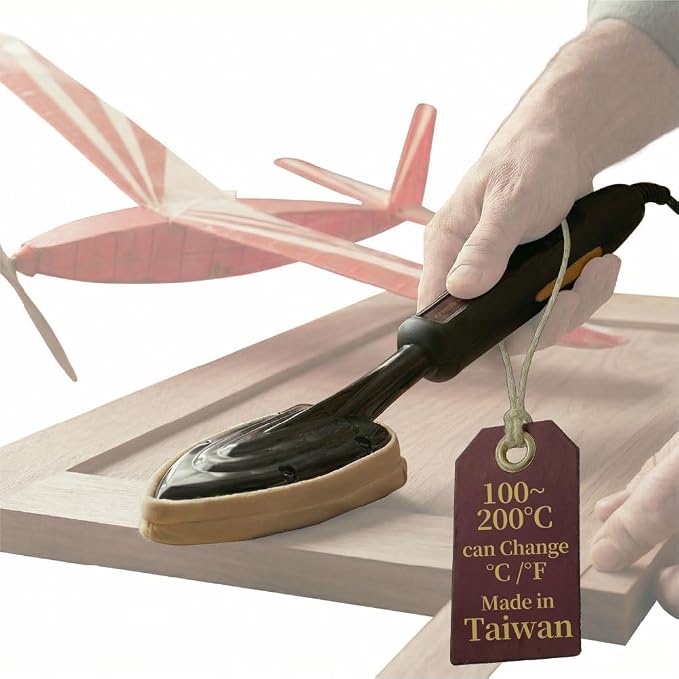
🥈 2. O’SKOOL Digital Edge Banding Iron VL01
This is the iron I’d give someone covering their first kit. The range is 212–392°F (100–200°C), which covers UltraCote sealing and shrinking with plenty of margin, the display switches between °C and °F, and the PTFE shoe has a pointed tip for the awkward bits. The listing actually calls out “delicate RC covering”, so the maker clearly knows who’s buying it.
Build quality is OK rather than great. The stand is a simple rest and budget thermostats like this one can read a few degrees off, so check it once with an IR thermometer — not a problem once you know. It’s lighter than the Hangar 9, which some people will actually prefer on a long session.
Specs: Digital temperature display, 100–200°C (212–392°F), °C/°F switchable, non-stick PTFE shoe with pointed tip, 110V
Best for: First covering jobs and budget builds
Builder feedback: Lots of RC modelers in the reviews saying it does the job of the hobby-brand irons for less.
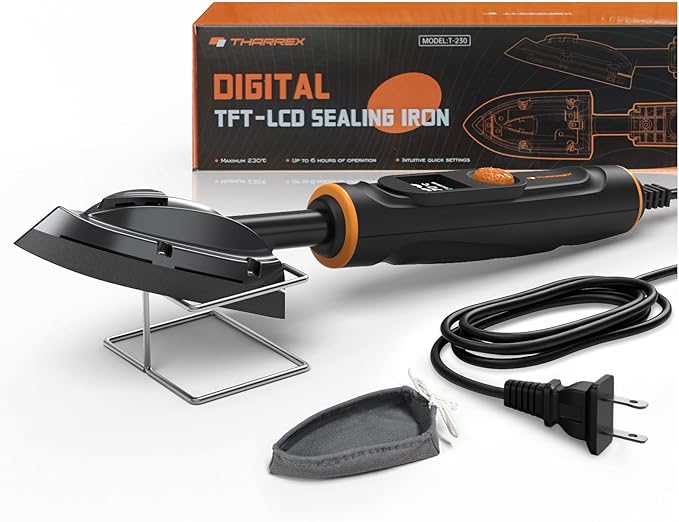
3. THARREX Digital Edge Banding Iron
Very similar idea to the O’SKOOL but with a higher top end — 212–446°F — and an 8.2-foot cord. That cord length is the bit I’d pay attention to. Covering a 60-inch-plus wing with a short cord means the plane keeps moving instead of the iron, which is how dings happen. A cotton sock and a safety stand come in the box, and RC hobbies are listed right there in the product description.
It’s a newer listing with fewer reviews than the others here, so long-term reliability is less proven. And the extra heat at the top end is more than you need for most films — just don’t crank it up out of impatience.
Specs: Digital LCD temperature control 212–446°F, 8.2 ft cord, cotton sock and safety stand included
Best for: Bigger models where cord reach matters, and films that like a bit more heat
Builder feedback: Good early reviews; the long cord and included sock are the common positives.
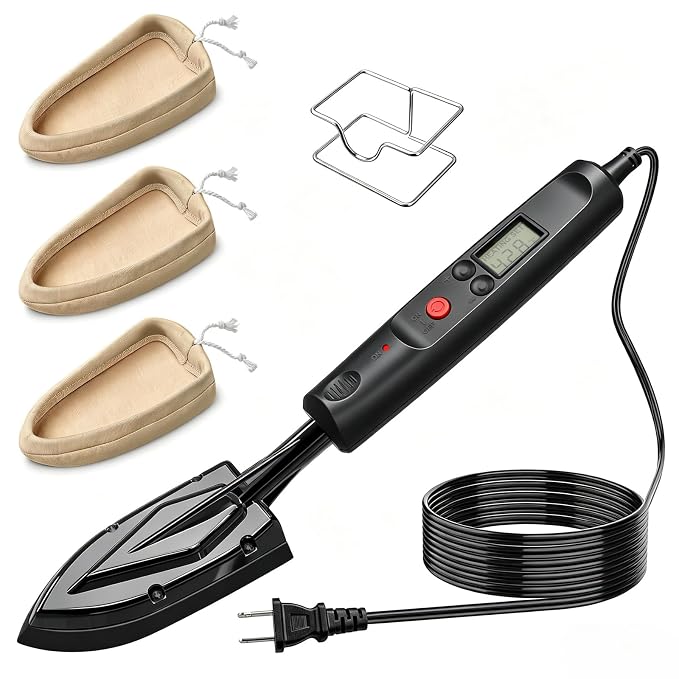
4. Edge Banding Iron with LCD Display, Metal Stand & 3 Socks
The most-reviewed of the generic irons. It goes to 428°F (220°C), has an LCD with real-time temperature, a metal stand, a roughly 98-inch cord and three cotton socks — so you’re sorted on socks for a good while. Model plane covering is listed as one of its uses.
No-name brand, so there’s some variation between units, and the manual asks you to rest it after four hours of continuous use. That tells me the heating element isn’t overbuilt. For weekend covering sessions it’s fine. For marathon builds, maybe go Hangar 9.
Specs: LCD display, adjustable 212–428°F (100–220°C), metal stand, ~98-inch cord, 3 replaceable cotton socks
Best for: Budget builders who want spare socks and a long cord in one box
Builder feedback: Over a thousand reviews; mostly positive about value and even heating.
Mini & Detail Irons
The “trim iron” category. Hangar 9 and Top Flite used to make dedicated trim seal tools, but you won’t reliably find them on Amazon anymore. A quilter’s mini iron does the same job.
🥇 5. Clover MCI-900 Mini Iron
Small head, long thin handle, stand with rubber feet. That’s it — and that’s exactly what you want for sealing film inside a wing fillet, around a canopy, along a servo hatch or on a narrow trim stripe. It’s a quilting tool, but plenty of scale builders keep one on the bench.
It has no numbered temperature readout, so check the settings with a thermometer once and make a note. The head is small, which means it’s slow on anything bigger than detail work. And stock seems to come and go, so grab it when it’s there. A second iron, not a replacement for a sealing iron.
Specs: Mini shaped head, lightweight long handle, stand with rubber feet and metal holder
Best for: Fillets, hatches, cockpit edges, trim and repair patches
Builder feedback: Thousands of reviews from quilters and crafters; modelers like the control in tight spots.

Iron Socks
A sock is a few dollars and it’s the difference between a clean shoe and one crusted with burnt adhesive. Buy spares. They wear thin, they get dirty, and a dirty sock leaves marks on light-coloured film.
6. Hangar 9 Sealing Iron Sock (HAN141)
The classic. Cotton sleeve made for Hangar 9 irons, so it fits snugly on those. Protects glossy film from scratches and keeps the shoe clean. On some edge banding irons it’s a little loose at the tip, so it might bunch up — pull it tight and it’s fine.
Specs: Cotton iron sock, designed for Hangar 9 sealing irons
Best for: Hangar 9 iron owners and anyone wanting the “original” sock
Builder feedback: Well reviewed; the usual note is that it eventually wears through, like any sock.

7. O’SKOOL Cotton Sock for Sealing Iron (VL01-A)
The matching sock for the O’SKOOL VL01 iron above, so if that’s your iron, this is the obvious spare. Fit is snug on the pointed shoe, which matters because a loose sock wrinkles at the tip and leaves little lines in the film. Not much else to say. It’s a sock. It’s a good one.
Specs: Cotton replacement sock for VL01-series sealing irons
Best for: O’SKOOL VL01 owners
Builder feedback: Highly rated for fit on the VL01.
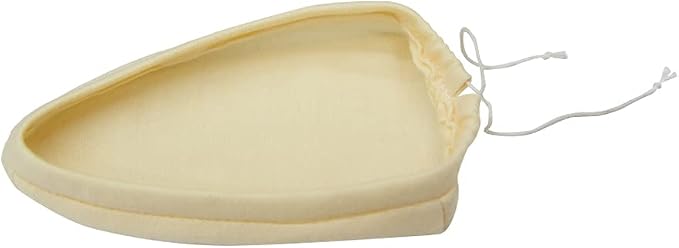
8. Dreyoo 4-Pack Cotton Socks for Sealing Iron
Four socks in a pack, listed as compatible with Hangar 9 irons and similar edge banding irons. Good value if you cover a lot or you like keeping one sock for dark film and one for light (worth doing, by the way — dark adhesive residue on white film is annoying to clean off).
Smaller brand and fewer reviews than the Hangar 9 sock. Fit can vary depending on your iron.
Specs: 4 cotton socks, heat resistant, fits Hangar 9 and similar sealing irons
Best for: Stocking up, and keeping separate socks for light and dark film
Builder feedback: Positive reviews on fit and value for the pack.

Temperature Check & Bench Safety
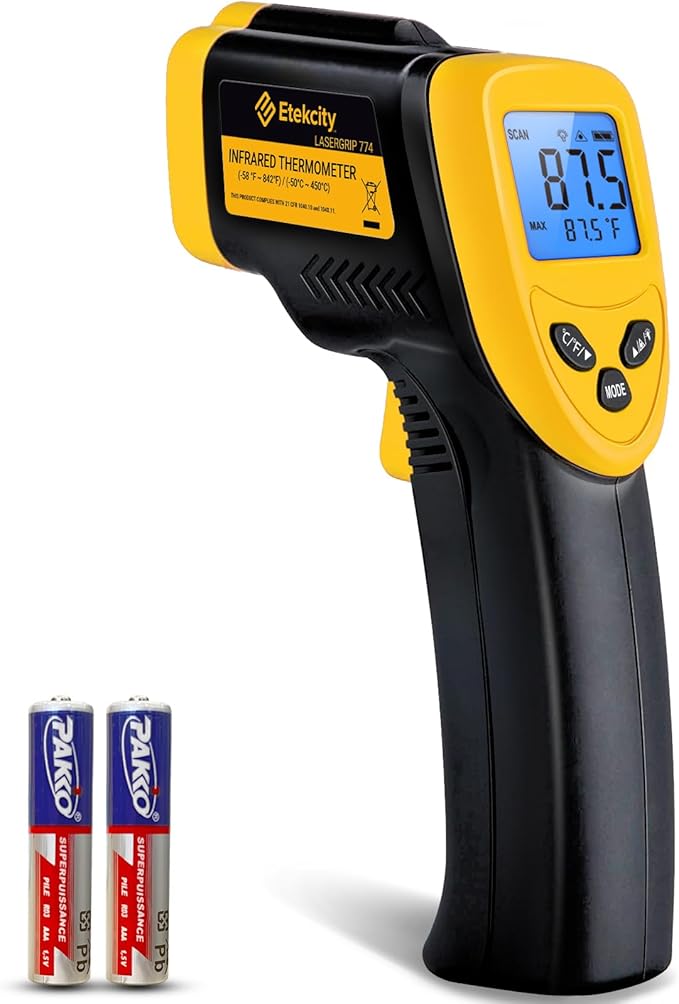
9. Etekcity 774 Infrared Thermometer
I keep pushing this on people at the club and they keep looking at me funny, until they try it. A cheap iron’s display might be 20 degrees off. A sock knocks off more. Point this at the sock or the film after a pass, and you know what’s actually happening instead of guessing. Once you’ve calibrated, you’ll barely need it — but that first session it’s gold.
IR thermometers read low on shiny surfaces, and a bare Teflon shoe is shiny. Measure the sock or the film, or use the adjustable emissivity. It’s also handy for checking motor and battery temps after a flight, so it won’t just sit in a drawer.
Specs: Infrared surface thermometer, 12:1 distance-to-spot, adjustable emissivity, max temperature display
Best for: Calibrating any iron, especially budget ones
Builder feedback: A best seller with tens of thousands of reviews.
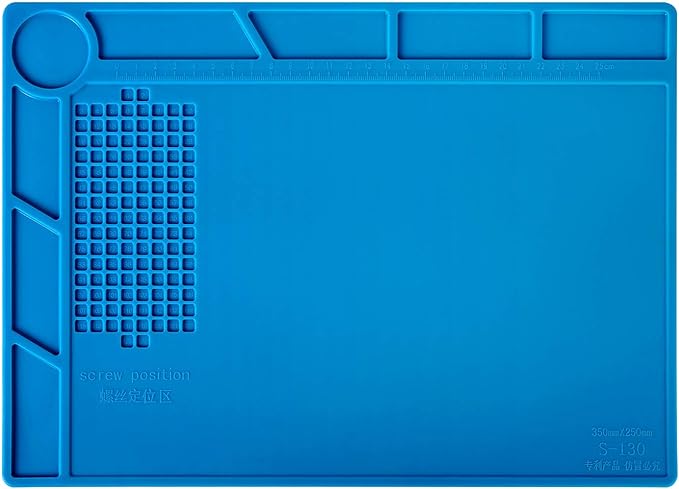
10. Kaisi S130 Silicone Heat-Resistant Work Mat
Rated to 932°F. Put it at the corner of the bench and you have a place to rest a hot iron when the stand is in the wrong spot, or to lay down the mini iron between passes. It’s got a ruler and small-parts slots too.
It’s small, so don’t expect to lay a wing on it. Think parking spot.
Specs: Silicone, heat resistant to 932°F (500°C), 13.8 x 9.8 in, scale ruler, small-part slots
Best for: Safe resting spot for hot tools
Builder feedback: Very highly rated by electronics hobbyists.
Pair Your Iron with a Heat Gun
An iron will shrink film, but over open rib bays and around wingtips a heat gun is quicker and leaves fewer creases. Two that pair well with any of the irons above:
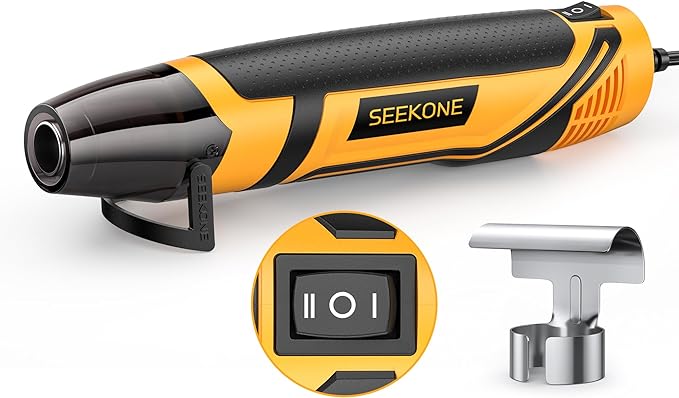
11. SEEKONE 350W Mini Heat Gun
Small and light, two settings (500°F and 842°F). Perfect for tightening film on control surfaces, small park flyers and repairs, and it doubles as your heat-shrink tubing gun for wiring. Low airflow means it’s slow on a big wing, but it’s very easy to control, which matters more when you’re learning.
Specs: 350W, 500°F / 842°F, ~380 g, overheat protection, reflector nozzle
Best for: Small models, control surfaces, heat-shrink tubing
Builder feedback: Thousands of reviews; praised for being easy to aim.
12. Wagner Spraytech HT1000 Dual-Temperature Heat Gun
The full-size option. 750°F and 1000°F with two fan speeds. For film, stay on low, keep four to six inches away and keep it moving. It’s not as forgiving as a gun with a variable dial, but it’s a tough, well-known tool that’ll also do every other heat job in the house.
Specs: 750°F / 1000°F, two fan speeds, corded
Best for: Larger models and builders who want one gun for everything
Builder feedback: Huge review count; a garage staple.

More heat gun options, including variable-temperature models, are in the covering irons & heat guns guide.
Comparison Table
| Iron | Temperature Range / Control | Extras | Best For |
|---|---|---|---|
| Hangar 9 Digital Sealing Iron | Digital | Stand, sock, 3-hr shutoff | Regular builders |
| O’SKOOL VL01 | Digital, 212–392°F | Pointed PTFE shoe | First iron, budget |
| THARREX Digital | Digital, 212–446°F | 8.2 ft cord, sock, stand | Bigger models |
| Edge Banding Iron w/ 3 Socks | LCD, 212–428°F | Metal stand, 3 socks | Value bundle |
| Clover MCI-900 | No readout | Stand | Detail and trim |
FAQ
What’s the best temperature for a covering iron?
It depends on the film. For UltraCote, Hangar 9 gives about 200–220°F for adhesion, starting to shrink around 300°F and max shrink around 350°F. Oracover’s adhesive activates at about 100–120°C (212–248°F). Add a little if you use a sock, and always test on a scrap piece first.
Is an edge banding iron the same as a covering iron?
Essentially yes. Both are a heated, non-stick shoe on a handle with a thermostat. Make sure it reaches at least 350°F (about 180°C) and has a coated shoe. Several are now marketed for RC covering as well as woodworking.
Do I need a trim iron?
Not to start. A sealing iron with a pointed tip does most things. Once you start doing fillets, cowl edges and trim stripes, a mini iron like the Clover makes life a lot easier.
Should I use a sock on my covering iron?
For most films, yes. It prevents scratches on glossy film and stops adhesive building up on the shoe. You’ll need to set the iron slightly hotter to make up for the insulation. Keep separate socks for light and dark films.
Can I cover foam with an iron?
Carefully, and only with a low-temperature film. Foam melts at temperatures a lot of films need, so test on a scrap first and keep the heat low. Our covering film guide covers foam-friendly options.
Final Thoughts
For most people, the O’SKOOL VL01 plus a spare sock is all you need to cover your first few planes well. If you’re covering regularly, the Hangar 9 digital iron is worth the extra for the stable temperature and better build. Add a Clover mini iron once you start fighting with fillets, and an IR thermometer if your iron’s display and reality don’t seem to agree.
The rest is practice. Cover a tailplane before a wing, and a scrap of sheet before a tailplane. Your first one will have wrinkles. Mine did. But that’s the nice thing about heat shrink film — you can always go back and iron things out. (Sorry. Had to.)
Related Guides
- Best Covering Irons & Heat Guns for RC Airplanes — the full heat tool guide, including heat guns
- Best RC Airplane Covering Film & Materials — choose the film first
- Best Balsa Wood for RC Airplanes — the structure under the film
- Best Glue for RC Airplanes — CA, epoxy and foam-safe adhesives
- Best RC Airplane Paint & Finishing Supplies — decals and paint for the finishing touches