
Some links in this article are affiliate links. As an Amazon Associate, rcplanediy.com/ earns from qualifying purchases at no extra cost to you.
Before laser cutters and CNC routers showed up in home workshops, this is how every foam-wing scratch builder actually made a wing: two paper templates, a wire heated up with a power supply, and a steady hand dragging that wire through a block of foam while trying very hard not to wobble. I still use this method more than either of the powered machines I’ve written about on this site, and honestly, for a tapered foam wing panel, it’s still faster than setting up a CNC hot-wire rig for a one-off cut.
The basic technique hasn’t changed in decades: you glue a root airfoil template to one end of a foam block and a tip airfoil template to the other, stretch a heated nichrome wire across both, and pull the wire through the foam while keeping it riding against both templates at once. Do it right and you get a perfectly tapered wing core in about ninety seconds. Do it wrong — pull too fast, let the wire sag, rush a corner — and you get a wing core that looks like it lost a fight with a belt sander.
This isn’t a machine-buying article so much as a “here’s the actual gear that makes this technique work” article. Some of it is dirt cheap. Some of it — the bow kits especially — is worth spending real money on if you’re going to cut more than one or two wings a year, because a wobbly bow with an unreliable power supply will ruin more foam than it saves you.
Quick note on scope: this guide covers the cutting tools and wire themselves, not the foam stock. If you’re still deciding between EPP, EPS, XPS, or Depron for your build, I’ve already covered that in a separate foam materials guide. And if you’re building rigid balsa/plywood structures instead of foam-core wings, powered cutting is a different conversation entirely — see my guides to laser cutters and CNC routers for that side of the shop.
Quick Picks
| Pick | Product | Why |
|---|---|---|
| Best Overall | Hot Wire Foam Factory 4ft Compound Bow Cutter Kit | Full-size wing panels in one pull, adjustable heat, USA-made |
| Best Budget | Pitsco Foam Wing Cutter | Simple, reliable, cheapest legitimate way in |
| Best for Detail Work | Woodland Scenics Hot Wire Foam Cutter | Handheld freeform cutting, hinge slots, small parts |
What to Actually Look For in a Hot Wire Foam Cutter
Adjustable heat control is the single feature that separates a tool from a frustration machine. Every foam density and thickness wants a slightly different wire temperature — too hot and the wire melts a wider kerf than it should (and can warp the foam surface next to the cut), too cold and it drags, catches, and tears instead of slicing clean. A bow with a fixed-power supply forces you to compensate by changing pull speed instead, which is a much harder skill to get consistent. Pay for adjustable heat if you’re buying more than one bow cutter in your life.
Bow length should match your actual wingspan, not the biggest one available. A 4-foot bow lets you cut a 4-foot wing panel in a single continuous pull, which matters because stopping mid-cut and restarting almost always leaves a visible step in the surface. If you build smaller park flyers, a 2-foot bow is easier to control and store. Some kits give you both lengths in one package, which is genuinely the better buy if the price difference is small.
Wire gauge and material — nichrome is the standard for a reason: it has high electrical resistance (so it heats up predictably from a low-voltage power supply) and it holds up to repeated heating cycles without getting brittle and snapping every third cut. Thinner wire (30-34 AWG) gives a finer kerf and needs less power; thicker wire holds tension better across longer bows but needs more current to heat properly. Keep spare wire on hand regardless — it’s a consumable, not a one-time purchase.
Handheld cutters vs. bow cutters solve different problems. A bow cutter is for straight or tapered cuts guided by templates — wing cores, tapered fuselage blanks. A handheld hot wire pen is for freeform work — hinge line slots, foam repairs, carving canopy openings, trimming a core after it’s already cut. Most serious foam builders end up owning one of each rather than trying to make one tool do both jobs.
If you’re cutting your own airfoil templates for a tapered wing bow cut, our free RC Wing Designer tool will export root and tip profiles you can print directly and glue to the ends of your foam block — no tracing curves by hand.
Hot Wire Foam Cutting Bow Kits
These are your wing-panel cutters — a heated wire stretched across a frame, guided along templates at each end.
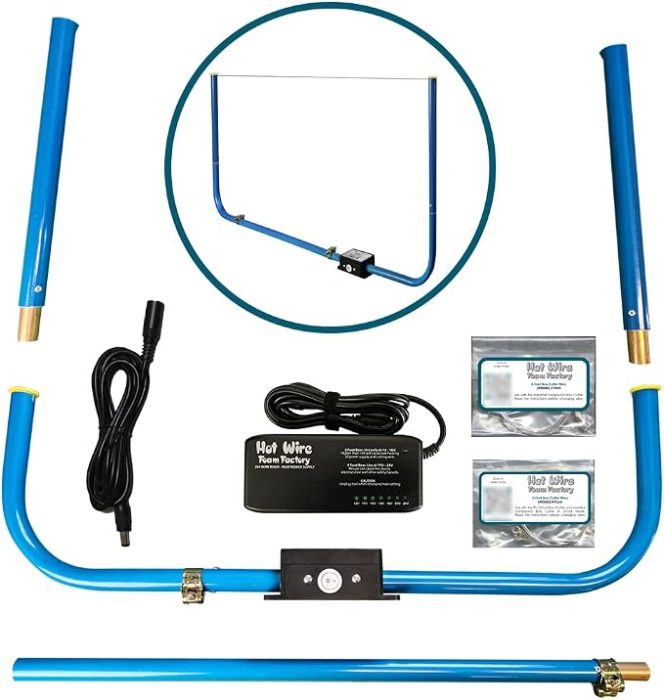
🥇 Hot Wire Foam Factory 4ft Heavy-Duty Compound Foam Bow Cutter Kit
Hot Wire Foam Factory is a dedicated foam-cutting tool company, not a generic dropship listing, and it shows in the build quality here. The 4-foot compound bow handles full-size wing panels in one continuous pull, the heat settings are genuinely adjustable rather than a single fixed output, and the frame stays rigid enough that you’re not fighting bow flex on top of everything else you’re already managing.
It’s a bigger, heavier tool than the 2-foot version below, and it takes up real storage space when you’re not using it — not something you casually toss in a drawer.
Specs: 4-foot cutting length, adjustable heat settings, compound bow design for improved rigidity, made in the USA
Best for: Full-size wing panels and larger scratch builds where you need one continuous, uninterrupted pull
Builder feedback: Consistently the brand mentioned first when foam-wing builders talk about upgrading from a homemade bow.
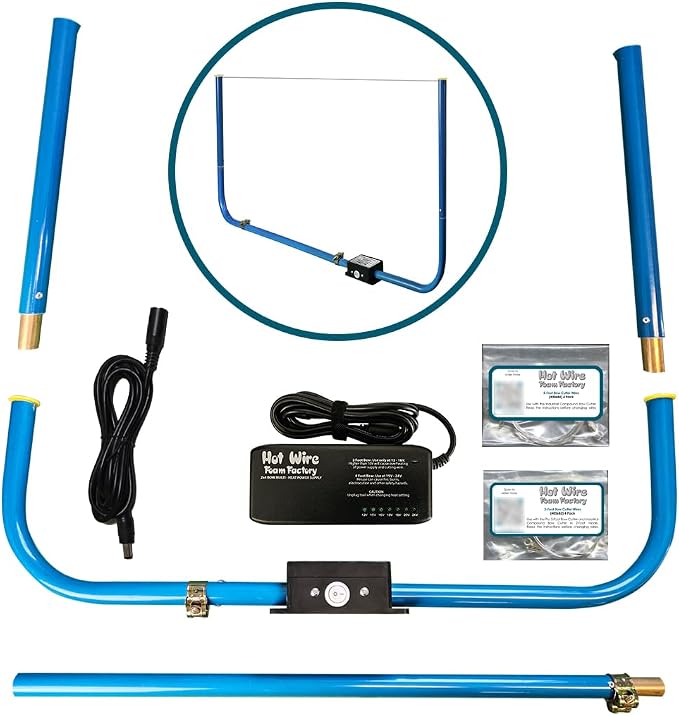
🥈 Hot Wire Foam Factory 2-Foot Foam Bow Cutter Kit
Same trusted brand, sized down for smaller wings and easier storage. The adjustable multi-heat power supply is shared across the Hot Wire Foam Factory lineup, which means the learning curve carries over if you eventually add the 4-foot version too. Comes with extra cutting blades (wire), which you will need eventually regardless of how careful you are.
Specs: 2-foot cutting length, adjustable multi-heat power supply, extra cutting wire included, made in the USA
Best for: Park flyers, smaller scratch builds, and builders who want an easier tool to store and control
Builder feedback: The size most people should actually start with — a 4-foot bow is overkill until you’re building something that needs it.
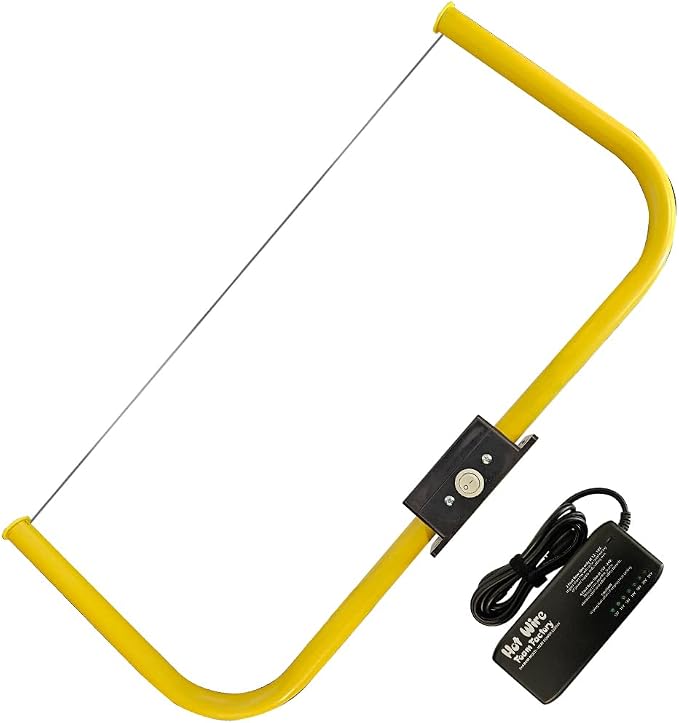
🥉 Pitsco Foam Wing Cutter
Pitsco built its name on STEM and classroom tools, and this cutter reflects that — it’s simple, it’s rugged, and it doesn’t try to do anything fancy. No frills adjustable-heat electronics, just a straightforward bow that gets the job done for a fraction of the cost of the dedicated hobby-brand kits above.
The tradeoff is control. Without fine heat adjustment, you’re relying more on pull speed to manage cut quality, which takes a bit more practice to get consistent. Fine for someone testing whether they even like this method before spending real money.
Specs: Basic bow-frame foam wing cutter, compact size, straightforward setup
Best for: First-time buyers who want to try hot-wire wing cutting before committing to a premium kit
Builder feedback: Popular as a “let’s see if this technique is for me” purchase before stepping up to an adjustable-heat kit.
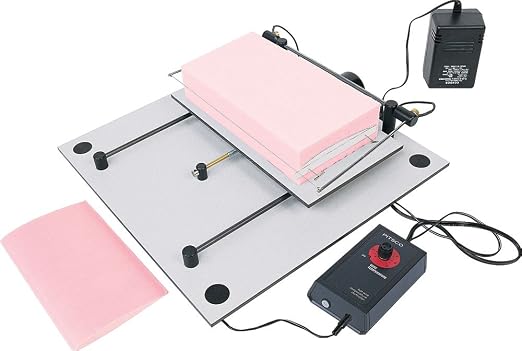
Handheld Hot Wire Cutters & Foam Carving Pens
For freeform work a bow can’t do — hinge slots, canopy openings, foam repairs, and trimming already-cut cores.
Woodland Scenics Hot Wire Foam Cutter
Woodland Scenics is a genuinely big name in the hobby world — model railroaders have used their terrain and foam tools for decades — and this handheld cutter is a reliable, no-surprises tool for freeform cutting. It’s not purpose-built for RC specifically, but the cutting mechanics are identical, and the brand reputation for durability is well earned.
Specs: Handheld hot wire design, replaceable wire tip, low-voltage power supply
Best for: Freeform carving, hinge line slots, canopy openings, cleaning up bow-cut wing cores
Builder feedback: Crosses over well from the model railroad hobby — a lot of scratch builders already own one for terrain work before they ever try it on an RC wing.
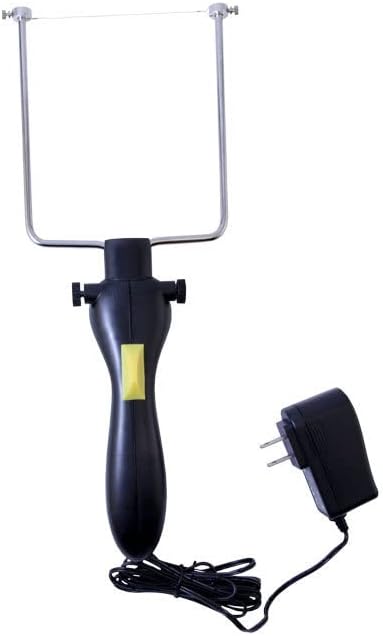
Hot Knife Foam Cutter with 10ft Long Cable (150W)
The muscle option. 150W is well beyond what a delicate detail pen puts out, and the 10-foot cable means you’re not tethered right next to a wall outlet or fighting a cord that’s too short to reach across a full workbench. Better suited to denser foams like EPP that shrug off lower-wattage pens.
It’s overkill for fine detail work — this is a cutting tool, not a carving tool, and the higher power means less margin for error on thin, delicate parts.
Specs: 150W output, 10-foot cable, includes 2 blades, rated for EPP/EPS/XPS/EVA/EPE/PU foam and KT board
Best for: Denser foam types and builders who need cord length to reach across a full-size workbench
Builder feedback: The power is genuinely useful on EPP specifically, where lower-wattage pens tend to drag instead of slice.
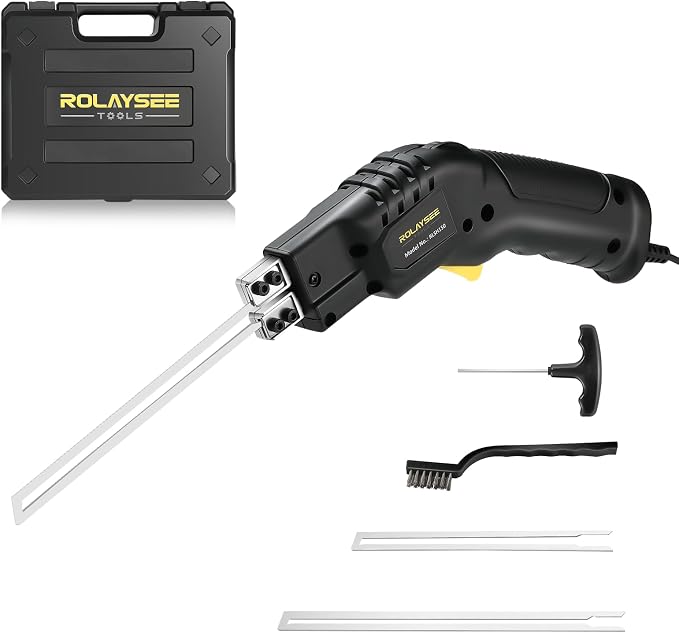
WINONS Hot Wire Foam Cutter Tool (WFC0008, Kit of 3)
WINONS is a brand that’s carved out a whole niche for itself doing basically nothing but hot wire foam cutters — they’ve got a dozen-plus models on Amazon, all with the same WFC-numbered naming scheme, which tells you this isn’t a company that stumbled into foam cutting as a side hustle. The WFC0008 is their mid-range pick and it’s a genuinely thoughtful piece of kit: 5-level temperature control instead of a single fixed setting, a max output around 752°F, and it comes as a kit of 3 — so you’re not stuck with one tip shape when a project calls for something narrower or more angled.
It’s rated for EPS, EPE, XPS, and sponge foam specifically, which covers the vast majority of what shows up in RC foam-core builds. The 5-level control is the standout feature here compared to a lot of the cheaper single-tip pens — dial it down for delicate EPS detail work, crank it up when you’re pushing through denser XPS, without needing to guess-and-check on scrap first every single time.
My one gripe, and it’s a small one: with this many WINONS models floating around at slightly different price points and kit sizes, it’s easy to accidentally order the wrong variant if you’re not paying attention to the model number. Double-check you’re getting the WFC0008 specifically if that’s the temperature range and tip count you actually want.
Specs: 5-level temperature control, up to 752°F max output, kit of 3 interchangeable tips, rated for EPS/EPE/XPS/sponge foam
Best for: Builders who want real temperature control across multiple foam densities without buying separate single-setting pens
Builder feedback: The 5-level control gets singled out repeatedly as the reason to pick this over cheaper fixed-temperature pens — one tool instead of two or three.
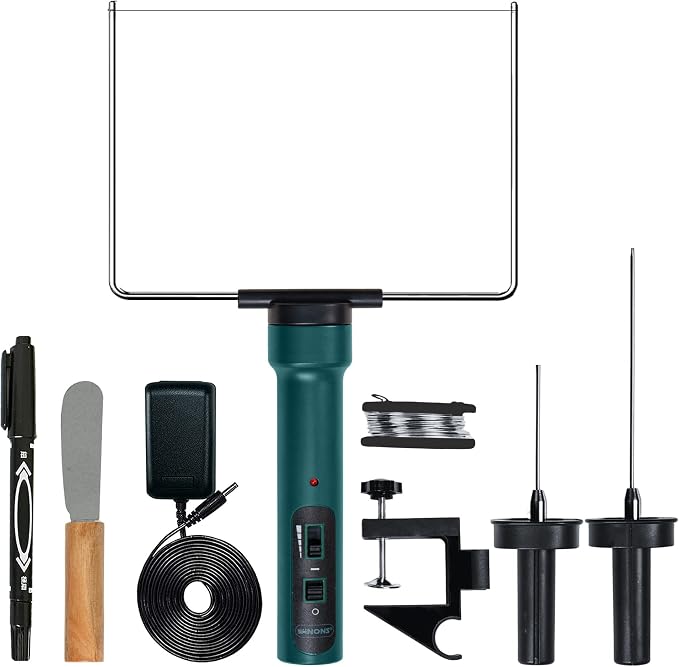
Replacement Wire & Spares
Wire is a consumable, not a lifetime part. It stretches, it eventually snaps at the same spot it always flexes, and you do not want to discover you’re out mid-project.
High Temp Nichrome Wire (32.8ft/roll)
A straightforward replacement/bulk spool for anyone re-wiring a bow cutter or building their own frame from scratch. Nichrome’s resistance properties are what let it heat predictably off a low-voltage supply without needing exotic electronics.
Specs: 32.8ft roll, high-temperature nichrome alloy, rated for foam-cutting heat resistance applications
Best for: Re-wiring bow cutters, DIY frame builds, keeping spares on hand
Builder feedback: A cheap enough purchase that there’s no good reason to run a bow cutter without a spare roll sitting in the toolbox.
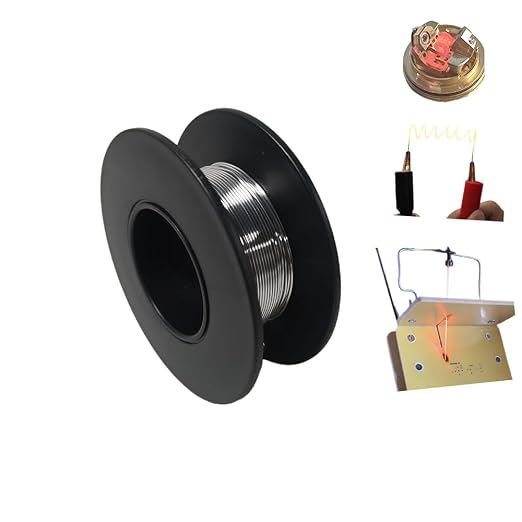
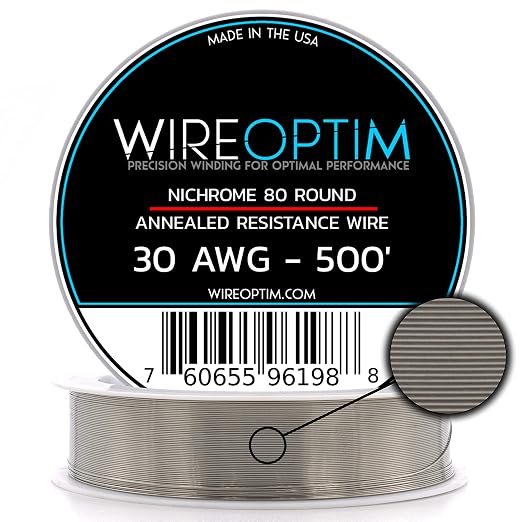
WIREOPTIM 30AWG Nichrome 80 Resistance Wire (500ft)
For builders who go through a lot of wire, or who want a dedicated wire supplier rather than a generic hobby-tool bundle. 500 feet is a serious bulk buy — this is the spool for someone who’s outfitting a whole workshop or replacing wire regularly across multiple bows.
Specs: 30 AWG, Nichrome 80 alloy, 500ft spool
Best for: High-volume builders and anyone who’d rather buy wire in bulk once than reorder small spools constantly
Builder feedback: Overkill for an occasional builder, but the per-foot cost makes sense if you’re cutting foam regularly.
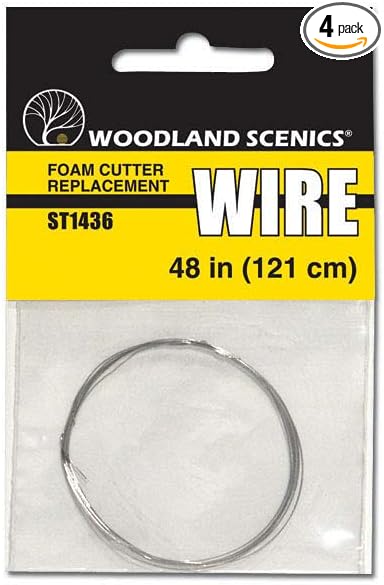
Woodland Scenics Hot Wire Foam Cutter Replacement Wire
The matched replacement wire for the Woodland Scenics cutter above. If you bought that one, this is the obvious reorder once the original wire fatigues — no guessing about compatibility.
Specs: Replacement wire sized for Woodland Scenics Hot Wire Foam Cutter
Best for: Anyone who already owns the Woodland Scenics cutter and needs a direct-fit replacement
Builder feedback: Worth ordering two at once — the first replacement always seems to happen mid-project.
Bow Frames & Guide Accessories
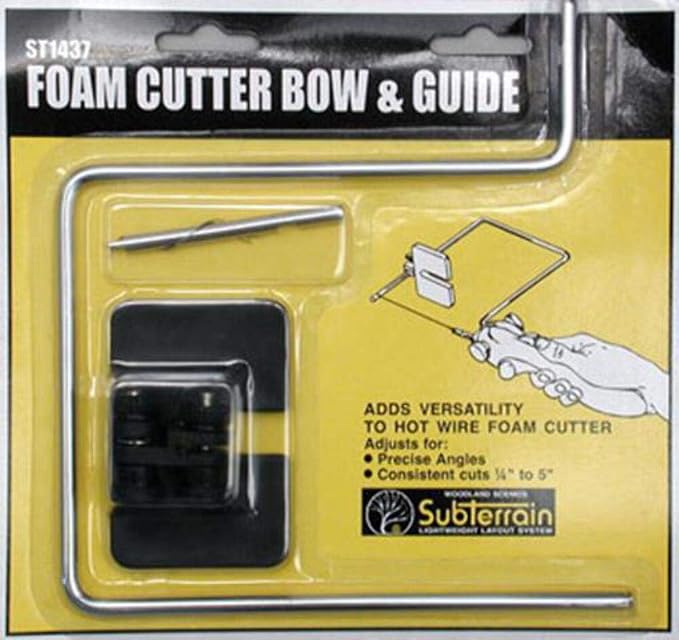
Woodland Scenics Foam Cutter Bow & Guide
A dedicated bow-and-guide accessory from the same trusted brand, useful if you want more controlled, repeatable straight and tapered cuts than a fully freehand handheld pen can give you, without stepping up to one of the larger dedicated bow kits above.
Specs: Bow frame with guide attachment, compatible with Woodland Scenics hot wire cutting system
Best for: Builders who want more guided control than a handheld pen offers, at a smaller scale than a full 2-4ft bow kit
Builder feedback: A nice middle step between “freehand pen” and “full bow cutter” for smaller projects.
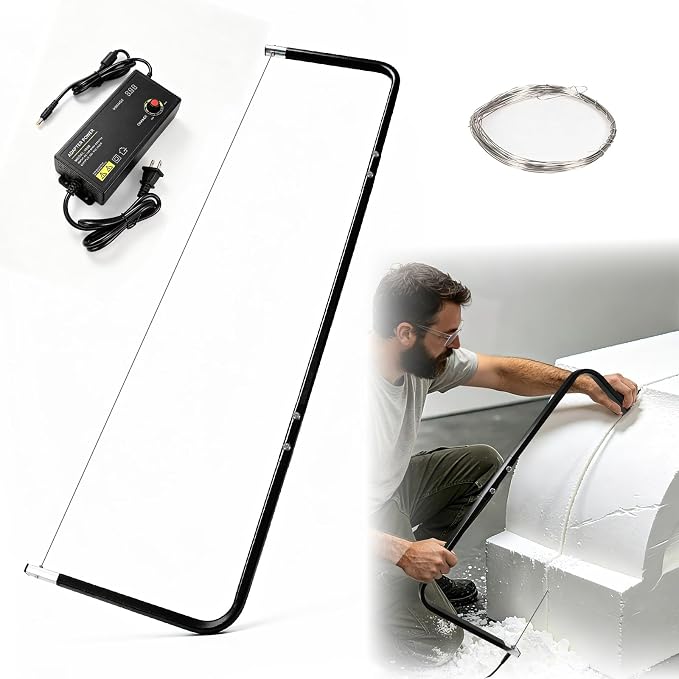
Adjustable Hot Wire Foam Cutter 2FT–4FT with Replacement Wire
An expandable bow that adjusts between 2 and 4 feet, which is a genuinely handy feature if your projects vary in size and you don’t want to own two separate bow kits. Ships with replacement wire included, so you’re not immediately shopping for spares.
Expandable frames flex a bit more than a fixed-length compound bow by design — it’s the tradeoff for the size versatility, not a defect, but worth knowing going in.
Specs: Adjustable 2ft–4ft cutting length, multi-heat power supply, replacement heating wire included
Best for: Builders who don’t want to commit to a single fixed bow length across different projects
Builder feedback: The flexibility gets used more than people expect once they realize not every wing needs the full 4 feet.
Comparison Table
| Product | Type | Size / Length | Best For |
|---|---|---|---|
| Hot Wire Foam Factory 4ft Compound Bow Kit | Bow Cutter | 4 feet | Full-size wing panels |
| Hot Wire Foam Factory 2-Foot Bow Kit | Bow Cutter | 2 feet | Park flyers, smaller wings |
| Pitsco Foam Wing Cutter | Bow Cutter | Compact | Budget first-timer purchase |
| Woodland Scenics Hot Wire Foam Cutter | Handheld Pen | N/A | Freeform detail cutting |
| Weytoll Handheld Pen | Handheld Pen | N/A | Detail work with multiple tip shapes |
| 150W Hot Knife Foam Cutter | Handheld Pen | 10ft cable | Denser foam (EPP), full-bench reach |
| WINONS Hot Wire Foam Cutter (WFC0008) | Handheld Pen | Kit of 3 tips | Multi-density foam with real temperature control |
| Adjustable 2FT–4FT Bow Cutter | Bow Cutter | 2–4 feet (adjustable) | Mixed project sizes, one bow instead of two |
Frequently Asked Questions
What’s the actual difference between a bow cutter and a handheld pen?
A bow cutter stretches wire across a rigid frame and is guided along templates for straight or tapered cuts — that’s how you cut an actual wing core. A handheld pen is a single wire tip on a small grip, used for freeform work like hinge slots, canopy cutouts, and cleanup after the main cut. Most builders eventually own both rather than trying to make one do the other’s job.
Do I need a CNC hot-wire machine instead of a manual bow?
For most scratch builders, no. True 4-axis CNC hot-wire rigs exist, but they’re mostly DIY-built setups rather than off-the-shelf Amazon products, and they only pay off if you’re cutting the same wing shape repeatedly at production volume. For one-off or occasional builds, a manual bow with good adjustable heat gets you a clean wing core in under two minutes with a much smaller investment.
What foam types can I cut with these tools?
Nichrome hot wire cuts EPS, XPS, and most polystyrene-based foams cleanly. EPP is denser and more rubbery — it cuts, but you’ll want more power and a bit more patience, which is where the higher-wattage handheld cutters earn their keep. If you’re still choosing which foam to build with, see our foam materials guide for the tradeoffs between types.
Why does my wire keep snapping?
Usually one of three things: the wire is running too hot for too long (dial the heat down and let pull speed do more of the work), the wire is old and fatigued at a stress point from repeated flexing, or there’s too much tension on a bow that wasn’t designed for that wire gauge. Keep spare wire on hand — it’s a consumable, and a snap mid-cut on a nearly-finished wing panel is exactly the kind of thing that makes you say words you don’t usually say in front of your kids.
Is hot-wire cutting safe to do indoors?
It’s lower-risk than a laser or spinning CNC bit, but it’s not risk-free — the wire gets hot enough to burn skin on contact, and cutting foam does release some fumes, more with EPP than EPS. Work in a ventilated space, don’t touch the wire during or immediately after a cut, and keep it unplugged when you’re not actively pulling it through foam.
Final Thoughts
If you’re building foam-core wings at all regularly, this is genuinely the best money-to-usefulness ratio of anything covered across this whole tool category — a decent bow kit costs a fraction of a laser cutter or CNC router and, for a tapered wing panel specifically, is often faster to actually use. Start with a bow sized to your typical wingspan and a handheld pen for the detail work neither a bow nor a laser can do cleanly, and keep spare wire around so a snap mid-project doesn’t turn into a wasted evening.
Related Guides
- Best Laser Cutters for RC Airplane Building — for flat balsa and plywood sheet parts instead of foam cores
- Best CNC Routers for RC Airplane Building — for thicker structural parts and 3D-contoured shapes
- Best Foam for RC Airplane Building — choosing between EPP, EPS, XPS, and Depron before you start cutting
- Best Balsa Wood for RC Airplanes — for builders working in balsa alongside or instead of foam
- RC Wing Designer — Complete User Guide — export root and tip airfoil templates for your next bow cut